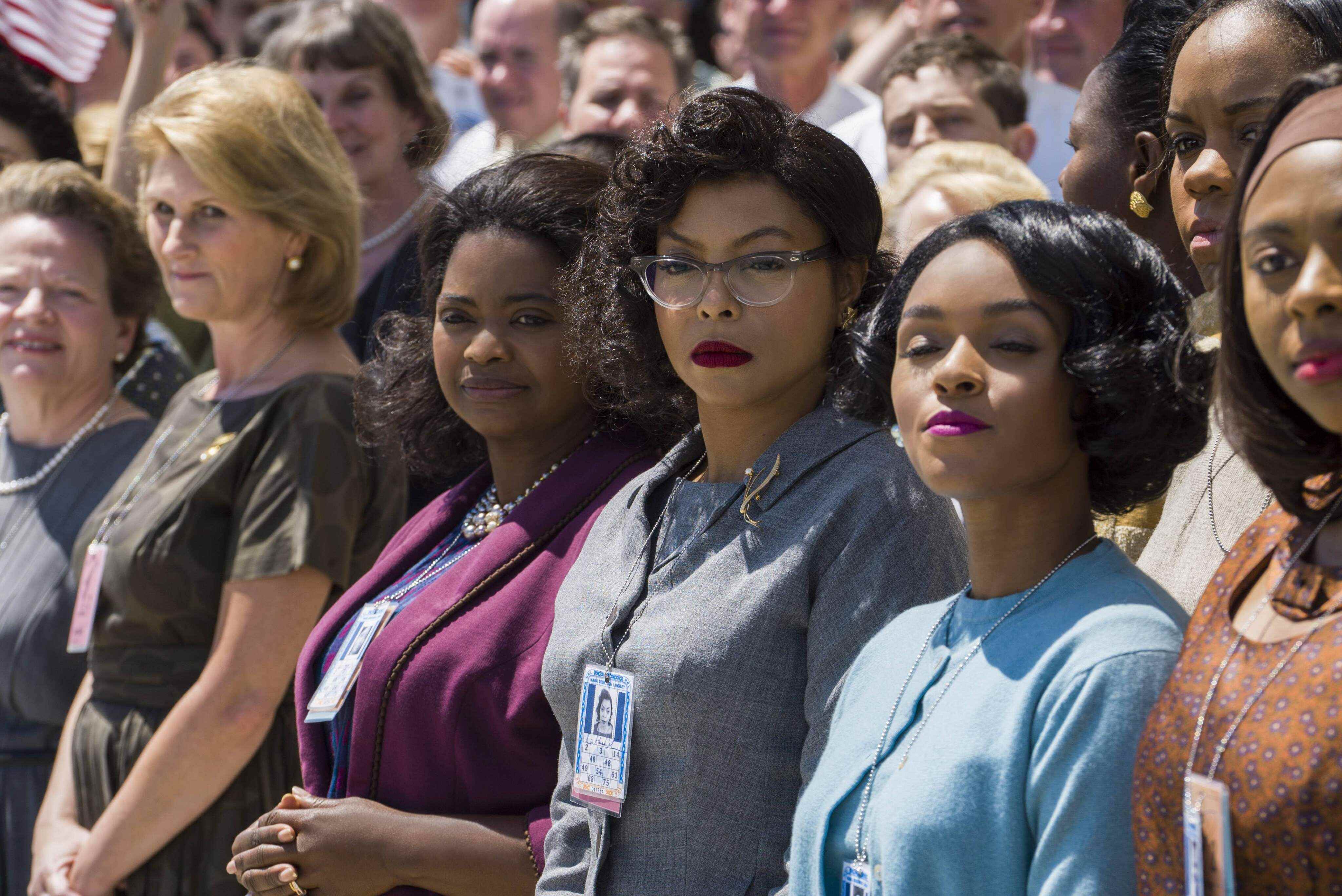
As Black History Month comes to an end and International Women’s Day is approaching, both events inspire us to reflect on the often neglected contributions of Black women throughout history.
Here are five films that feature women who have worked to reshape institutional discrimination.
1. The Six Triple Eight (2024)
This powerful historical movie tells the story of the 6888th Central Postal Directory Battalion, the only predominantly-Black, all-female unit that the US deployed overseas during World War II. Starring Kerry Washington as Captain Charity Adams, the film portrays the 855 women who volunteered to serve their nation and were tasked with a mission to handle a three-year backlog of undelivered mail for American troops who were fighting in Europe.
Operating under the motto “No Mail, Low Morale”, the battalion understood that communication from home was essential to sustaining soldiers’ mental endurance. Despite confronting racism and sexism within the military, these women executed an “impossible” logistical mission with their high discipline and precision, under the leadership of the demanding yet sympathetic Captain Adams.
The film, which won five NAACP Image Awards, reminds us of the actual history of these women and how their achievements transformed America’s notion of who could be a soldier.
2. Hidden Figures (2016)
Set during the Cold War, this acclaimed film revolves around three African-American mathematicians – Katherine Johnson, Dorothy Vaughan and Mary Jackson – whose calculations were critical to Nasa’s early successes in the space race. Adapted from Margot Lee Shetterly’s book, Hidden Figures, the story highlights their roles as “human computers” at the Langley Research Centre. The film earned multiple Academy Award nominations.
The protagonists are actual heroes in US history who contributed to Nasa’s projects.
Working under segregation and institutional discrimination, these women produced the precise mathematical analyses that enabled astronaut John Glenn to orbit Earth.
3. The Help (2011)
Based on Kathryn Stockett’s 2009 novel, this film explores the lives of Black domestic workers and the white families they served during the 1960s in the US state of Mississippi.
The story is about a young white woman, Eugenia “Skeeter” Phelan, played by Emma Stone, who wants to be a journalist. Her relationship with two Black domestic workers, Aibileen Clark and Minny Jackson, and their observations of systemic racism and the mistreatment of Black people make up the main plot of the movie.
Through the perspectives of Aibileen and Minny, the film depicts the daily indignities of African-Americans in white households, alongside their acts of resistance. Octavia Spencer won an Academy Award for her role as Minny.
The movie not only inspires reflection on the unfairness of the employment system during the US civil rights movement, but also, more importantly, the systemic racism that Black women face.
4. Till (2022)
This biographical film is based on the true story of Mamie Till, an African-American educator and activist who relentlessly pursued justice after the lynching of her son, Emmett Till, in August 1955.
Rather than focusing solely on the murder, the film underscores the moral clarity and activism of Mamie, who is portrayed by Danielle Deadwyler.
By insisting on an open-casket funeral, Mamie forced the public to witness how racial terror destroyed her son. Her approach then became an important part of the US civil rights movement.
The film portrays how Mamie’s maternal grief was transformed into political action, marking a defining moment in American history.
For her extraordinary performance in the film, Deadwyler received nominations for the British Academy Film Awards and the Critics’ Choice Awards.
5. The Woman King (2022)
Inspired loosely by historical events, this fictional film tells the story of the Agojie, an all-female warrior unit that is trying to protect the West African kingdom of Dahomey in the 1800s.
The movie stars Viola Davis as General Nanisca, who leads her warriors in freeing women who were abducted to be sold as slaves.
The film also depicts the emotions of General Nanisca as she trains a new generation of warriors and prepares them for battle against their enemy, who is determined to destroy their way of life.
The film shows African history through a lens of strength and sovereignty, and it challenges the stereotypes that often dominate Western portrayals of the continent.
The American Film Institute has listed it as one of the top 10 films of 2022.