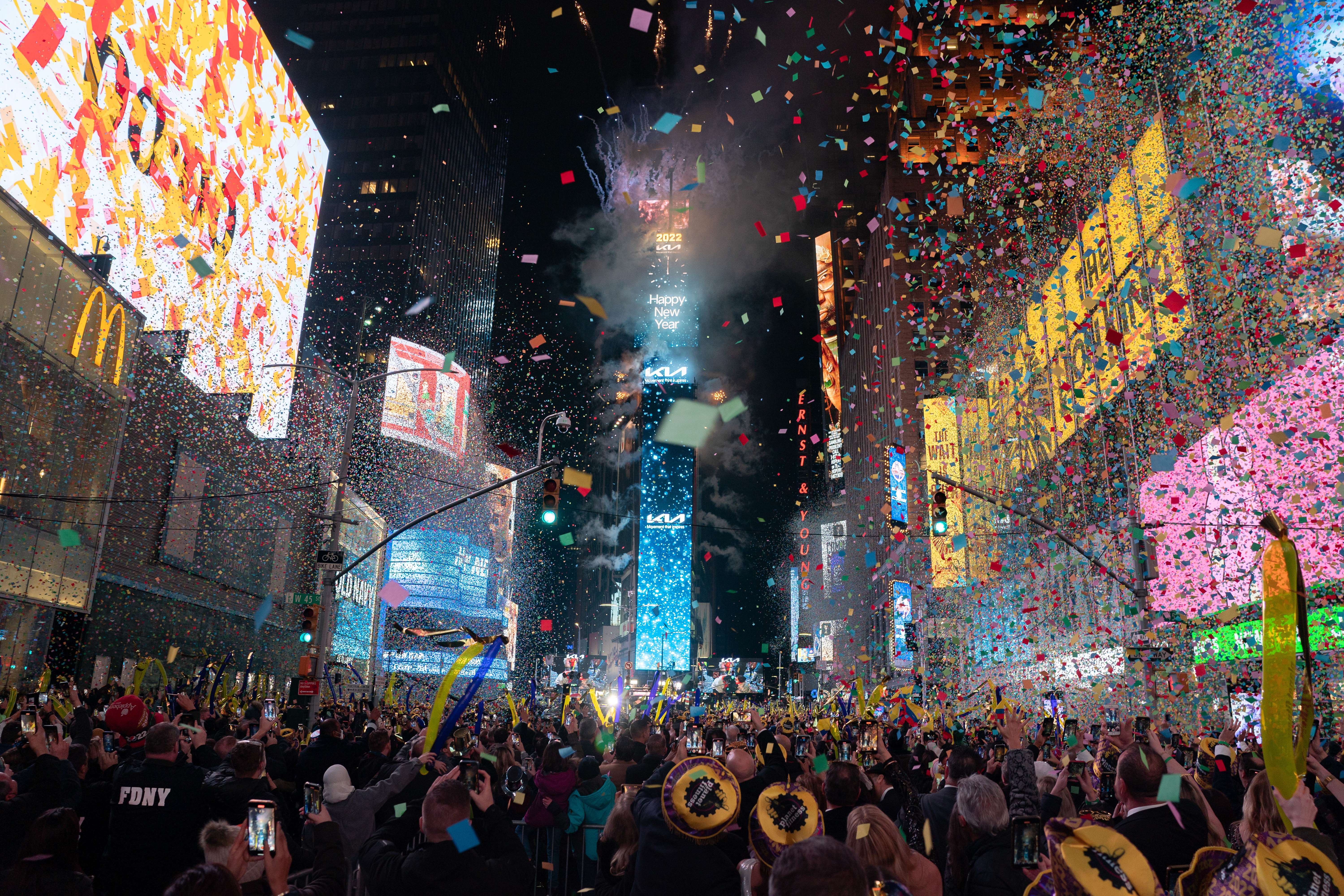
The countdown to the New Year begins when the last one ends. On January 1 of every year, people ring in the New Year with parties filled with good times.
But why do we celebrate New Year's Day, and how did the holiday start?
When to begin
New Year's festivities date back thousands of years to ancient Babylon, in the Middle East. In Babylon, the first new moon after the spring equinox marked the start of a new year. This was in March. The festival of Akitu lasted for 11 days, with a different ritual on each day.
The ancient Roman calendar was similar, with its new year happening at the spring equinox. The Romans had 10 months and 304 days in a year. The months of January and February were added later, thanks to king Numa Pompilius.
In the year 46 BC, the Roman emperor Julius Caesar introduced a new calendar which set January 1 as the start of the new year. January used the name of Janus, the Roman god of beginnings. Roman celebrations for New Year's Day included exchanging gifts, giving offerings to Janus, decorating homes with tree branches, and attending parties.
Change the dates
The date of New Year's Day changed again several times as Christian leaders in Europe moved the first day of the year to December 25 and March 25.
When the modern Gregorian calendar was introduced in the year 1582 by the Catholic church, Pope Gregory XIII set January 1 as New Year's Day once more.
However, many cultures and religions celebrate their New Year on other days. For example, in the Jewish calendar, the new year is marked on Rosh Hashanah. This happens between September and October, depending on the year. And of course, Chinese New Year is usually celebrated in late January or early February.
New Year traditions
Today's New Year celebrations often begin on New Year's Eve, on December 31. In the United States, the tradition of the Times Square ball drop in New York City counts down to midnight, or the official start of the new year on January 1. About one million people gather to watch it.
The first New Year's Eve ball drop took place in 1907. The first ball was made of iron and wood, weighing 317kg, and it was decorated with 100 light bulbs. The ball used today weighs 5,440kg.
Making New Year's resolutions has been a tradition for centuries. It dates back to ancient Babylon, when people made promises to the gods to start the year in a good way. Today, people still make promises, but instead they make promises to themselves, usually promising to stop their bad habits or learn a new skill.
Other ways people ring in the New Year include partying with loved ones, watching fireworks, singing songs like "Auld Lang Syne" or sharing a New Year's kiss at midnight.