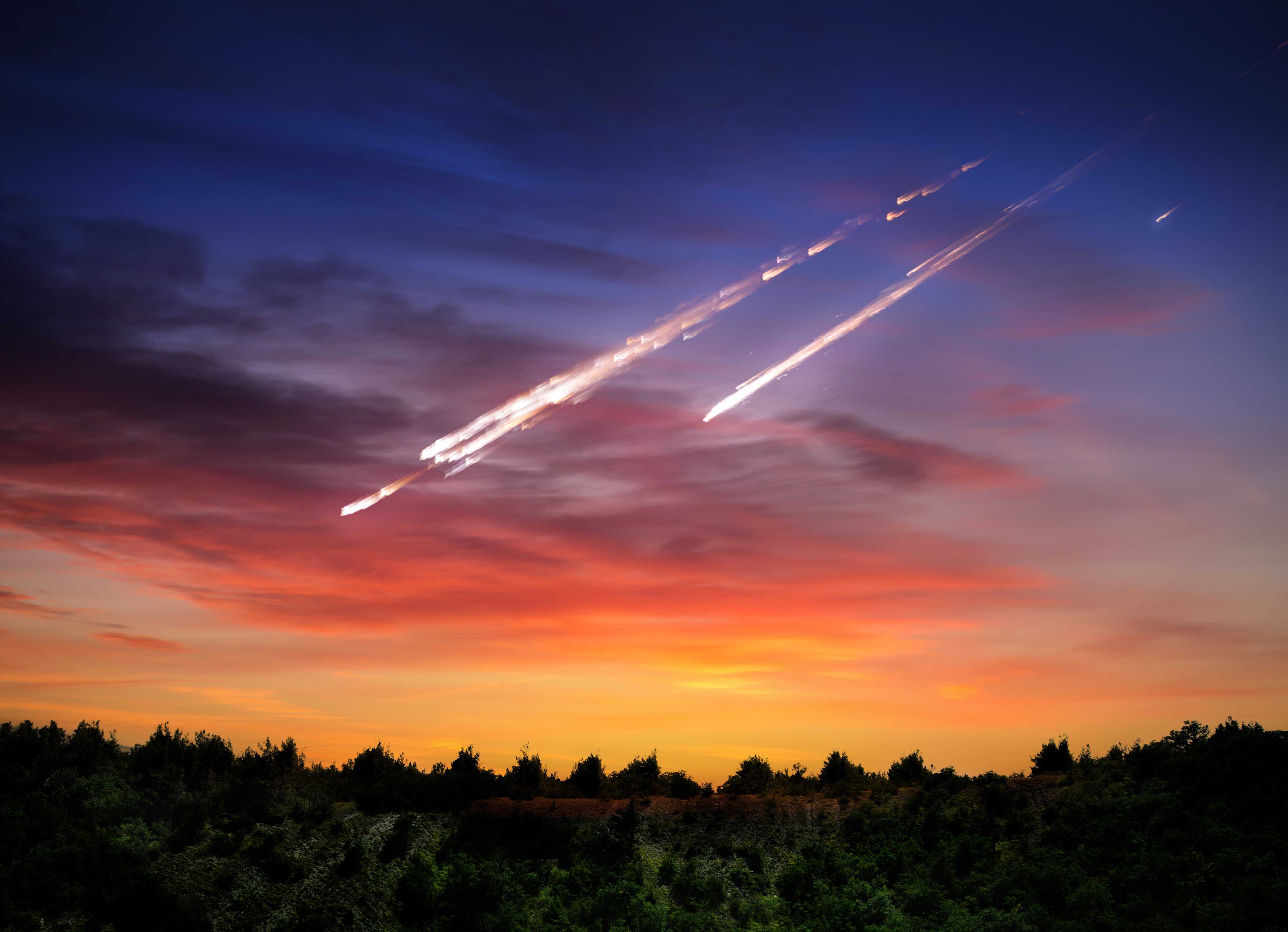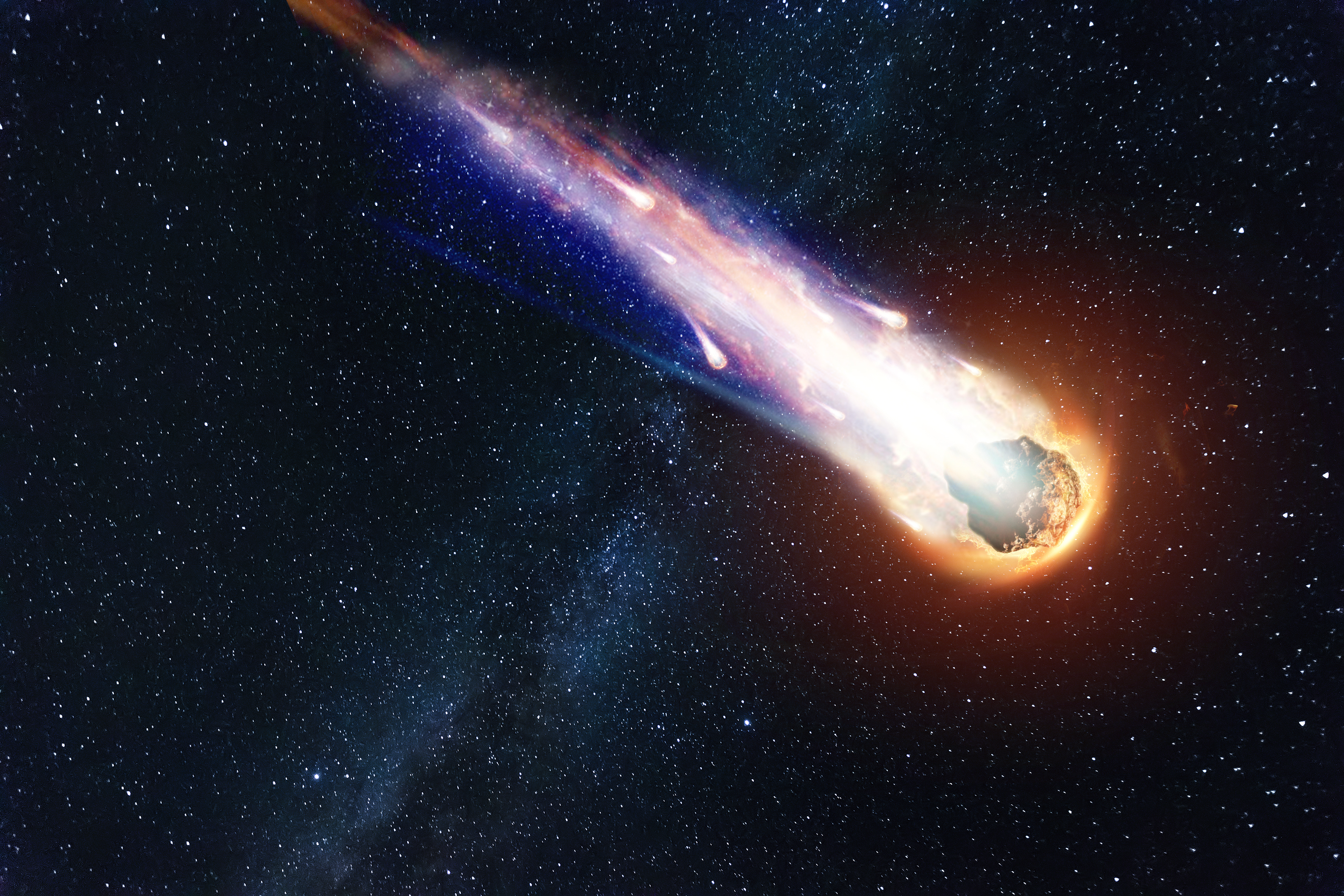
An asteroid about the size of a fridge was spotted hours before it hit Earth's atmosphere in March this year.
If you've ever heard about how an asteroid ended the age of dinosaurs 66 million years ago, this news might seem worrying.
Luckily for us, it wasn't dangerous, and this was the fifth time in history an asteroid was seen before hitting our planet. Let's learn about these rocky space objects.
Asteroids revolve around the sun but are too small to be called planets. When our solar system was formed about 4.6 billion years ago, asteroids were made from dust that collided. Some even crashed slowly into other asteroids and merged into one.
Some 66 million years ago, a 10km-wide asteroid called Chicxulub crashed into the sea near Mexico. It caused a giant tsunami, earthquakes and wildfires that were powerful and destructive.
The asteroid's impact threw lots of soot into the atmosphere, blocking sunlight. This sent the planet into a long, cold winter. This didn't just destroy the dinosaurs. It killed more than three-quarters of Earth's species.
Is anyone doing something to protect us from an asteroid apocalypse?
Hundreds of years from now, there is a chance that an asteroid called Bennu could slam into Earth. But Bennu is much smaller than the asteroid that killed the dinosaurs, and it is unlikely that it will hit our planet.
Nevertheless, to prepare for dangerous asteroids, Nasa is testing its first planet defence system. It's called Double Asteroid Redirection Test (DART). Its goal is to find out whether crashing a spacecraft into an asteroid could change its direction.
Nasa launched the DART system last year, and it will hit a small asteroid the size of a football stadium soon... either next month or in October.
Five things to know
1. In the story, we mentioned Nasa. This is an American science organisation that explores space.
2. Nasa became famous in 1969, when it sent the very first astronauts to walk on the moon.
3. The International Space Station is a large satellite that astronauts can live in for months at a time.
4. People living in the space station have a strange life. It takes them only 90 minutes to orbit the Earth, so the sun looks as if it is rising and setting 16 times a day! They have to sleep in sleeping bags that are stuck to the wall. They must strap themselves inside so they will not float around.
5. Other countries that explore space include Russia, China, Europe, Japan, Brazil and Canada.