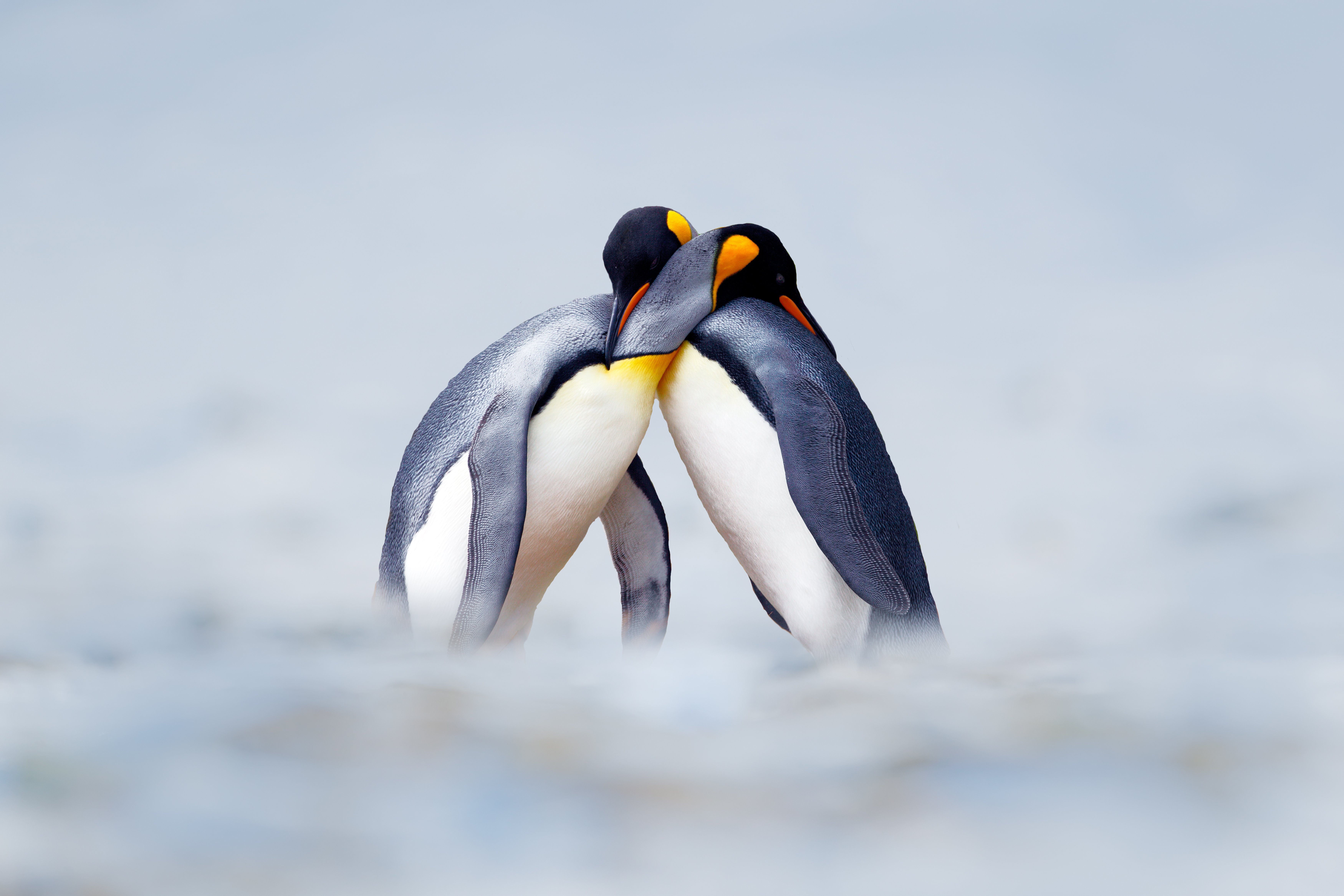
The evolution of penguins is one of the wonders of the animal kingdom. Once upon a time, they could fly. So how did they evolve from flying birds into the flightless penguins of today? And why did they change from living on land to living in the sea?

Scientists have recently found out more information. They looked back to the origin of penguins more than 60 million years ago. They wanted to find out how penguins can see underwater, and how they can dive for so long.

The scientists looked at the DNA of the 20 living penguin species. DNA is called "the building blocks of life" because it holds all the information about a living thing.

All of today's penguins evolved from one ancient ancestor. Penguins first evolved the ability to dive under the water, and then they lost the ability to fly. They adapted to an ocean life, becoming excellent swimmers and divers.

"To me, penguins are a perfect example of a major evolutionary change, like the evolution of flight by bats," says palaeontologist Daniel Ksepka. "We know penguins evolved from flying birds, but that happened over 60 million years ago. We need to look at fossils to work out where, when and how that happened."

Why is Daniel interested in penguins?

"Penguins are ridiculously charming creatures," he says. "They love, they fight, they steal. And because of their funny upright posture, it's really easy to imagine them having the same thinking as people."

Penguins live mainly in the Southern Hemisphere, in cold places like Antarctica. The Galapagos penguin is the only one that lives north of the equator.

Penguins were once much larger than they are today. One species, Kumimanu biceae, that lived in New Zealand about 58 million years ago, stood about 1.8 metres tall. The largest penguin today, the emperor penguin, is about 1 metre tall.