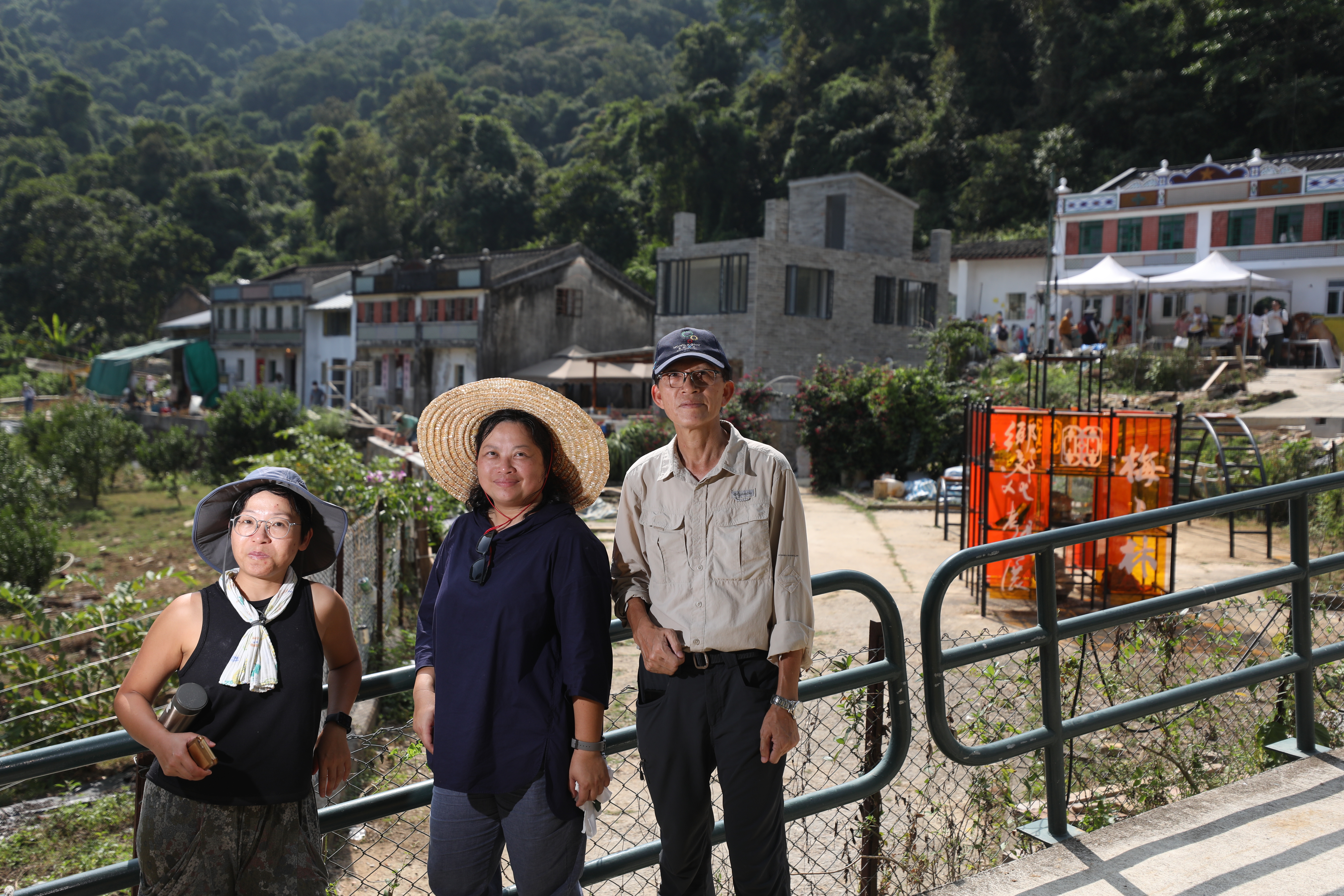
Nestled on a hill in the northeast New Territories is a Hakka village with 400 years of history. For retired teacher Tsang Yuk-on, his heart has always called this place home.
Born and raised in Mui Tsz Lam in the 1950s, Tsang has memories of his idyllic childhood far from the bustle of the city.
It was home to more than 100 residents in its heyday. But the village's poor location and the decline in local farming pushed many people to move overseas or to the city in the 1970s. When the last family left in 1980, the place became a ghost town.
After more than two decades away from his village, Tsang quit his job in the city in 2001.
"I thought: is there anything different that I can do in my life?" he says. He decided to bring Mui Tsz Lam back to life.
For help, he contacted the Countryside Conservation Office. The government set up this office to start conservation projects in remote villages. Stephen Tang, head of the office, says: "There is a lot of ecological and architectural value in Hong Kong's rural villages. By conserving the countryside, Hongkongers can relieve their stress from city life."
Mui Tsz Lam had become part of the jungle, and many ancestral houses had fallen down.
"As the path was blocked by trees, it was hard to get in and tidy up," Tsang says. "I hope the facilities in the village can be shared with others, getting more people to experience the tranquil country life and Hakka culture."
Difficult to reach
There are only a few ways to get into Mui Tsz Lam. One way is a 90-minute ferry ride to Lai Chi Wo from Ma Liu Shui, and then a 40-minute hike. Another way is to hike from Wu Kau Tang near Tai Po or Luk Keng near Fanling – each route takes about two hours.
Four projects are taking place in the village. Patsy Cheng, the curator of one project, has spent two years with 40 volunteers to investigate its history. When they first arrived, they found many artefacts scattered on the ground.
"We started unearthing the relics from the deserted houses, recording their usage to understand more about the place," Patsy says. Her team found 618 antiques.
However, they found few written records of the place. Therefore, she invited former villagers to tell their life stories and hold traditional Hakka celebrations.
Last month, Patsy's team published a book, Story of Mui Tsz Lam, and held an exhibition in the village.
A village campsite
Some former residents and their descendants have returned to visit. Among them is Tsang Kwok-keung. After moving out in 1967 and living in Ireland for decades, he returned to Hong Kong for his retirement. "After all, it's my home," he says. "It's good to see many volunteers help rebuild the village. I hope people can live here again."
Tsang Yuk-on plans to open a campsite at Mui Tsz Lam. "I hope people will come not just to stay overnight, but also to get a taste of the village's history and culture," he says.
Fun facts
Hong Kong has 642 rural villages and two-thirds of them are of Hakka heritage. About two million Hakka people are living in Hong Kong!
Quick questions
- What is the easiest way to get to Mui Tsz Lam?
- Why did people leave the village in the 1970s?
- What kind of antique items do you think Patsy's team found?