Parrots are famous for their ability to copy human voices and make a lot of other sounds. But there are 372 different parrots, and not all of them speak.
They come in all sizes and colours, from the brilliant macaws to the little budgerigars and the clever African grey.
They are popular pets, but be warned. They make a lot of noise and live for a very long time. And before you buy one, make sure it was not caught in the wild, which harms wildlife.
Meet the kea
New Zealand is very far away from other lands. It has a lot of interesting animals that cannot be found in other places.
Most parrots live in warm tropical climates, but New Zealand's keas are the only parrots to live in a cold alpine climate.
Keas are known for their intelligence and curiosity. They hang out near ski slopes, and tourists love them. They love tourists, too, because they soon learned that tourists would feed them. They have no problem eating bread and snacks that other parrots would not be able to eat.
They can be quite nosy, looking in people's backpacks or boots. They even damage cars when they try to look at the rubber around the windows. Sometimes, they fly away with people's belongings – one even snatched a poor tourist's passport!
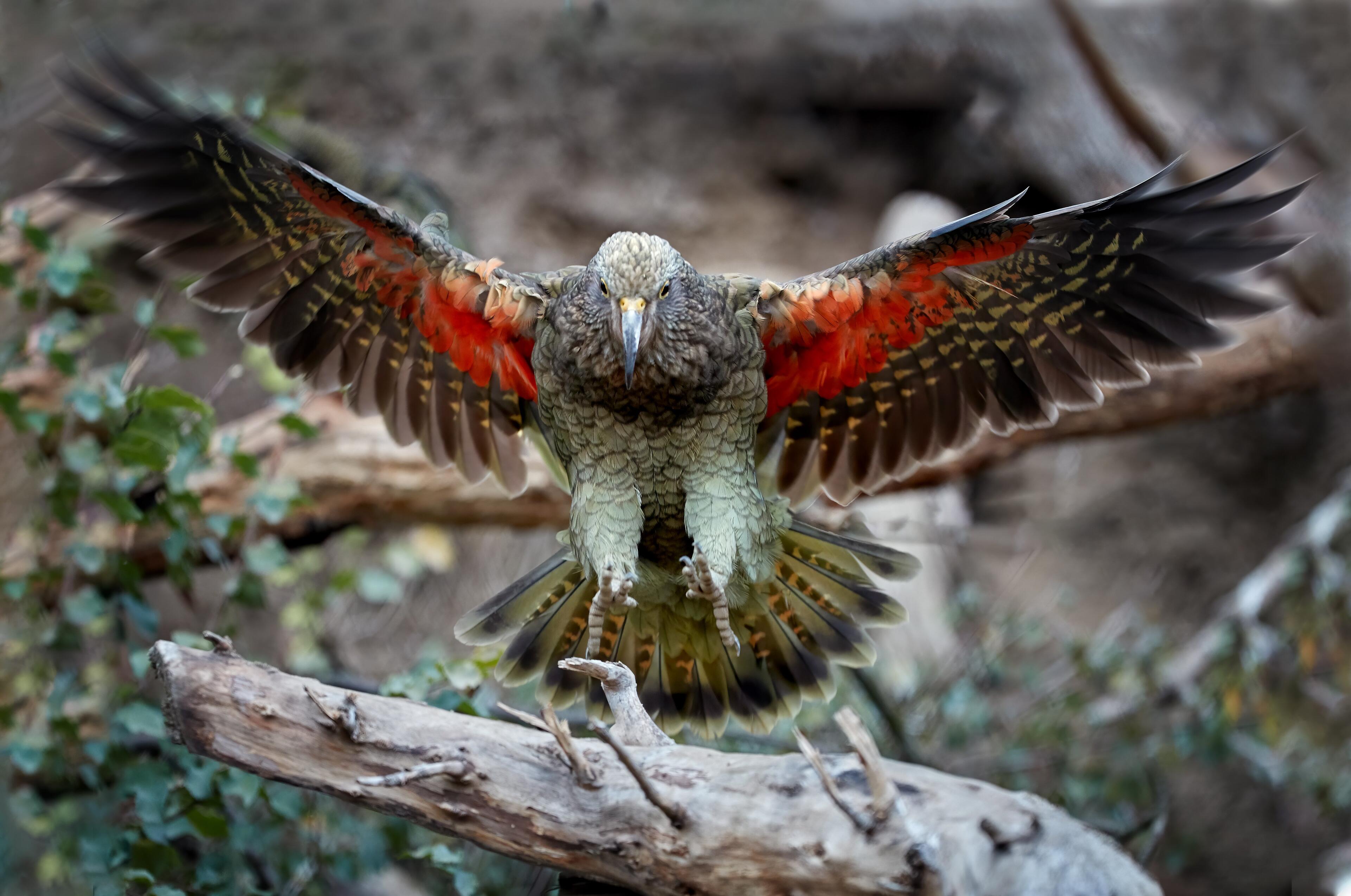
At first, you might not realise that keas are, in fact, parrots. When they're walking around, their outer feathers are a boring olive colour. But when they open up their wings and fly, they show off a burst of bright orange, almost the same as a tiger's orange fur.
The alpine climate
Imagine a mountain, covered in forest from the ground upwards. And after the trees stop, it's covered in snow. This is the alpine climate.
This is definitely not the warm, lush, tropical areas where most parrots live, but this is where keas live. No berries or plants grow for many months in the winter. So, what do keas eat?
Scientists believe they eat lichen, like many animals that live in alpine regions. It is that grey-green stuff we sometimes see growing on rocks. But that's not the only thing that they eat.
Along with the lichen, keas will eat a few beetle larvae, rubbish, or whatever tourists might give them.
And they are smart. They know that if a tourist doesn't hand over food, even after keas have bugged them, the food might have been left in the car.
This is why they try to get into vehicles. So they're not actually "looking at" car windows – they're trying to break in!
Fun facts
New Zealand has two main islands, the North Island and South Island. The islands were created by volcanic action millions of years ago. There are still over 50 volcanoes there today.
Quick questions
- What family do keas belong to?
- Which other countries have an alpine climate?
- What activity are the tourists doing in New Zealand?