Difficulty: Summiteer (Level 3)
Did you know that even poop, or faeces, can have a purpose beyond just being smelly waste? It can be transformed into something useful!
Hong Kong’s Ocean Park made history last month by hosting the world’s largest animal faeces papermaking lesson, using the faeces from adorable giant pandas.
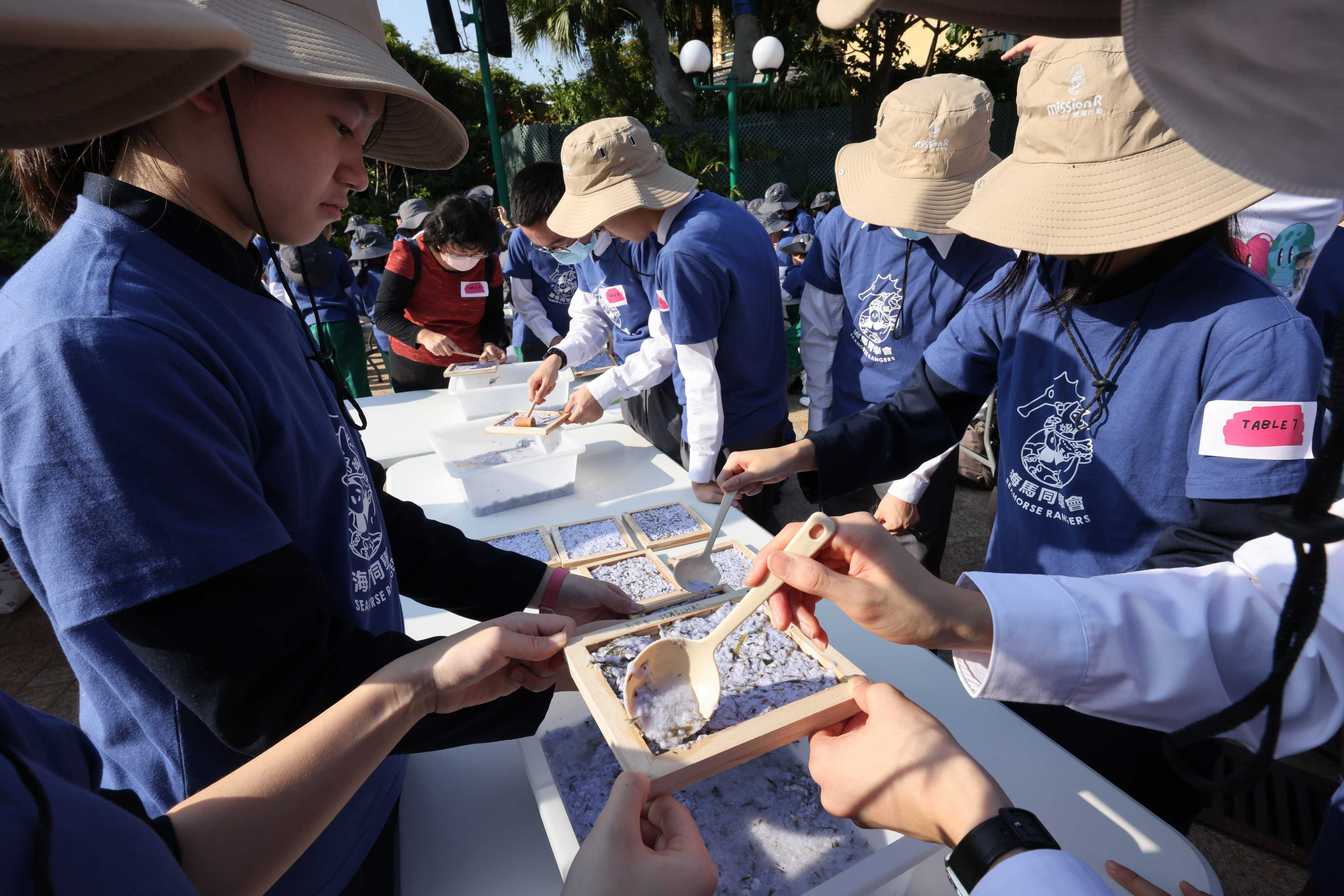
During the lesson, 369 students of various ages, from kindergarten to secondary school, took part. They carefully placed a mixture of giant panda faeces and pulp onto a wire screen. Then, they used a hammer to flatten the mixture before allowing it to dry in the sunlight. After the mixture is properly dry, it can be used as recycled paper!
The workshop set a new Guinness World Record for the “largest animal faeces papermaking lesson”.
One student, 11-year-old Trista Wing Tung-chung from Sau Mau Ping Catholic Primary School, was sceptical about the lesson at first. However, it turned out to be a lot of fun.
“I have never seen panda faeces before, and I thought it would be smelly. But surprisingly, it has a unique bamboo fragrance,” said the Primary Six student. It was her first attempt at making recycled paper.
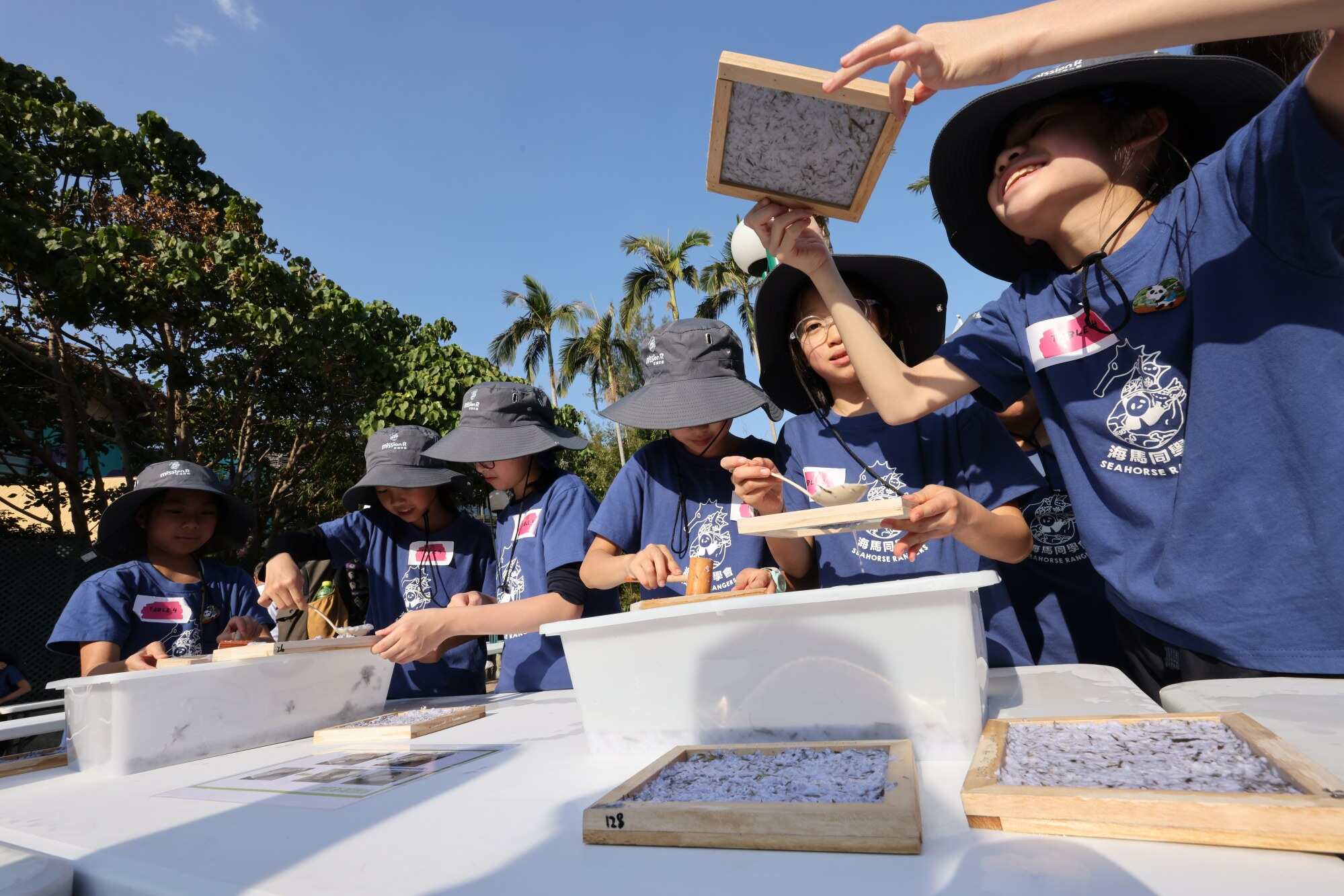
“The workshop has raised my environmental awareness by showing me how to transform trash into treasure.”
Trista and her peers have decided to use their paper to make thank-you cards for their favourite teacher. They plan to give them to her on graduation day.
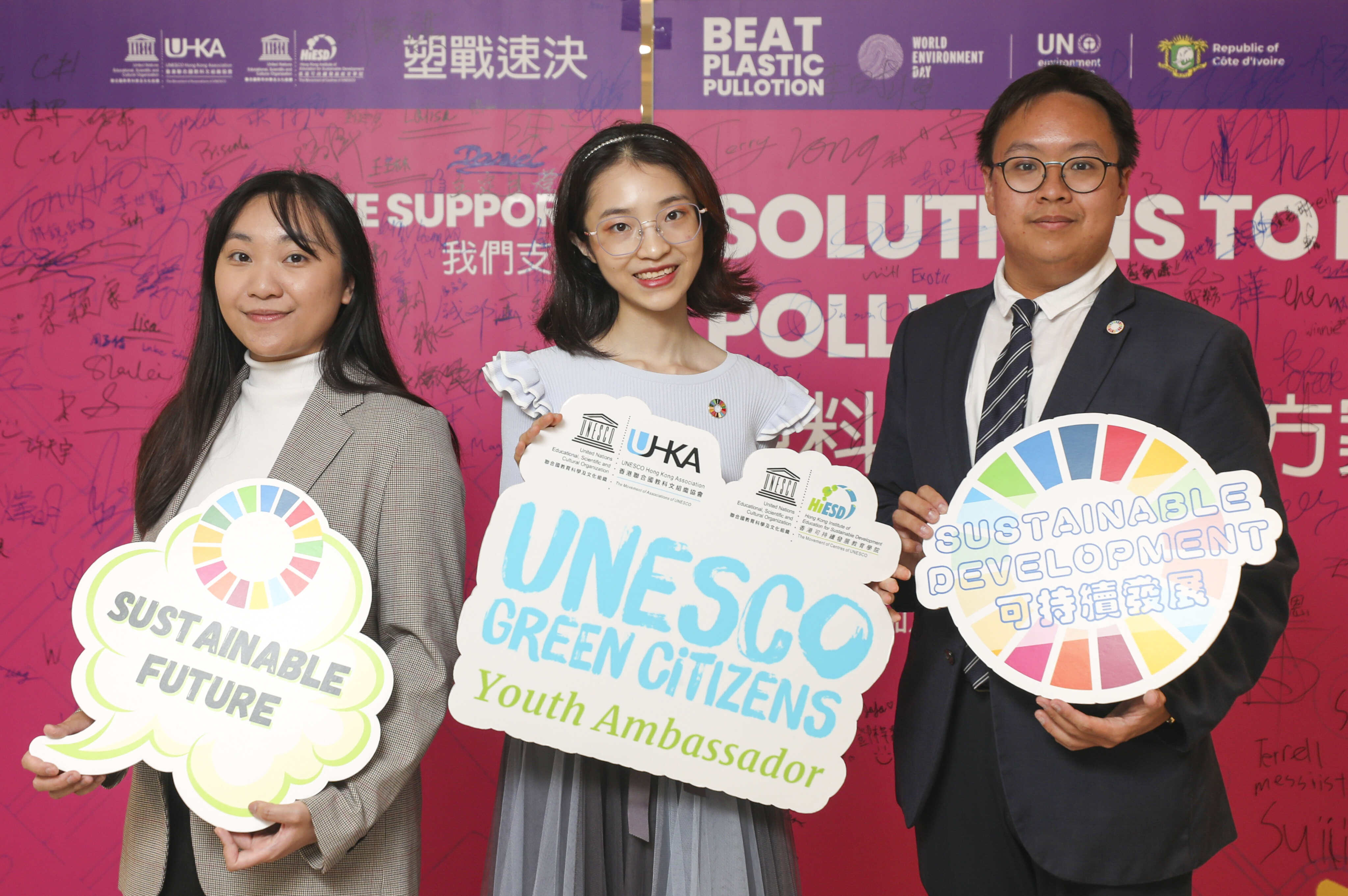
The chairman of Ocean Park, Paulo Pong, said the park hopes to empower students to become conservation advocates.
“We hope to drive changes with creativity by gathering ideas and strengths from different parties. By engaging in small acts in our daily lives, we can work towards reversing biodiversity loss,” he said at the launch ceremony.
To achieve this vision, the programme provides students with hands-on experience in animal science and research methods. It also includes a free pass to the park for the school year and various self-learning materials.
Find the words in the puzzle below to test your understanding of the vocabulary in this story.
Suggested answers
-
Quick question: Yes, using panda faeces to make paper changes how we see waste. It shows us that we can turn almost anything into something new.
-
Read and answer: They are turning poop, which is usually seen as trash, into something useful, paper.
-
Think about it: Volunteering at a local wildlife centre, reducing your own waste at school and home, and educating others about environmental issues.