In the past, people in Japan and other parts of the world collected human poop and used it to make fertiliser for growing plants. Shimogoe is a Japanese word that translates to “fertiliser from a person’s bottom”.
But when sewage systems and chemical fertilisers were invented, shimogoe became less common. Then, about 10 years ago, Japanese sewage treatment plants were looking to save money and protect the environment, so they decided to try shimogoe again.
Tome is a city in northern Japan that started producing this fertiliser in 2010, and it became so popular that it was sold out earlier this year.
“Our fertiliser is popular because it is cheap, and it is helping farmers cut soaring costs,” said Toshiaki Kato, the vice-president of a shimogoe facility in Tome. He added: “It is also good for the environment.”
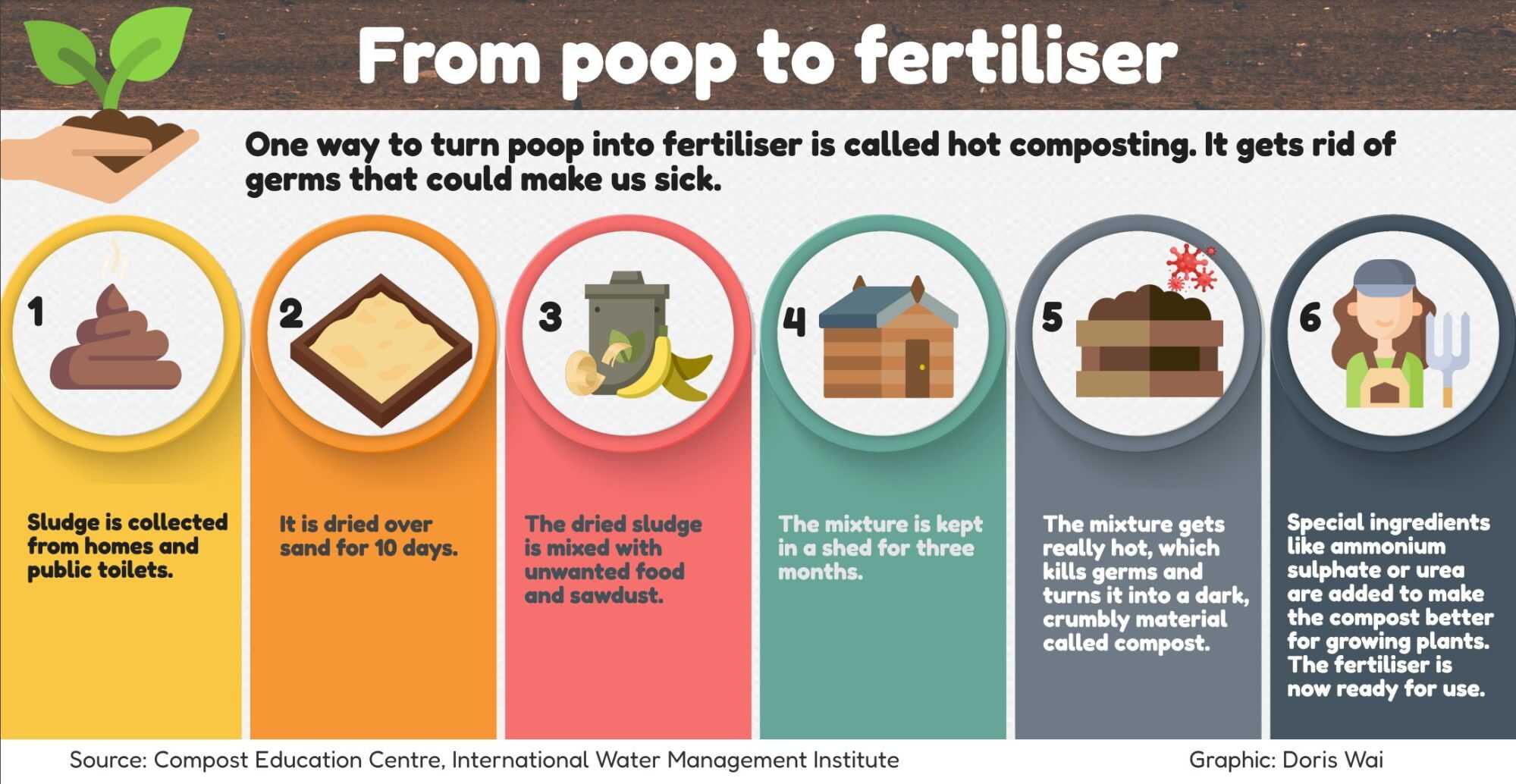
The fertiliser is made from treated sewage sludge (see graphic), and it costs 160 yen (HK$8) for 15 kilograms. This is much cheaper than fertilisers made from ingredients that must be shipped from other countries.
But its smell is a problem for farmers. Nobuyoshi Fujiwara, who has a lettuce farm, started using shimogoe last year to reduce costs, but he hopes more people learn about what it is.
“We can’t use it in fields near houses because there are complaints about the smell,” the farmer explained. “Even though we produce safe food ... the impressions people have of fertiliser made from human faeces might not be good.”