Difficulty: Summiteer (Level 3)
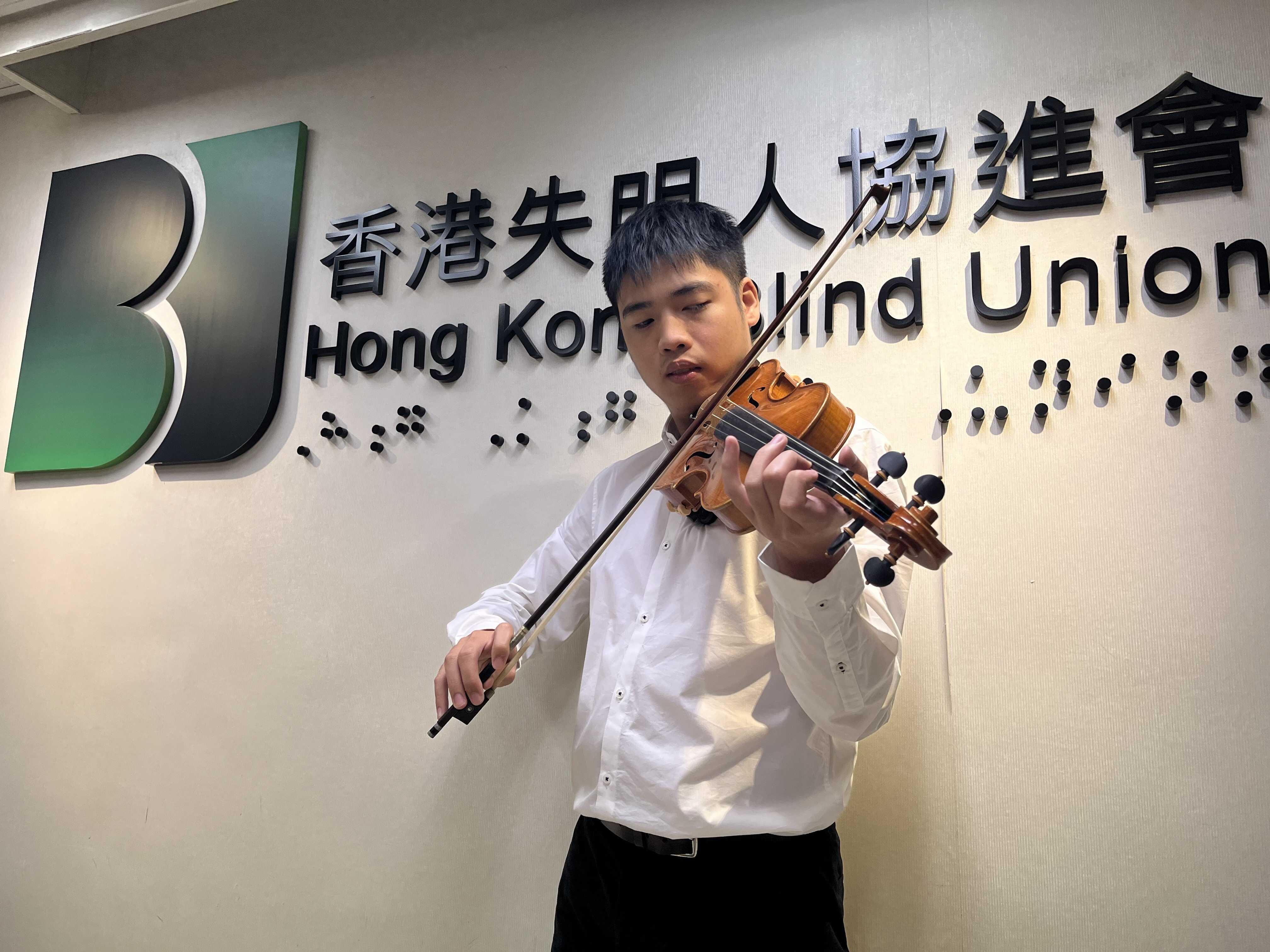
Hongkonger Gideon Tse Lok-pin has loved music from a young age. His journey began at the age of eight when he joined his first group piano class. Later, it was Pablo de Sarasate’s “Carmen Fantasy” that sparked his interest in the violin.
But pursuing music was not easy for Tse. Mastering a song could take two months, and he could only finish half of a music exam in one sitting. This is because Tse has only 10 per cent vision.
“For piano, the keys were a blur, and I am very slow at sight-reading,” the 23-year-old said. “Learning a new piece took me a long time. Even then, my performance was far from satisfactory.”
At 15, Tse made the difficult decision to step back from music and leave secondary school. He spent two years looking for a job. During this time, he tried many different things, like tuning pianos, arranging flowers, and even performing magic tricks.
“But I soon realised these paths were not for me,” he said.
In 2018, Tse went to the Hong Kong Blind Union (HKBU) for career support. Through this organisation, he rediscovered his love for music and decided to pursue his violin examinations once more.
Over the next three years, he achieved Grade Eight, the highest level in the exam system. He also set his sights on becoming a music teacher for visually impaired children.
Now, Tse works as a music teacher at the union.
What is the Hong Kong Blind Union?
Established in 1964, the HKBU is celebrating its 60th anniversary this year. It is the city’s first organisation led by the visually impaired. The union originally focused on helping visually impaired students transition to mainstream secondary schools. Its services also include English tutorials and training people to use visual aids.
One of its programmes provides training and internships for jobs such as online show hosts and post-production assistants.
Refreshing career choices
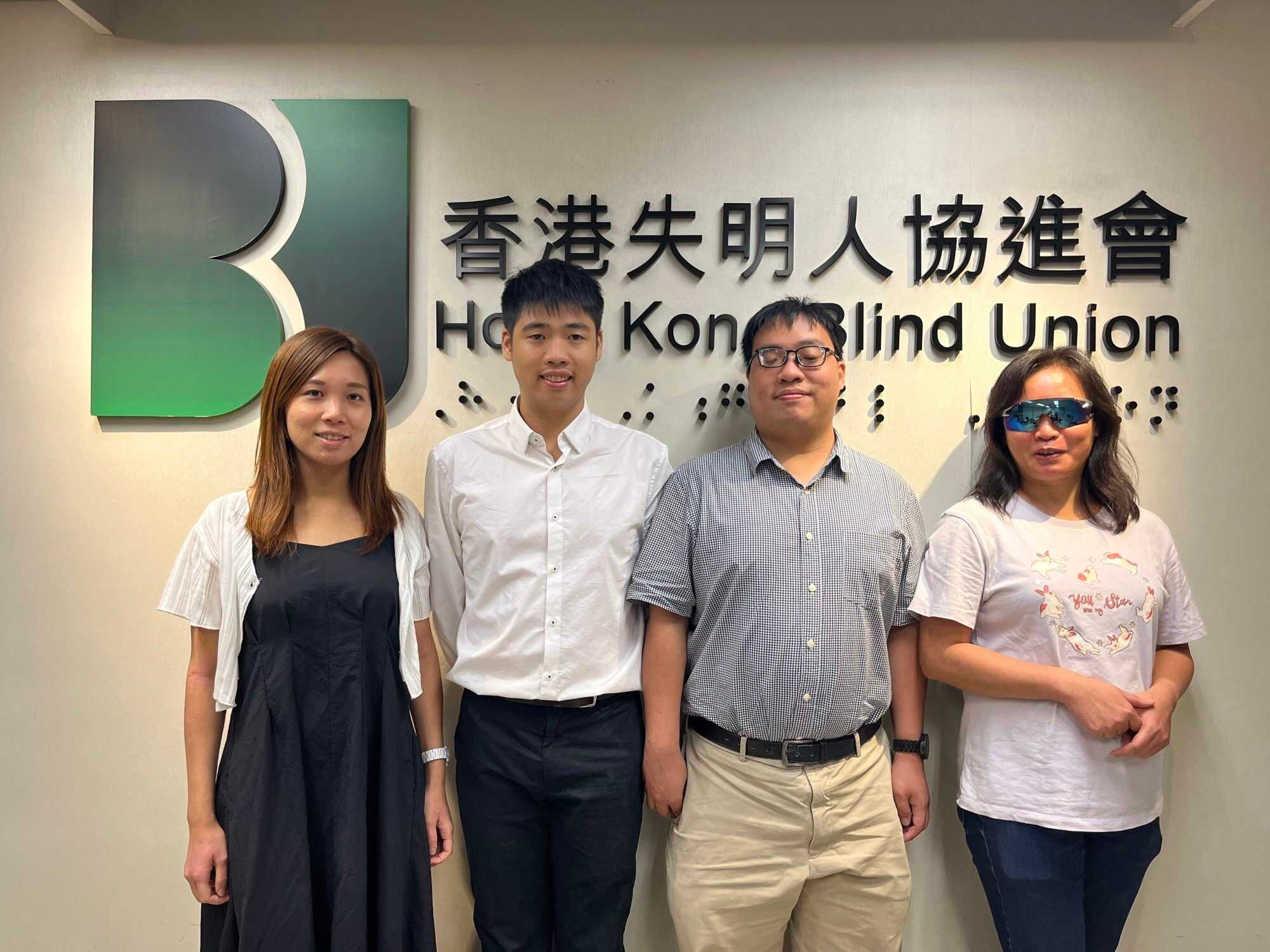
Peter Yim Chun-on, 30, is a teaching assistant at a local secondary school and serves on the HKBU committee that offers job interview training for visually impaired youth.
Before his current role, Yim worked different part-time jobs, from collecting trays at McDonald’s to data entry for a local NGO.
“We relied on the union for resources like amplifiers to help with text reading,” he said. This type of equipment enlarges text to improve readability.
Yim said that Hong Kong’s work environment needed to be more inclusive of people with visual impairments. His goal is to spread the message that the visually impaired can be good employees if companies support their needs.
Yim also hoped to change people’s beliefs that the visually impaired could only do certain jobs.
“In recent years, new jobs available to the blind are emerging,” he said. “What matters is that employers are willing to communicate with us and would make an effort to assist.”
Sample answers
-
Stop and think: HKBU prepares students who are making the transition into traditional secondary schools by way of training people to use visual aids and other tutorials. It also helps people enter the workforce through interview training and assists them in finding internships and jobs in various fields.
-
Read and answer: Because of Tse’ visual impairment, the keys were blurry and sight-reading was a struggle. This meant that it took a long time to learn and master a song.
-
Consider: Yim thinks that Hong Kong is not inclusive of visually impaired people and that businesses should be more aware and supportive of their visually impaired employees. He wants correct the misbelief that visually impaired people can only pursue certain careers.