Difficulty: Challenger (Level 2)
Tsim Sha Tsui is known for its busy crowds, delicious food, and beautiful harbour view. But its history as a hub for Hong Kong’s suit tailor shops goes beyond that.
Many of these shops are family-run and have been passed down through the generations. A significant number came from India, and their businesses were established in the city in the 1950s and 1960s.
History of Raja Fashions
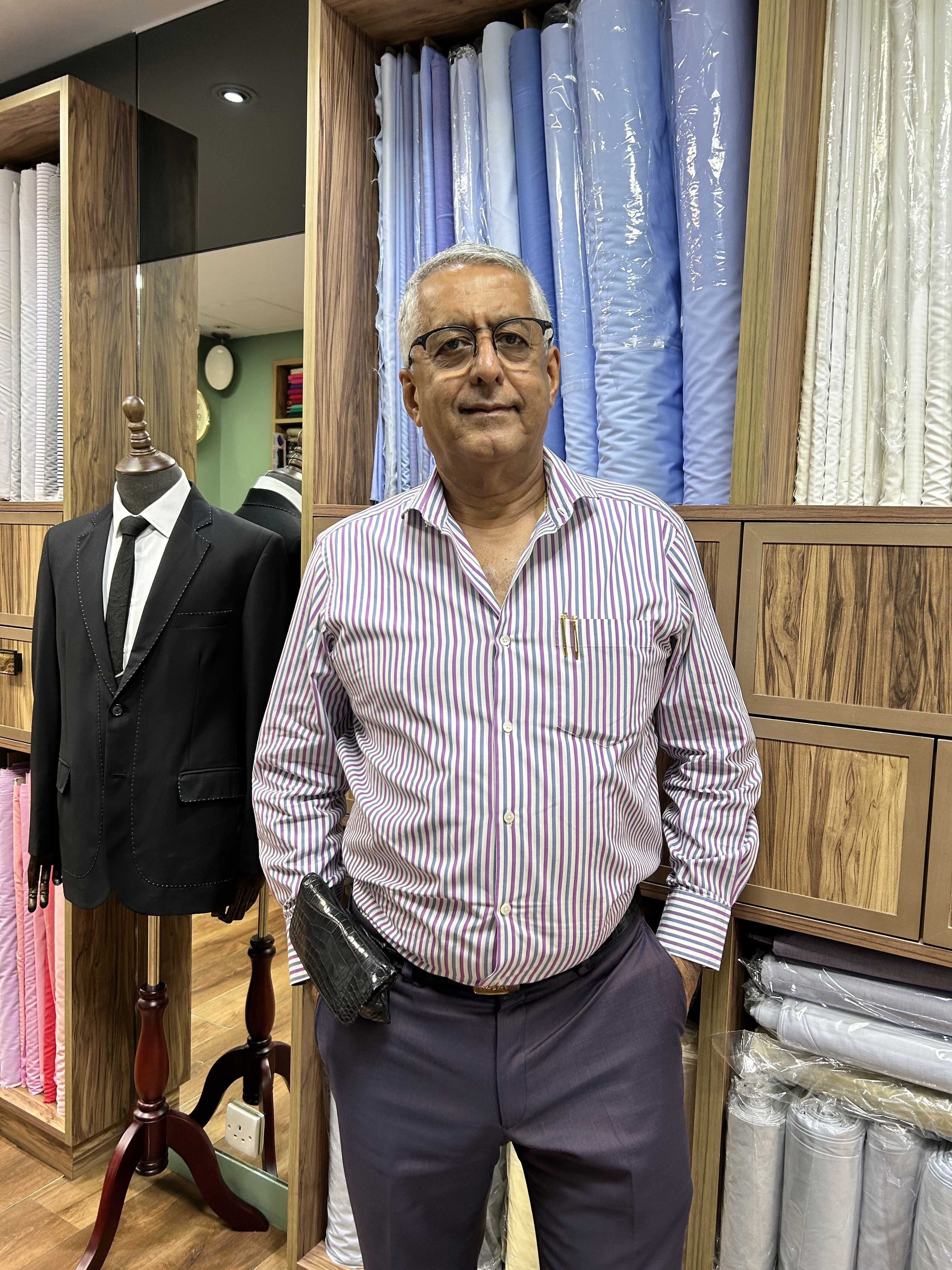
“Our business has grown because we have put in a lot of effort and a lot of love into it, and we serve a lot of people,” said 65-year-old Raja Daswani, who runs Raja Fashions.
Raja’s family immigrated to Hong Kong from Pune, India, in the early 1950s. His grandfather started the business in 1957. Raja is the third generation to run the business. Raja said his family opened a tailoring shop because they already “had a good understanding of clothing”.
“The British military was in Hong Kong, and they needed a lot of clothes,” Raja said. “We had a lot of British personnel and expats from the UK coming to trade with China then. There was a big demand because things were very expensive in the UK and not so expensive in Hong Kong.”
Over the years, the shop passed from his grandfather to his father to Raja.
“I started very young – at the age of 16, I took over,” he said. “At 18, I became a boss because my father became sick ... I was managing everything.”
The next generation
Now, Raja’s children are also involved. His son, 29-year-old Prashant Daswani, initially planned to work in science. But a part-time job at a men’s suit store in the United States changed his mind.
“I enjoyed the family business a little bit more,” said Prashant.
Along with his older brother, Prashant helped update the shop and handle the company’s social media pages and online newsletters.
Of course, working with family can “make it 10 times more complicated”, Prashant said, adding that he would sometimes get into disagreements with his father and older brother.
“But they’re also family; they’re family before [anything],” he explained.
Running the shop can feel very personal, not just because he is working with family but also because of the nature of the business.
“It’s all handmade, and mistakes happen. I get heartbroken when a customer or client I look up to does not like my product,” Prashant shared.
“But then you also get the opposite side of the spectrum, where you get heart-warming messages, and they really appreciate your service and the value you provide.”
Use the puzzle below to test your knowledge of the vocabulary words in the story.
Suggested answers
-
Stop and think: How did Raja come to take over the business? Raja started learning the trade as a child, and eventually started working at the shop. He took over the business as a teenager when his father became ill.
-
Consider: When Raja Fashions opened in the 1950s, why were suit tailor shops so profitable at the time? At the time, there was a high demand for suits because the British military were in Hong Kong. The labour costs were cheaper in Hong Kong compared to the United Kingdom, so people preferred to get clothes in Hong Kong. This gave suit tailor shops a lot of business.
-
Answer this: According to Prashant’s experience, what are some downsides to working in this business? Prashant says that working with the family makes things complex, and he and his brother and father get into arguments. Also, Prashant feels devastated if a client is unhappy with his work.