Difficulty: Summiteer (Level 3)
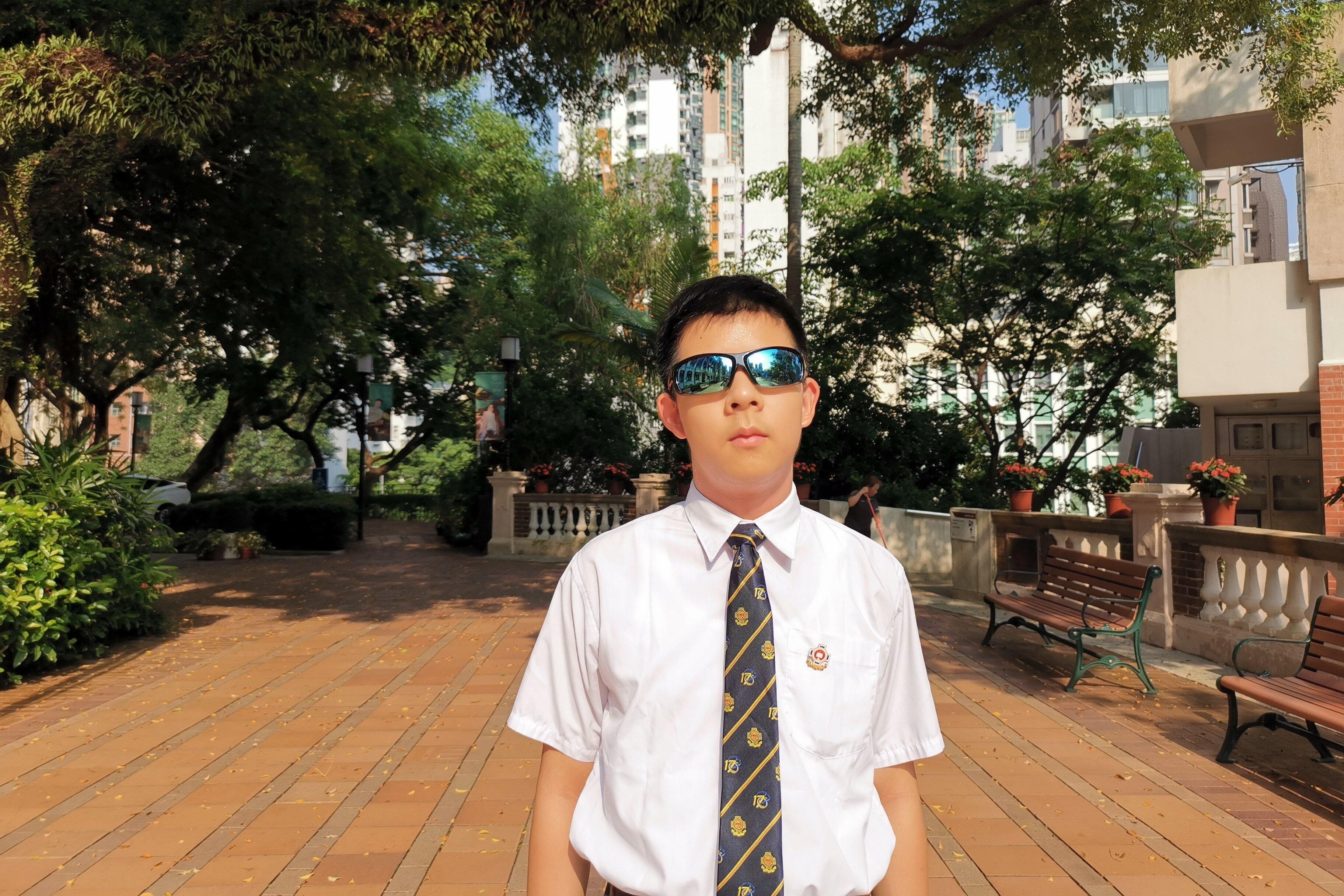
Zheng Zi’s life changed in 2022 when his vision rapidly worsened.
“I was born with an eye condition, but I was able to live normally,” said the St Paul’s College student, now aged 16.
But he noticed a sudden change during a debate competition when he could no longer see his speech clearly.
The Hongkonger was diagnosed with retinal detachment, in which part of the eye pulls away from its normal position. He underwent two operations, but the second failed and left him almost fully blind. Returning to school was a daunting experience.
“I realised I was completely unprepared for life without vision,” he said.
Overcoming vision loss
He remembers having to find his way to his seat on his first day back at school and the confusion he felt.
“I could only listen to the teacher, completely unable to see what was written on the blackboard,” he said.
At first, Zheng struggled to accept what had happened.
“I was shocked and confused for the first month ... I was resistant to rehabilitation training because I didn’t want to accept that I had lost my vision,” the student said.
But his family and teachers helped him to adjust.
“After some time ... I realised I needed to plan for my life and studies after losing my vision. So I decided to ... start working hard to live a mature life.”
Zheng said he initially struggled to learn how to use Braille, a system of raised dots that visually impaired people can read with their fingers.
“[It was] extremely challenging ... often practising until late at night before resting,” he said. “My fingers frequently got sore from the Braille, but I had to keep going.”
Tech innovation
The experience led him to develop an app to help other visually impaired students learn mathematics.
Zheng said he was inspired to develop the app as he was the first student in the city to use Braille to study the mathematics extended part module 2 for the Diploma of Secondary Education. He hopes the app will improve communication between teachers and students.
Zheng said he faced many misunderstandings about his condition and how it affected him.
“Some people think visually impaired people study at a slower pace and ... are less capable than those with normal vision,” he said. “Many prejudices are based on a lack of understanding.”
Zheng decided to learn how to produce videos to show his abilities, and he even started an online channel with a friend. He had to enlarge the computer screen and rely on voice-over software to help him edit videos.
His efforts have not gone unnoticed, with Zheng winning the Best Improvement category at the Student of the Year Awards. These are organised by the South China Morning Post and solely sponsored by the Hong Kong Jockey Club.
Use the puzzle below to test your knowledge of the vocabulary words in the story.
Sample answers
-
Before you read: What challenges do visually impaired students face in school? They need access to Braille resources to help them study and learn alongside their classmates (accept all other reasonable answers)
-
Stop and think: Why did Zhen initially avoid getting rehabilitation? Zheng refused rehabilitation training because he did not want to admit to himself that he had lost his vision.
-
Consider: What actions did Zheng take to help others like him? Zheng developed an app to help visually impaired people learn mathematics, a feat that helped him win the Best Improvement category at Student of the Year Awards.