Difficulty: Summiteer (Level 3)
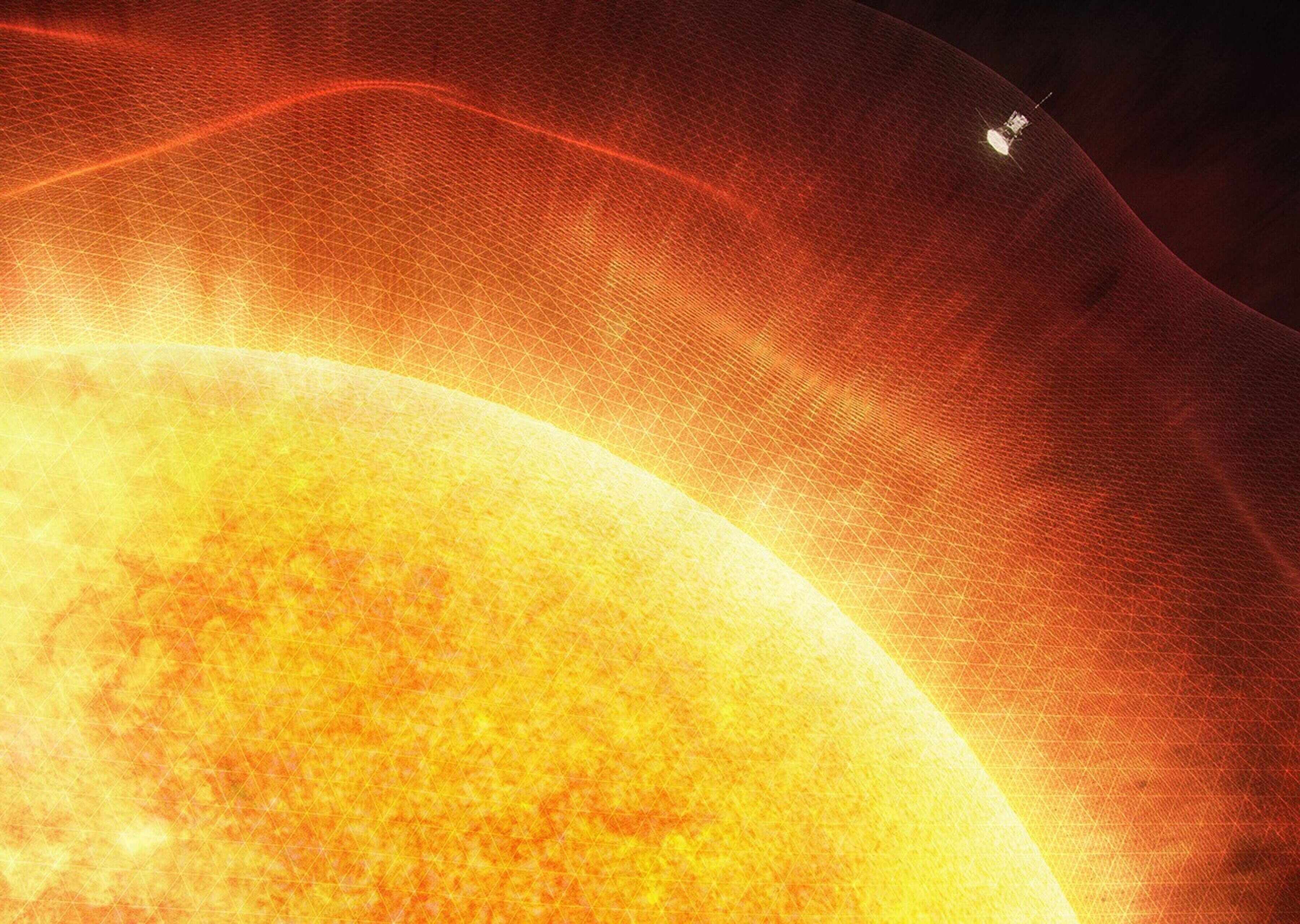
The first thing to form in our solar system was the sun. It was created by a cloud of collapsing gas about 4.5 billion years ago. Then the planets began to emerge.
Billions of particles of gas and dust left over from the sun’s formation became a flattened disk, known as a protoplanetary disk. This disk was enormous and stretched for billions of miles around the sun.
Within the disk, gas and dust particles began to collide, solidify and stick together, like snowflakes clumping into snowballs.
As the particles clung together, the microscopic grains grew into pebble-size objects. Some then became rocks the size of baseballs. Others became as big as a house. A few became as large as a planet. This process is called accretion. It is how everything in the solar system – planets, moons, comets and asteroids – came into being.
Formation order
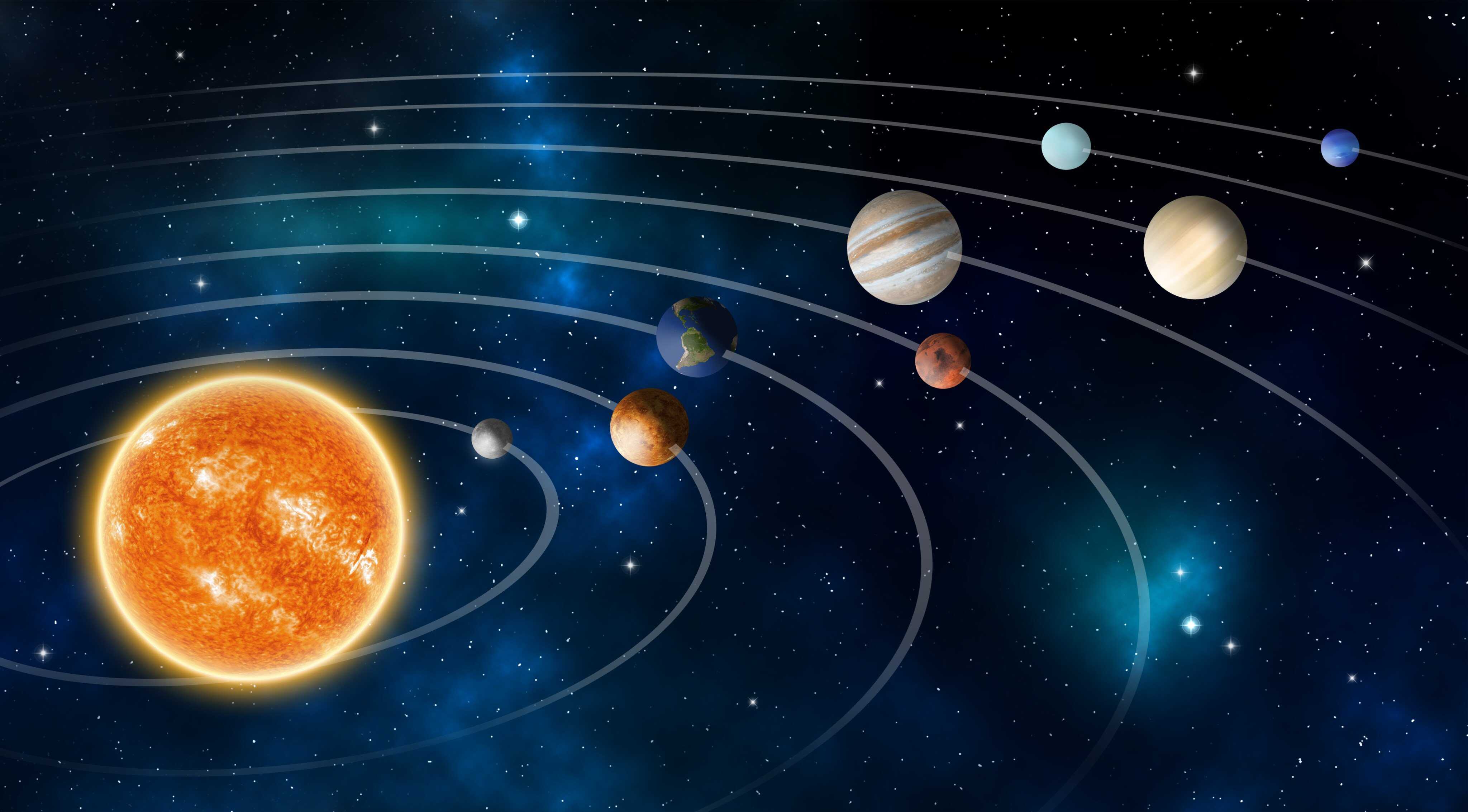
Jupiter and Saturn are the largest planets in our solar system. Today, it is believed they were the first to fully form, both within a few million years.
Uranus and Neptune were next, within 10 million years. The inner planets, including Earth, took at least 100 million years.
The four planets closest to the sun are the youngest. The two planets farthest away are the next youngest. And the two in between are the oldest. The difference in age between the youngest and oldest planets is perhaps 90 million years.
That sounds like an enormous age difference, but in space, 90 million years is not really that long. You can think of Earth as a little sister with a big brother, Jupiter, who is two or three years older.
Location, location, location
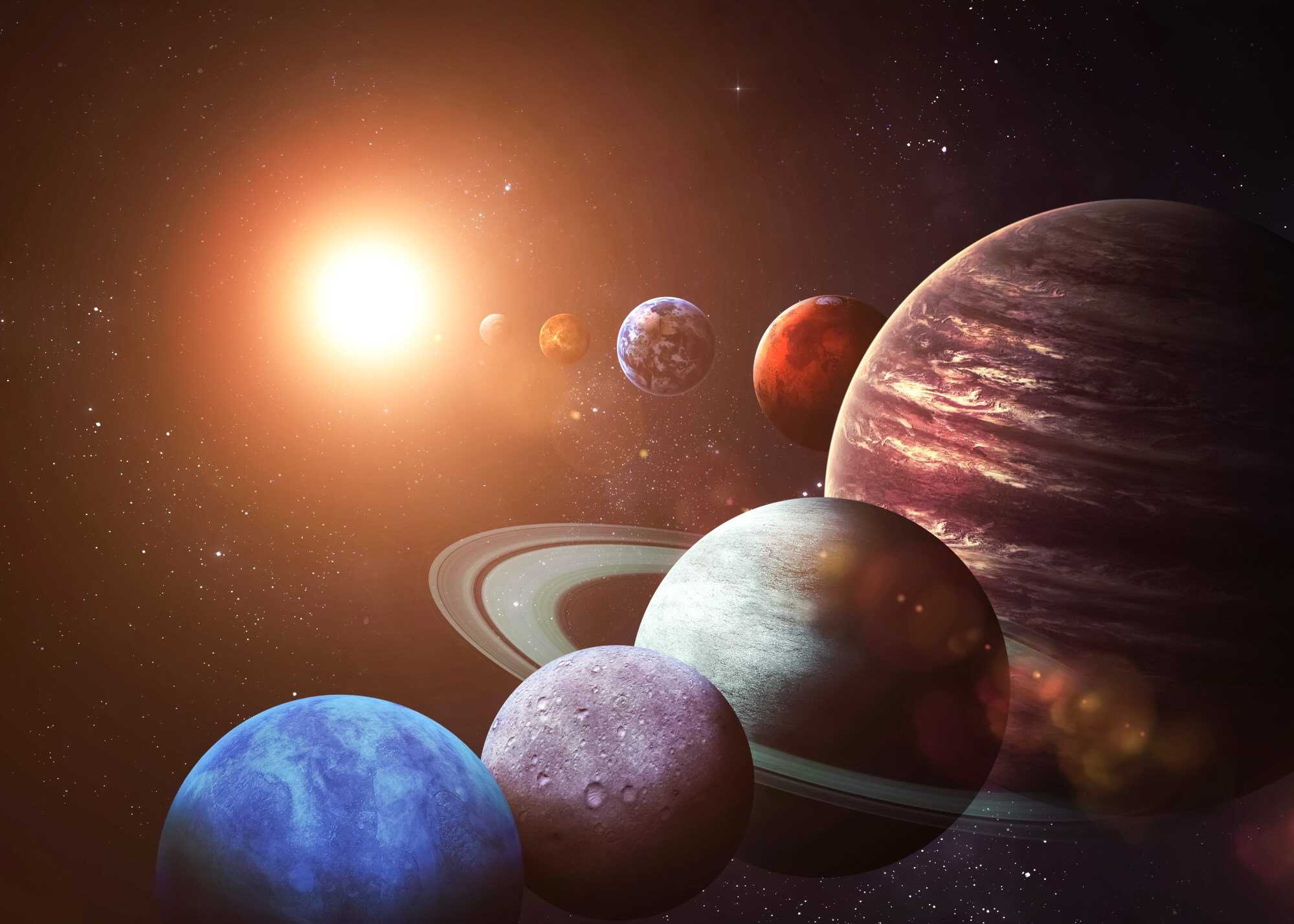
Soon after their formation, Jupiter, Saturn, Uranus and Neptune began migrating. They moved inward towards or outward away from the sun before settling into their final orbits.
Jupiter moved inward. Its massive gravity forced some forming planets into the sun, where they disintegrated. Along the way, Jupiter flung some smaller rocks out of the solar system altogether. The rest went to the asteroid belt.
Most critically, as Jupiter settled into its own orbit, it moved all of the forming objects. This likely finalised the location of the remaining inner planets, including Earth.
All of Jupiter’s tugging helped put our planet in the so-called “Goldilocks zone”, a place just the right distance from the sun, where Earth could have liquid water on its surface and the right temperature for life to evolve.
If Jupiter had not formed the way it did, it is entirely possible life would not have ignited on Earth – and we would not be here today.
This article was first published in The Conversation. It was written by Christopher Palma, a teaching professor of astronomy and astrophysics, and Lucas Brefka, a PhD student. They are both at the Pennsylvania State University in the US.