Difficulty: Challenger (Level 2)
When Gabrielle West was younger, she had a beloved book about the solar system. She would read it often, flipping through the pages with delight.
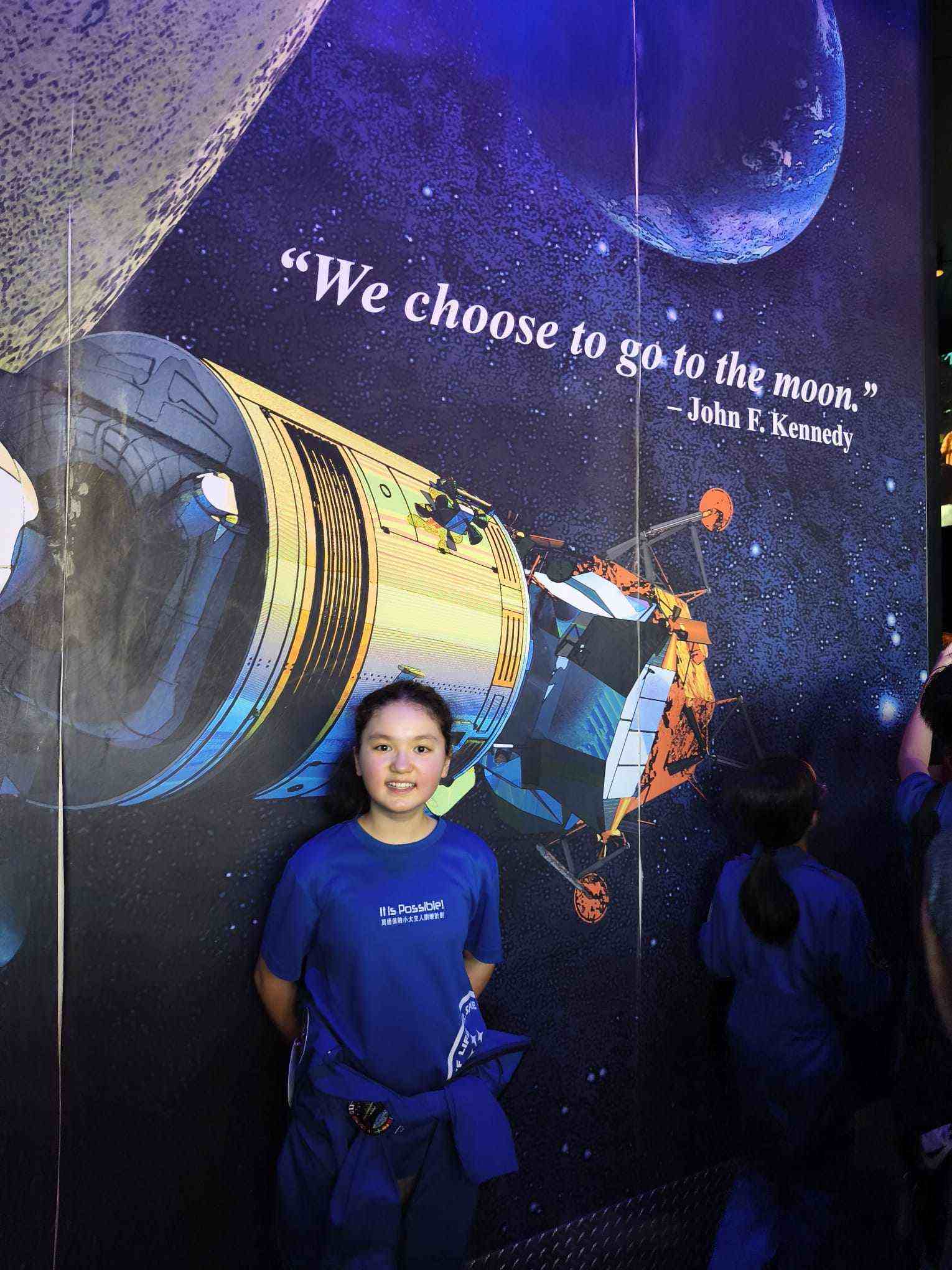
Now, the Hongkonger is 11 years old. Her goal is to be an astronaut doctor.
“I can go to space and help sick or injured astronauts get better,” said the pupil from St Paul’s Convent School. “I can also do some research about how the body can adapt better in space.”
In July, Gabrielle took the first step towards her dream. She trained as a junior astronaut at Nasa sites in the United States through The YF Life Jr Space Camp Programme. The programme was founded in 1999 and is sponsored by YF Life Insurance International. Eight children from Hong Kong and Macau are selected for the programme every year.
Out of this world
Gabrielle was among the lucky few chosen from more than 1,000 applicants this year. They had the chance to visit the US Space & Rocket Centre and the Kennedy Space Centre.
Students tried machines that simulate what it is like to walk on the moon or float in zero gravity. They also attended lectures and built and launched model rockets.
Gabrielle said her favourite part of the experience was the multi-axis trainer. This machine shows what it feels like to be weightless in space.
“I was a bit nervous at first because it was spinning really fast. When [other people] got off, their faces were all red ... [but] it actually wasn’t too bad,” she said.
Astronaut aspirations
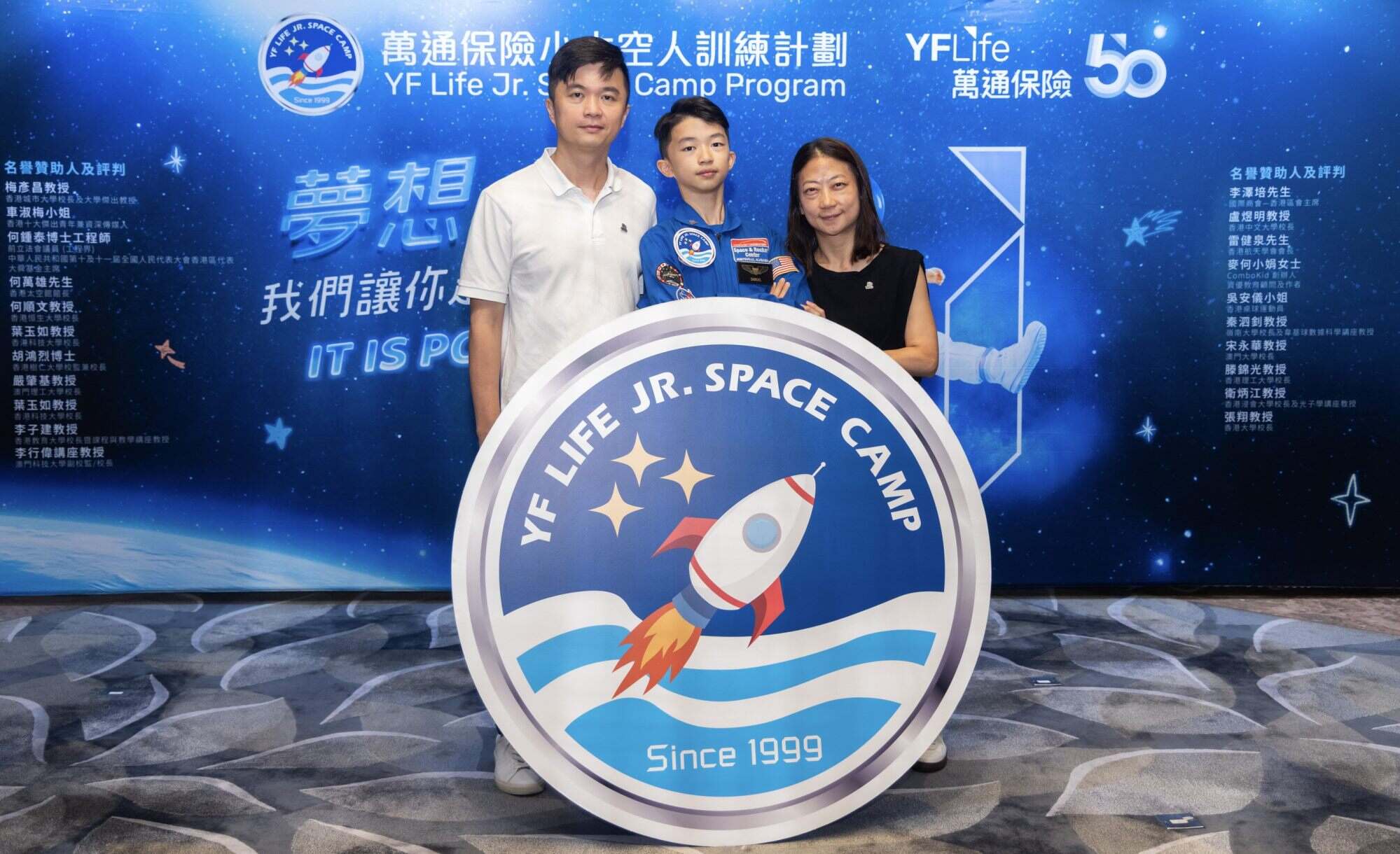
Samuel Hui Pak-sum was another junior astronaut in the programme. The 12-year-old pupil said it was “really exciting” to get this opportunity.
“It’s hard to imagine that feeling like you’re being told that you can go somewhere that [you’ve wanted for] a few years,” said Samuel, who goes to HKUGA Primary School.
“I really appreciate that I can have this opportunity.”
Samuel’s favourite part about space is that it is infinite.
“You cannot stop ... exploring it,” he said.
For him, the best part of the training camp was getting the chance to pretend to control a space shuttle.
He was also grateful to learn so much about the challenges of becoming an astronaut.
“The hardest part of the training is to lock you into a very, very narrow room. It is very dark. You’re not allowed to take anything – no watch, no tablet, no phone. You’re going to be locked in,” Samuel said.
“[Astronauts] have so much training to do, and if they cannot get past [it], they cannot be astronauts. And I think this is the best lesson.”