Difficulty: Challenger (Level 2)
Have you ever wondered what it would be like to live in isolation on an island?
For many people, this sounds like the plot of a movie or the classic book Robinson Crusoe by Daniel Defoe. But did you know that this famous story may have been based on a real person?
How did he get stranded?
Alexander Selkirk was born in Scotland in 1676. He always loved the sea, so he became a navigator on a government-sanctioned pirate ship.
In 1704, his ship made a stop on a remote island called Juan Fernandez. The island had no people living on it. It was far away from the coast of Chile.
Noticing that the ship was leaking and in desperate need of repairs, Selkirk argued with the captain.
He said he would prefer to stay behind on the island rather than risk drowning on a sinking ship. To his shock, the captain took him at his word and agreed to leave him.
He realised his mistake and begged to return to the ship. But Selkirk was left behind as the crew sailed away.
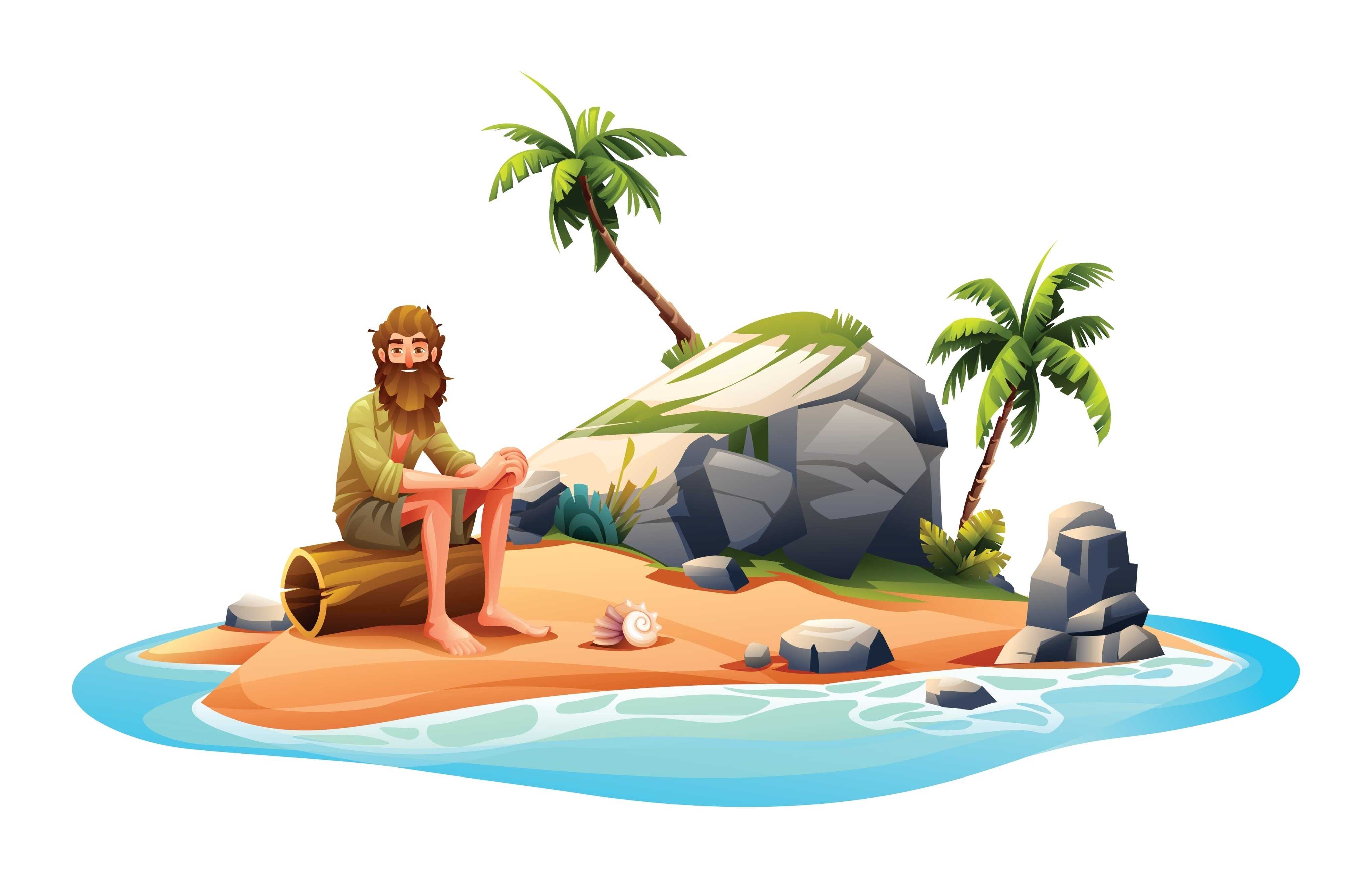
He was left with only a few tools, a gun and some clothing. For the first few weeks, Selkirk watched the ocean for signs of rescue while surviving on raw shellfish.
Survival saga
Upon exploring the island, he found herds of wild goats that gave him lots of meat and milk. He built two sturdy wooden huts covered with goat skins to protect him from the weather.
He even made new clothes from goat skins, using a sharp nail as a needle to sew them together.
His biggest fear came at night. This is when wild rats would gnaw on his feet while he slept.
To stop them, Selkirk made friends with the wildcats on the island by giving them goat meat. Before long, many helpful cats began sleeping around his hut. This helped keep him safe.
Eventual rescue
In February 1709, after more than four years, two British ships finally sailed near the island.
The crew could hardly believe their eyes when they saw a man dressed in goat skins running along the shore, yelling with joy.
Selkirk was rescued and taken back to Scotland. He became a legend for his tale of survival.
His story shows us that with resourcefulness and some creativity, people can get through tough times.
The island where he lived is now called Robinson Crusoe Island because many believe he inspired the character of Robinson Crusoe.