Difficulty: Explorer (Level 1)
Hong Kong is always changing. New buildings are built, while old ones are torn down. People are constantly coming and going. Take a moment to appreciate Hong Kong’s past. After all, it led to your present life.
Your neighbourhood
-
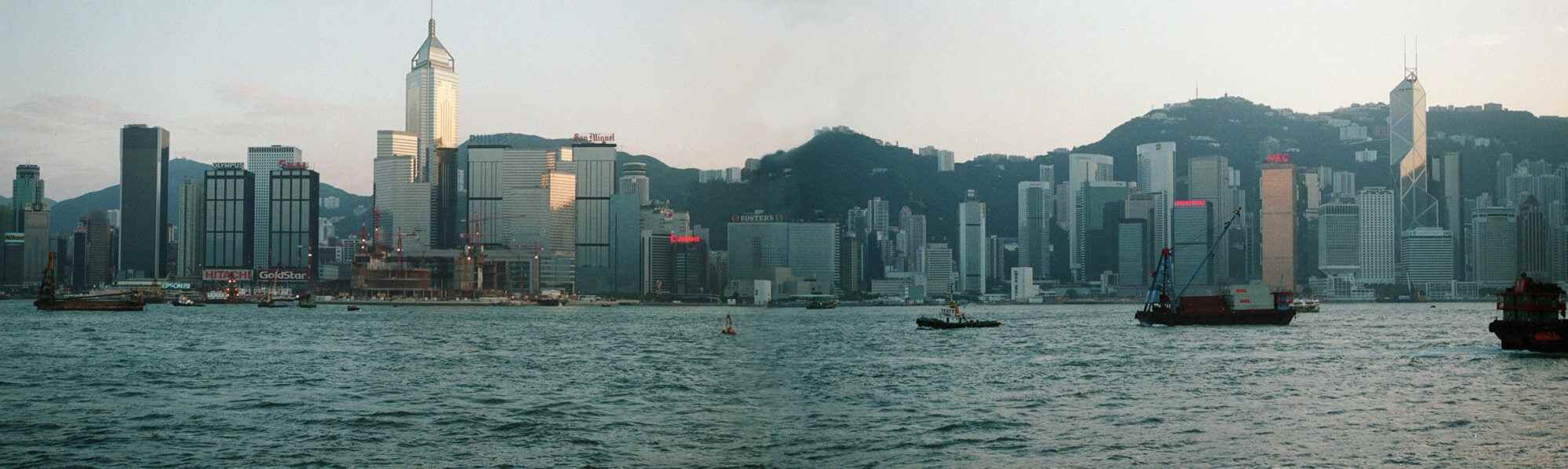
Take a look at this photo of Hong Kong’s skyline from the 1990s. Are there any buildings you recognise? What has changed?
-
Your neighbourhood has also changed a lot over the years. Choose a year in the past – it could be the year one of your family members was born. With an adult, search online to see what your neighbourhood looked like then. For example, if you live in Sham Shui Po and want to see what it looked like in 1960, the year your grandmother was born, you could search for “Sham Shui Po 1960”.
-
What do you see? What differences do you notice? See if you can figure out what new buildings or businesses have replaced the ones you see in old photos. You can even draw maps comparing the old and new neighbourhoods.
Illustrated history
Materials
-
pen or pencil
-
blank sheets of paper (at least five)
-
stapler
-
coloured pencils, crayons or markers
Instructions
1. History isn’t just the big moments; it also exists in the small things that make up everyday life. Find an older relative or family friend who is willing to tell you about their childhood. Ask them questions about their daily life, such as:
-
Where did you go to school? What was your favourite subject, and who was your favourite teacher?
-
What did you do with your friends?
-
What was your favourite food to eat, and where did you eat it?
-
What did you want to be when you grew up? What has changed most about Hong Kong since you were young?
2. Take a sheet of paper and fold it in half, bringing the two short sides together. Do the same with another sheet of paper. Then, put the second piece inside the first one, lining up the creases. Do this with as many pages as you like. With an adult’s help, staple the papers together in the crease. Use two or three staples to make sure your booklet is secure.
3. Now, use the information you learned in the interview to draw a picture book showing a day in the life of your interviewee. You could focus only on their life, or you could put your answers and experiences alongside theirs to show what you have in common.