




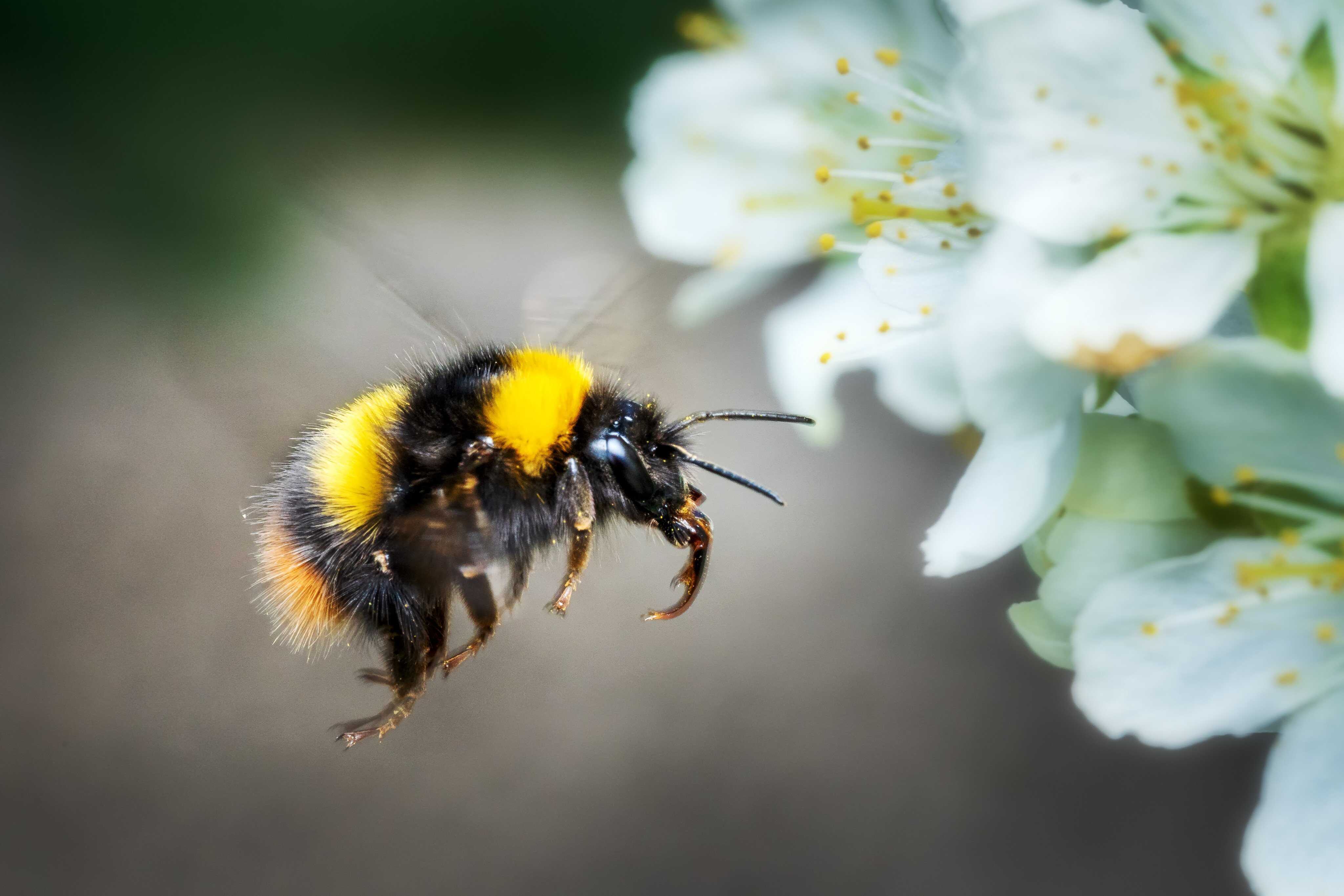
The number of European bumblebees may fall quickly in the coming decades due to climate change, researchers say.
Europe’s 68 species of bumblebees - including the black-and-yellow striped bees often seen buzzing through gardens - play a crucial role in pollinating crops and wild plants.
But they are like the cooler temperatures of the Northern Hemisphere, and a warming world caused by climate change is putting them in danger.
A team of Belgian researchers collected data on 46 bumblebee species across Europe.
“Up to 75 per cent of bumblebee species which are not currently threatened will see their habitat shrink by 30 per cent,” says study author Guillaume Ghisbain.
Bumblebee species in the Arctic may even be pushed to the edge of extinction.
This is bad news for the most common of Europe’s bumblebees, Bombus terrestris, a plump bee often seen pollinating flowers.
Part of the problem is how land is used for farming.
“Intensive farming uses fertilisers which artificially enrich the soil with nitrogen,” Guillaume says. “However, bumblebees mainly eat plants which grow in soil poor in nitrogen.”
Droughts, which happen more often because of climate change, also kill off the plants eaten by bumblebees.
