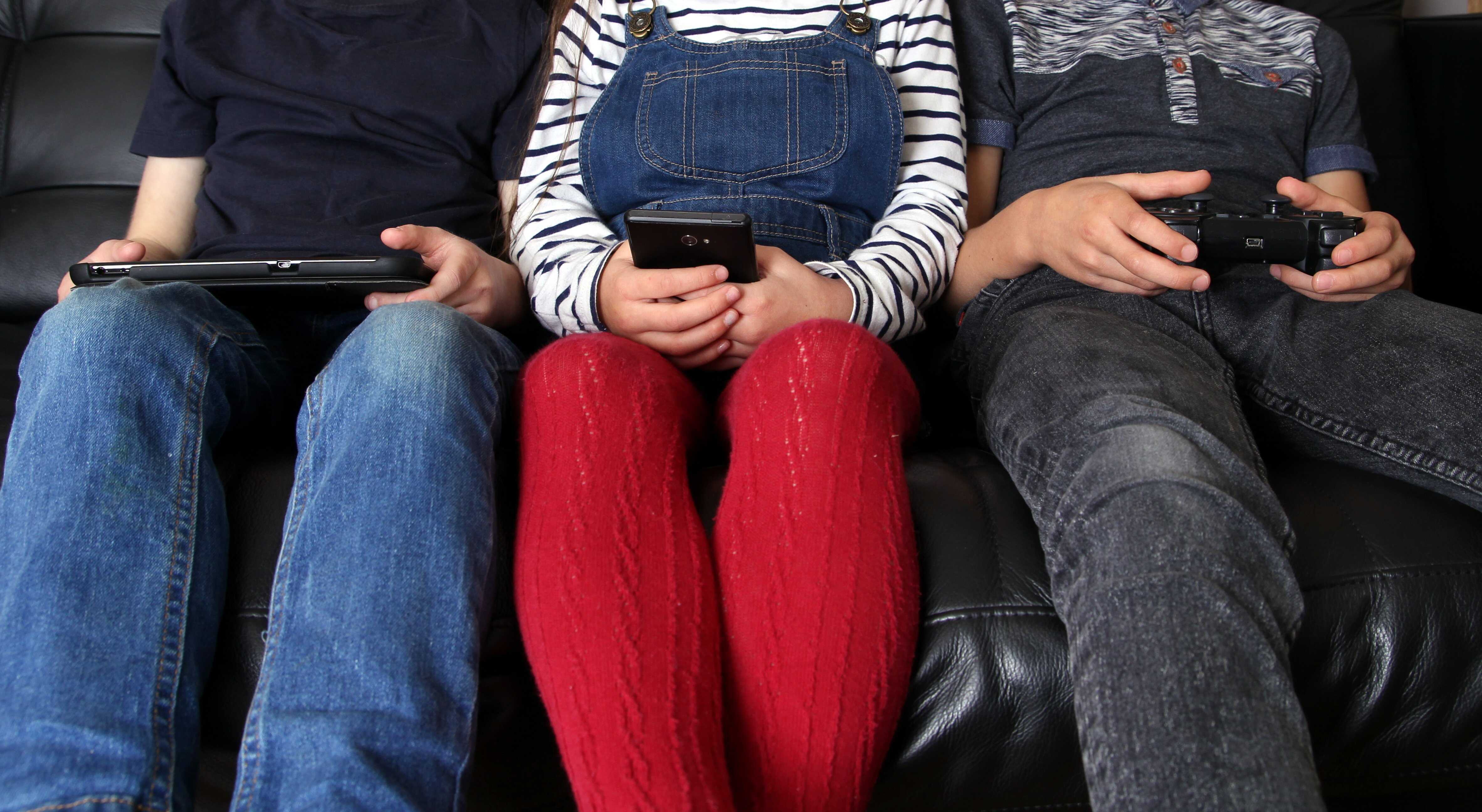
The amount of time Hong Kong primary students spent looking at screens tripled to seven hours a day during the pandemic.
The scientists who made the study say that poor sleep caused by the extra screen time could affect children in different ways. "It will affect their studies, as well as their physical strength and emotions," says Dr Patrick Ip.
The study found that the time primary students spent on gadgets went up from two hours before the pandemic to seven hours during the outbreak.
"During the pandemic, students had fewer chances to leave their homes. Classes were suspended," Dr Ip says.
Primary pupils should get 10 hours of sleep, and 15 minutes of exercise a day.
No more 'forever chemicals'
"Forever chemicals" are found in daily items such as pizza boxes and frying pans. They can cause serious health problems. This is because they are toxic and it is hard to break them down as waste products.
Chemists in the USA and China have now found a method to break down these polluting compounds, called PFAS. Their findings are a solution to a long-standing problem for the environment.
PFAS were invented in the 1940s. They are now found in many different products. Over time, these pollutants have collected in the environment, entering the air, soil, lakes and rivers.
The solution is a mixture of a soap ingredient and a solvent. When the solution is boiled, most of the PFAS break down into harmless products in a few hours.