YoungPost Club Learn
DOWNLOAD OUR APP
appstoregoogleplay
FIND US AT
My JourneyMy VocabularyMy Leaderboard
My AccountSearchAbout UsContact Us
Subscription Plan
School Subscription
YOUNG POST
NewsTrendingBeing wellLearning zoneShare with usQuizzes
SPARK
NewsTrendingBeing wellLearning zoneShare with usQuizzes
POSTIES
Big readEye on the newsHa-ha-happeningsThings to doYour saySteam studioHealth and happinessQuizzes
Subscribe to Young Post Club to access our great content
ABOUT US|CONTACT US|WRITE FOR US|PRIVACY POLICY|TERMS & CONDITIONS
©2025 Young Post Club. All rights reserved.
My Journey Hello
Brand Avatar
Young Post
My Journey illustration

With a subscription, you can answer quizzes and track your reading progress.

Read / STEAM studio

What are shooting stars? Here’s what you should know about comets and meteors

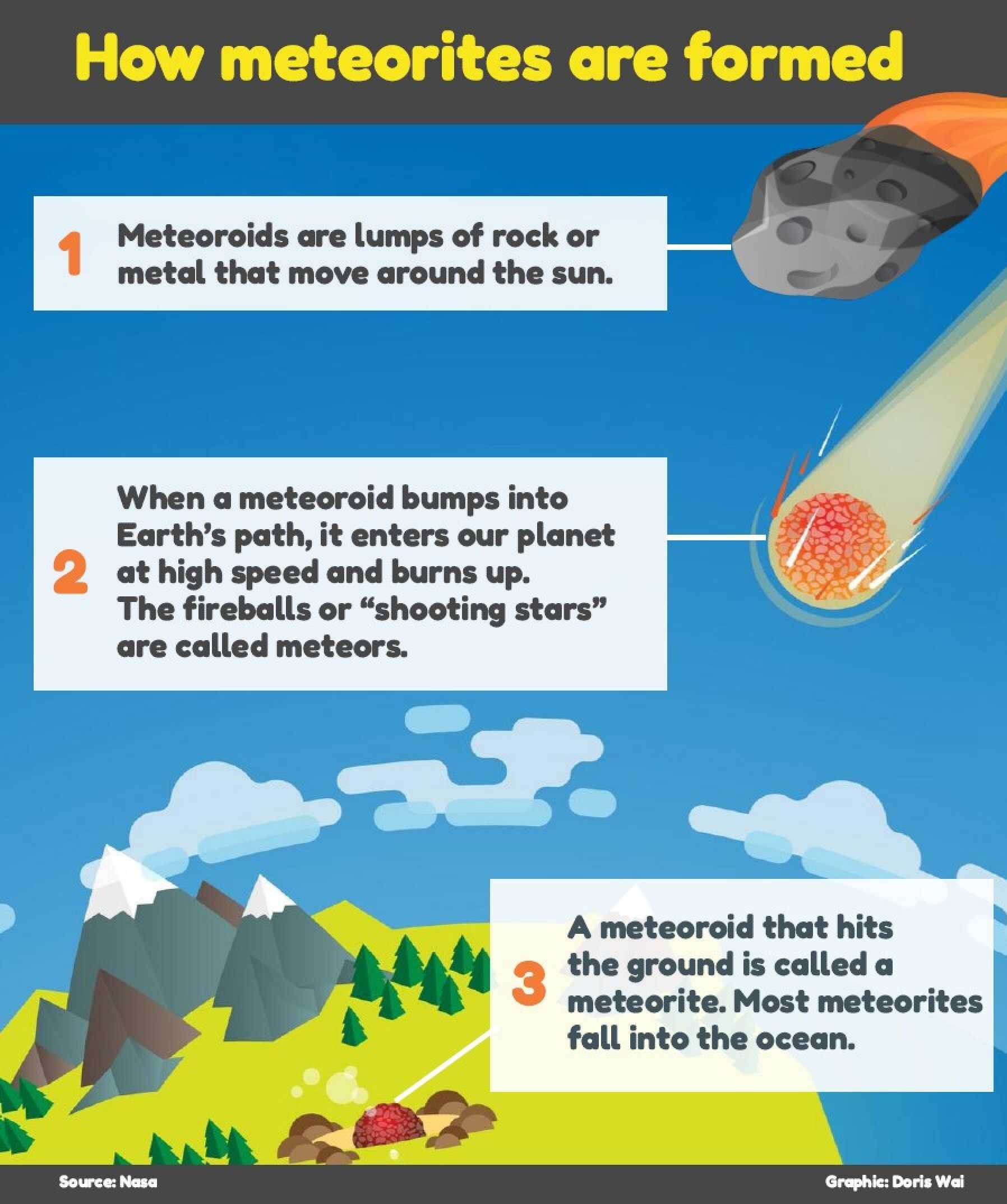
Check out our graphic explaining how meteorites are formed
byDoris Wai
Published: 10:45pm, 07 Jan 2024
Length: 248 words
What are shooting stars? Here’s what you should know about comets and meteors

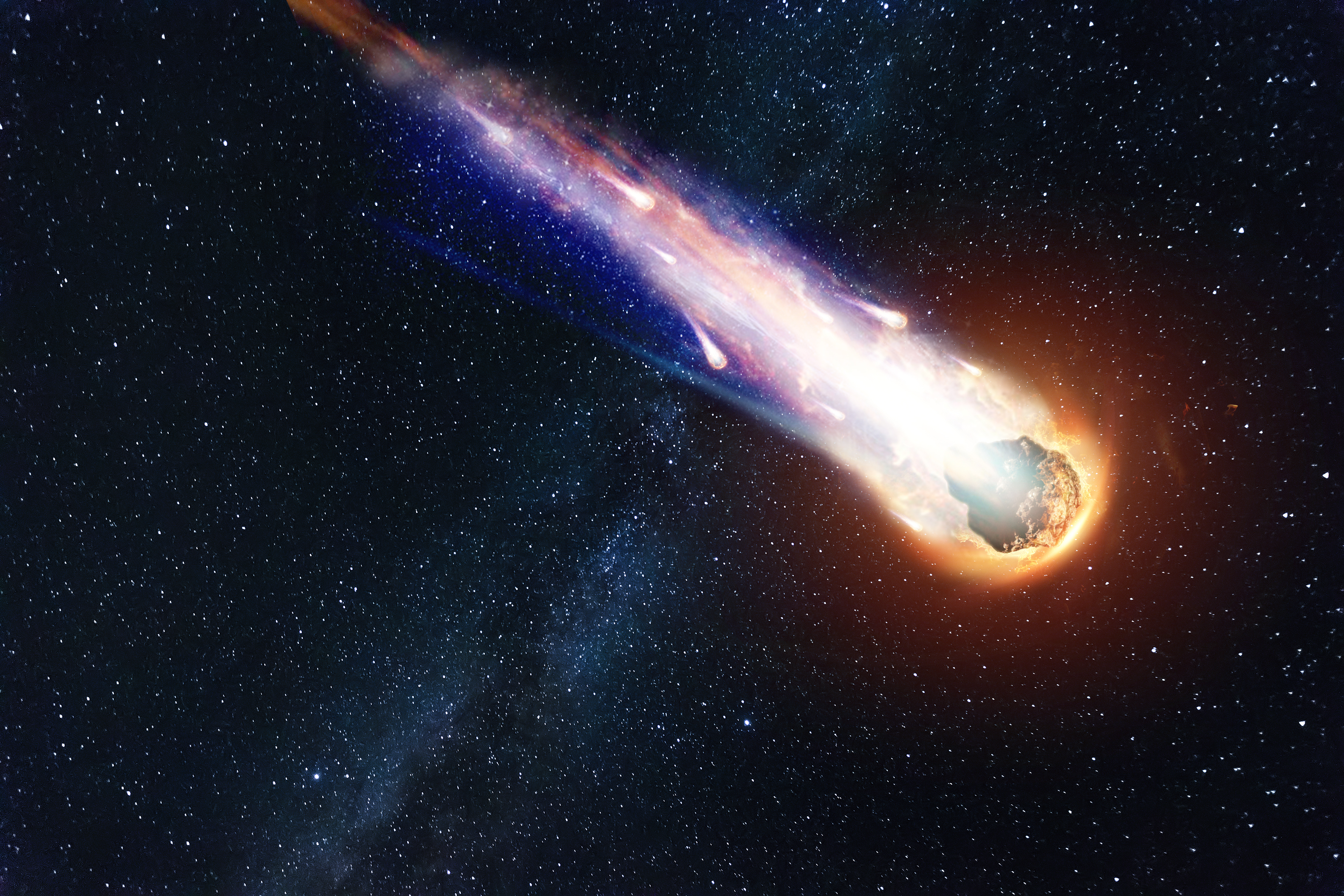
Have you ever seen a meteor shower? Photo: Shutterstock

Imagine looking up at the night sky and seeing shooting stars flashing. These shooting stars are meteors, which are small pieces of rock from space burning up in Earth’s atmosphere.

Comets are icy bodies made of frozen gases, rock and dust. As comets go around the sun, they leave behind trails of remains called debris. This debris is what makes meteoroids. Meteoroids can also come from rocky objects in space called asteroids.

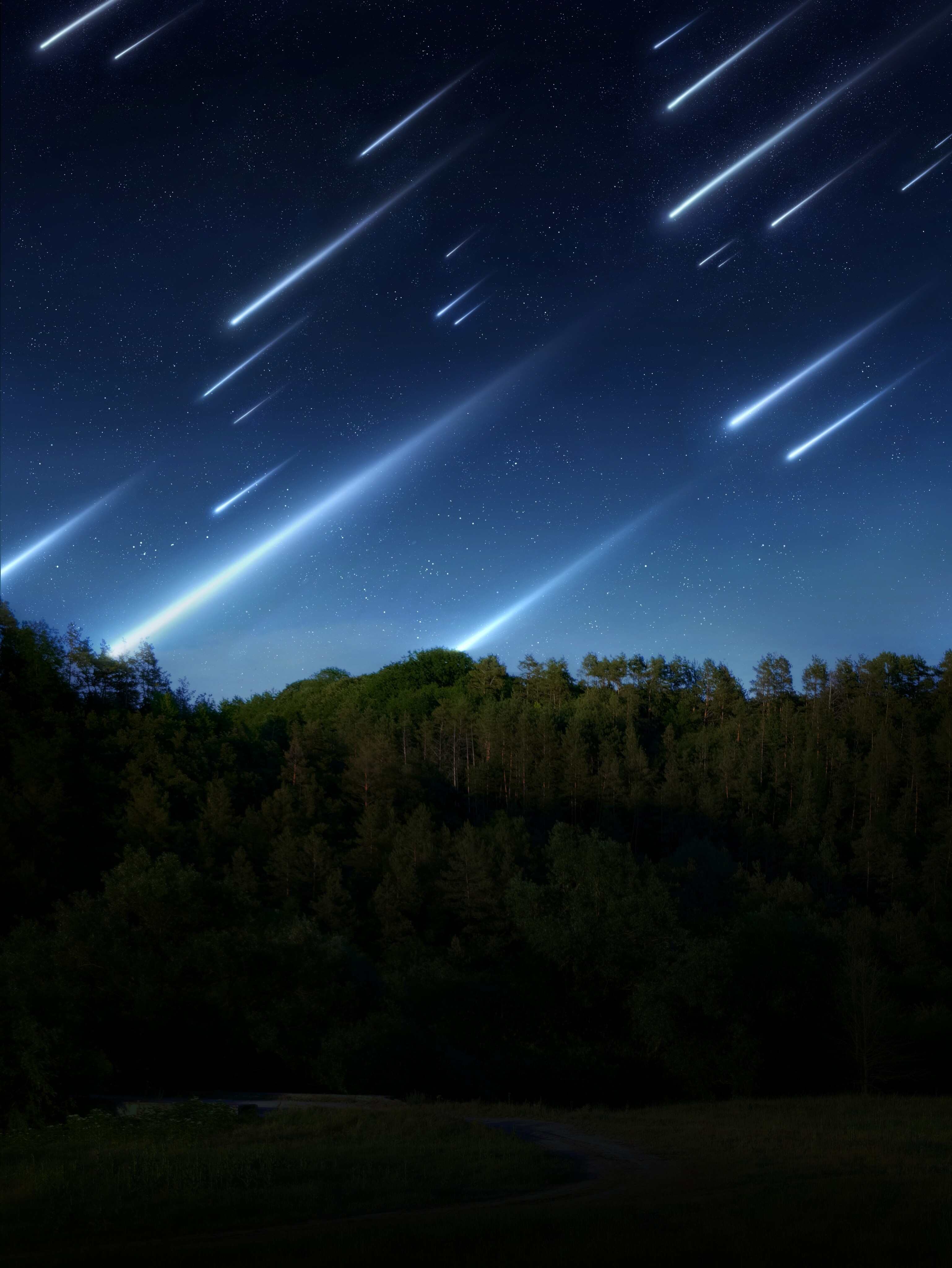
When Earth passes through a comet’s trail, many meteoroids enter the planet’s atmosphere at high speeds. They burn up and become meteors, creating bright flashes of light known as meteor showers (see graphic).
During a meteor shower, we see the paths of many meteors that seem to all come from one point in the sky, called the radiant point. There are more meteors as the radiant rises higher in the sky.

The best time to see a meteor shower is when the radiant is at its highest point.

A measurement called the Zenithal Hourly Rate (ZHR) describes the number of meteors that can be seen every hour at the best conditions. But we usually see fewer meteors every hour than the ZHR. This is because of how dark the sky is, if our view is blocked, and how high the radiant is.

Content provided by

IN THIS ARTICLE
Space exploration
KEEP READING
cover
Eye on the news
Likely asteroid debris found upon opening of returned Nasa probe
08 Oct 2023
cover
Big read
An asteroid killed off the dinosaurs, so are we next?
24 Aug 2022