
YoungPost Club Learn
DOWNLOAD OUR APP
appstoregoogleplay
FIND US AT
My JourneyMy VocabularyMy Leaderboard
My AccountSearchAbout UsContact Us
Subscription Plan
School Subscription
YOUNG POST
NewsTrendingBeing wellLearning zoneShare with usQuizzes
SPARK
NewsTrendingBeing wellLearning zoneShare with usQuizzes
POSTIES
Big readEye on the newsHa-ha-happeningsThings to doYour saySteam studioHealth and happinessQuizzes
Subscribe to Young Post Club to access our great content
ABOUT US|CONTACT US|WRITE FOR US|PRIVACY POLICY|TERMS & CONDITIONS
©2025 Young Post Club. All rights reserved.
My Journey Hello
Brand Avatar
Young Post
My Journey illustration

With a subscription, you can answer quizzes and track your reading progress.

Read / STEAM studio

How elephants communicate: friendly nicknames, soft rumbles and loud trumpeting

Scientists believe these animals are the first besides humans to create special names for their loved ones
byAgence France-Presse, Doris Wai
Published: 10:45pm, 11 Aug 2024
Length: 252 words
How elephants communicate: friendly nicknames, soft rumbles and loud trumpeting

Elephants create nicknames for their friends and family members. Photo: Shutterstock

Difficulty: Challenger (Level 2)

Elephants call their friends using special nicknames. This was found in a recent study. Scientists believe elephants are the first animals besides humans to do this.

Scientists around the world used an artificial intelligence programme to study the calls made by two wild herds of African savannah elephants.

They examined elephant sounds called “rumbles”. These were collected in Kenya’s Samburu National Reserve and Amboseli National Park from 1986 to 2022.

With the help of AI, scientists identified 469 different elephant calls. These calls included 101 elephants making a sound and 117 elephants receiving one.

Elephants make a wide range of sounds. They can trumpet loudly or make rumbles so low that they cannot be heard by the human ear (see graphic).
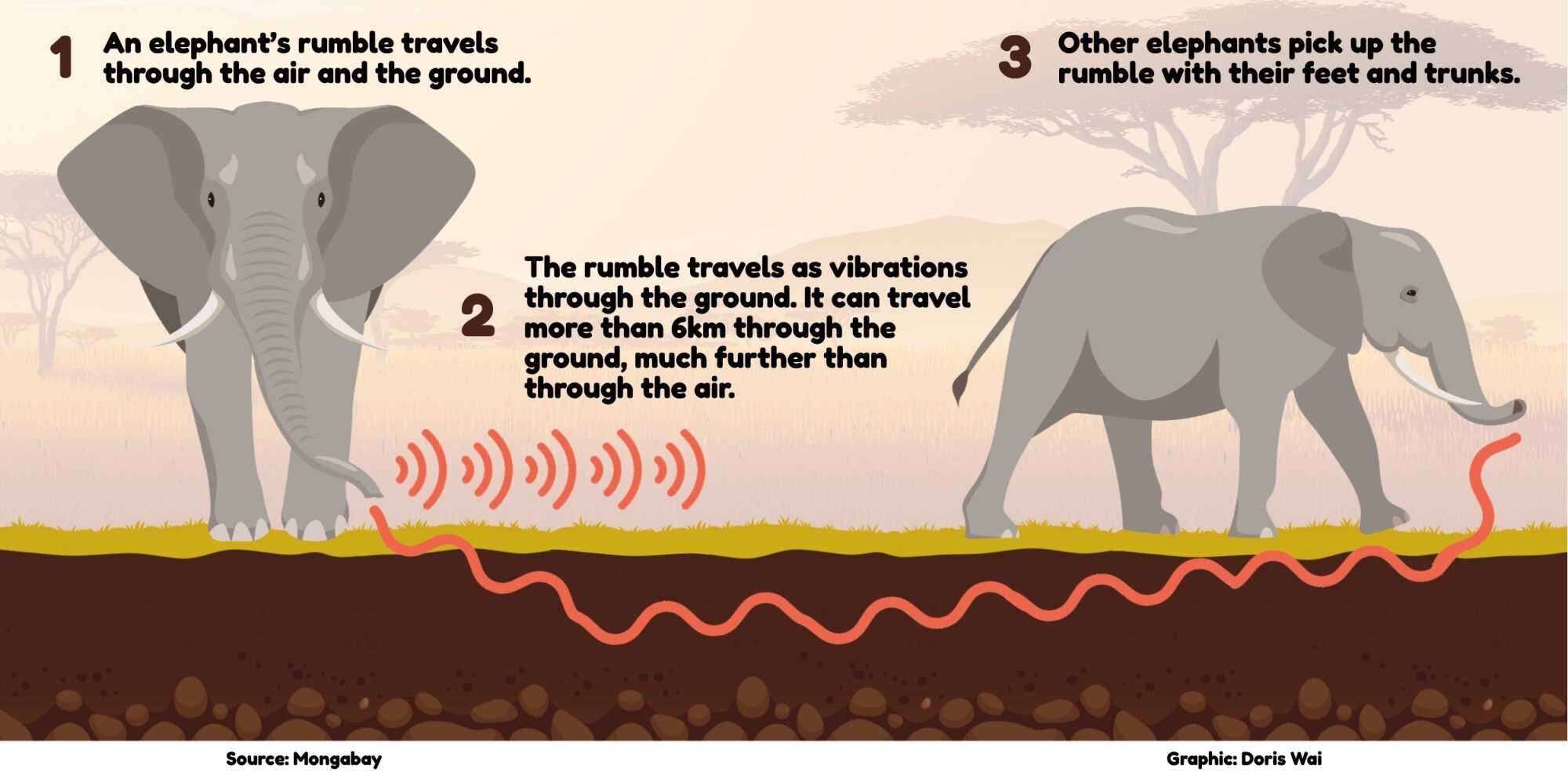
How elephants rumble

Names were not always used in the elephant calls. But names were used when elephants were far away and when adults were calling young elephants.

Adults were also more likely to use names than calves. This suggests that it could take years to learn this skill.

The researchers played a recording to an elephant of their friend or family member calling out their name. The animal would respond positively. But the same elephant was far less excited when played the names of others.


IN THIS ARTICLE
Animals
Science

KEEP READING
cover
STEAM studio
Baby great white shark video could be the world’s first look at these newborns
18 Feb 2024
cover
STEAM studio
Scientists study mammoth fossils to learn how they evolved
11 Feb 2024
cover
STEAM studio
Rhinos are coming back to Mozambique after 40 years of extinction
13 Jul 2022