YoungPost Club Learn
DOWNLOAD OUR APP
appstoregoogleplay
FIND US AT
My JourneyMy VocabularyMy Leaderboard
My AccountSearchAbout UsContact Us
Subscription Plan
School Subscription
YOUNG POST
NewsTrendingBeing wellLearning zoneShare with usQuizzes
SPARK
NewsTrendingBeing wellLearning zoneShare with usQuizzes
POSTIES
Big readEye on the newsHa-ha-happeningsThings to doYour saySteam studioHealth and happinessQuizzes
Subscribe to Young Post Club to access our great content
ABOUT US|CONTACT US|WRITE FOR US|PRIVACY POLICY|TERMS & CONDITIONS
©2026 Young Post Club. All rights reserved.
My Journey Hello
Brand Avatar
Young Post
My Journey illustration

With a subscription, you can answer quizzes and track your reading progress.

Read / STEAM studio

Scientists study mammoth fossils to learn how they evolved

These ancient relatives of elephants lived around 5 million years ago in many places around the world
byDoris Wai
Published: 10:45pm, 11 Feb 2024
Length: 202 words
Scientists study mammoth fossils to learn how they evolved

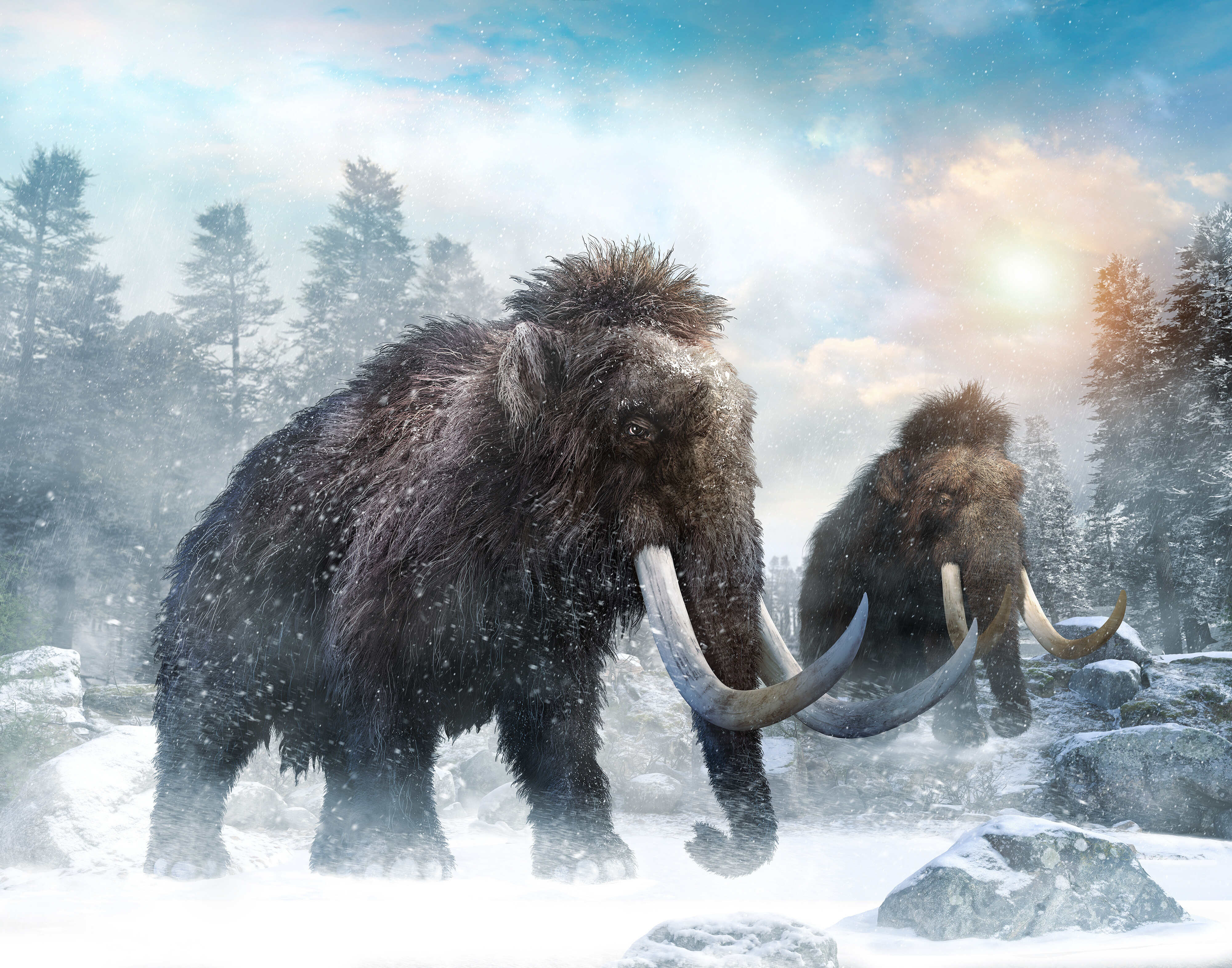
Scientists hope to learn how different types of mammoths evolved over time using their fossils. Photo: Shutterstock

Difficulty: Challenger (Level 2)

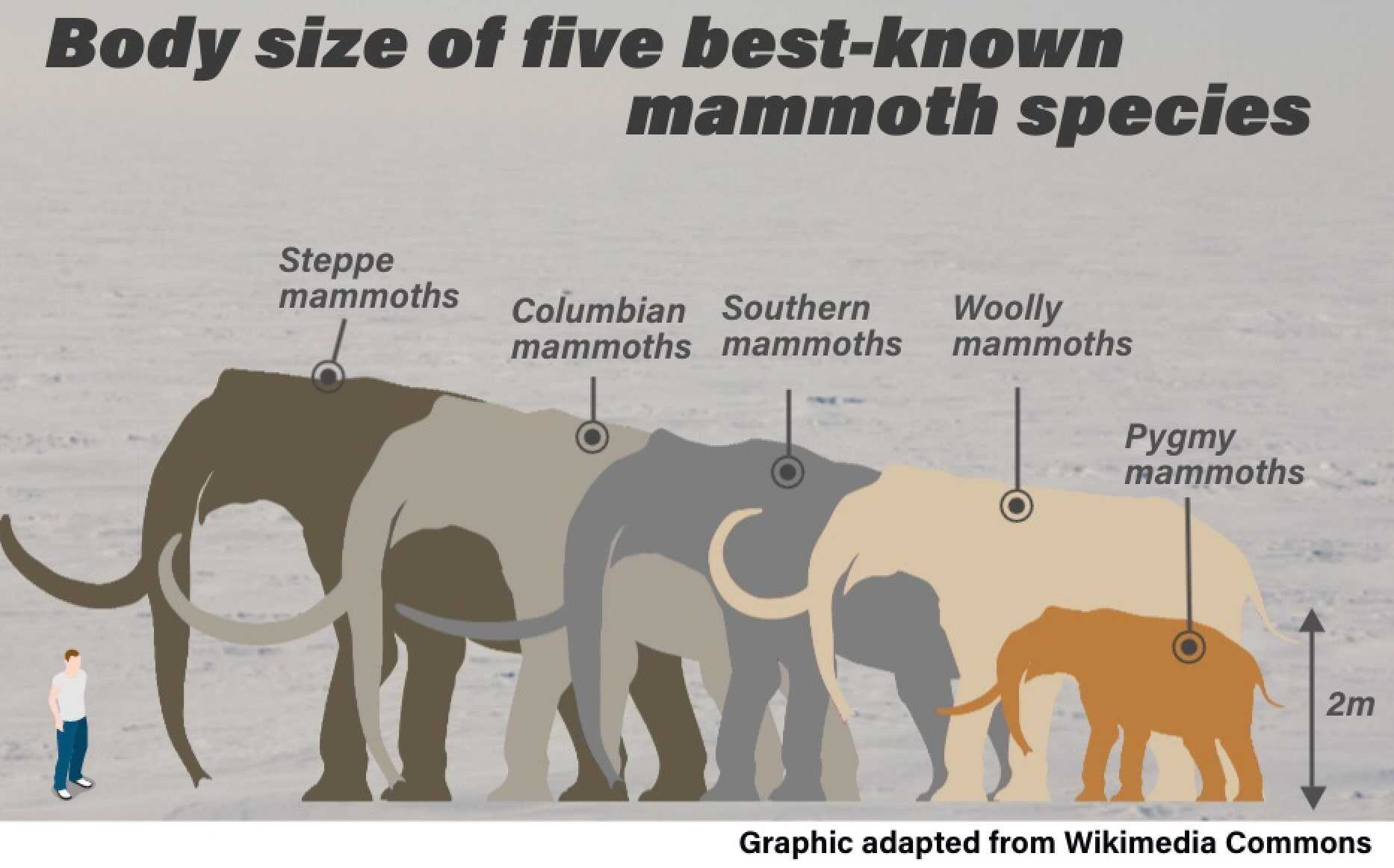
Mammoths lived about 5 million years ago. They were huge relatives of today’s elephants. They mysteriously disappeared around 4,000 years ago. Scientists who study their fossils believe they lived in many places, including Africa, America, Asia and even Siberia.

These massive animals stood over three metres tall. They also had long curved tusks. There were many different types of mammoths, including woolly and Columbian mammoths. Both these types lived in North America.

Scientists studied the differences between these two species using their fossilised remains. This included their tusks and teeth (see graphic).
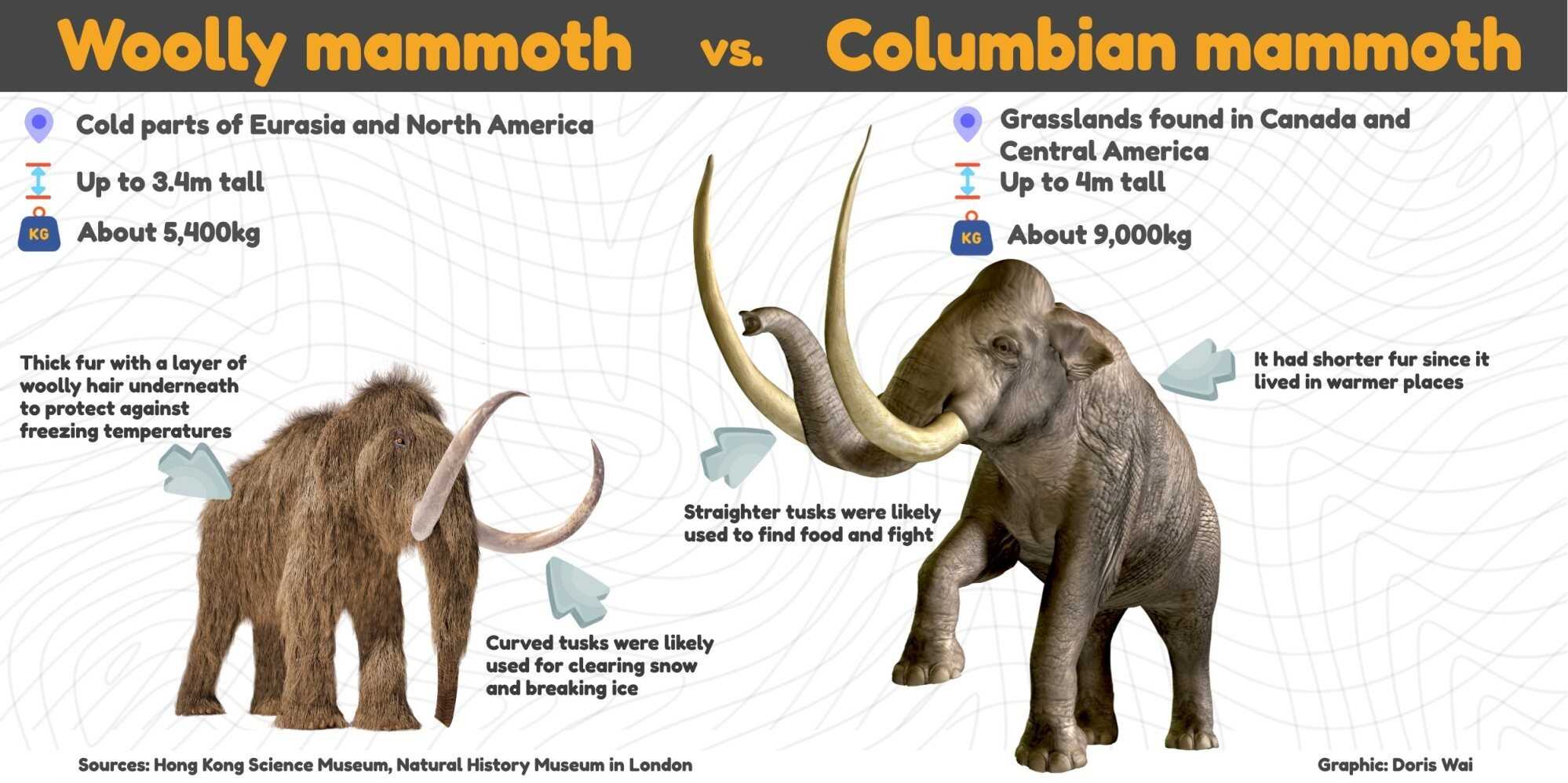
Scientists are trying to learn how the different types of mammoths evolved. They used to believe that Columbian mammoths evolved from Eurasian steppe mammoths. This was because they looked similar and had less fur than woolly mammoths.

However, new DNA clues suggest something interesting. Columbian mammoths might be a mix of woolly mammoths and an unknown type of ancient mammoth!
Content provided by

IN THIS ARTICLE
Animals
Science

KEEP READING
cover
Eye on the news
‘Appetite for drumsticks’: first prey found in a tyrannosaur stomach
31 Dec 2023
cover
Eye on the news
‘Bizarre’ birdlike dinosaur with long legs has scientists excited
18 Sep 2023
cover
STEAM studio
Ancient fossils of a gigantic ancient otter found in east Africa
21 Sep 2022