


Difficulty: Explorer (Level 1)
From violins and pianos to triangles and trumpets, instruments are key to making music. Did you know that there are four different categories of instruments? They are string, brass, woodwind and percussion.
String instruments are usually easy to spot. They use a string to make sounds. Examples include the guitar, violin, cello, ukulele and harp.
Brass instruments are often shiny. People play a brass instrument by making a buzzing movement with their lips against a mouthpiece to produce sound. The air vibrates in a metal tube that widens into a bell shape.
Examples include the trumpet, the tuba and the trombone.
Woodwind instruments also need someone to blow into a mouthpiece. This makes air vibrate in a tube. Unlike brass instruments, these do not widen into a bell at the end. The flute, the clarinet, the oboe and the bassoon are examples of woodwind instruments.
Finally, percussion instruments are those that you have to hit or shake to make noise. Some of these are drums, tambourines, xylophones and cymbals.
Pianos are considered a string and a percussion instrument, since sound is made when their strings are struck.
Make your own flute
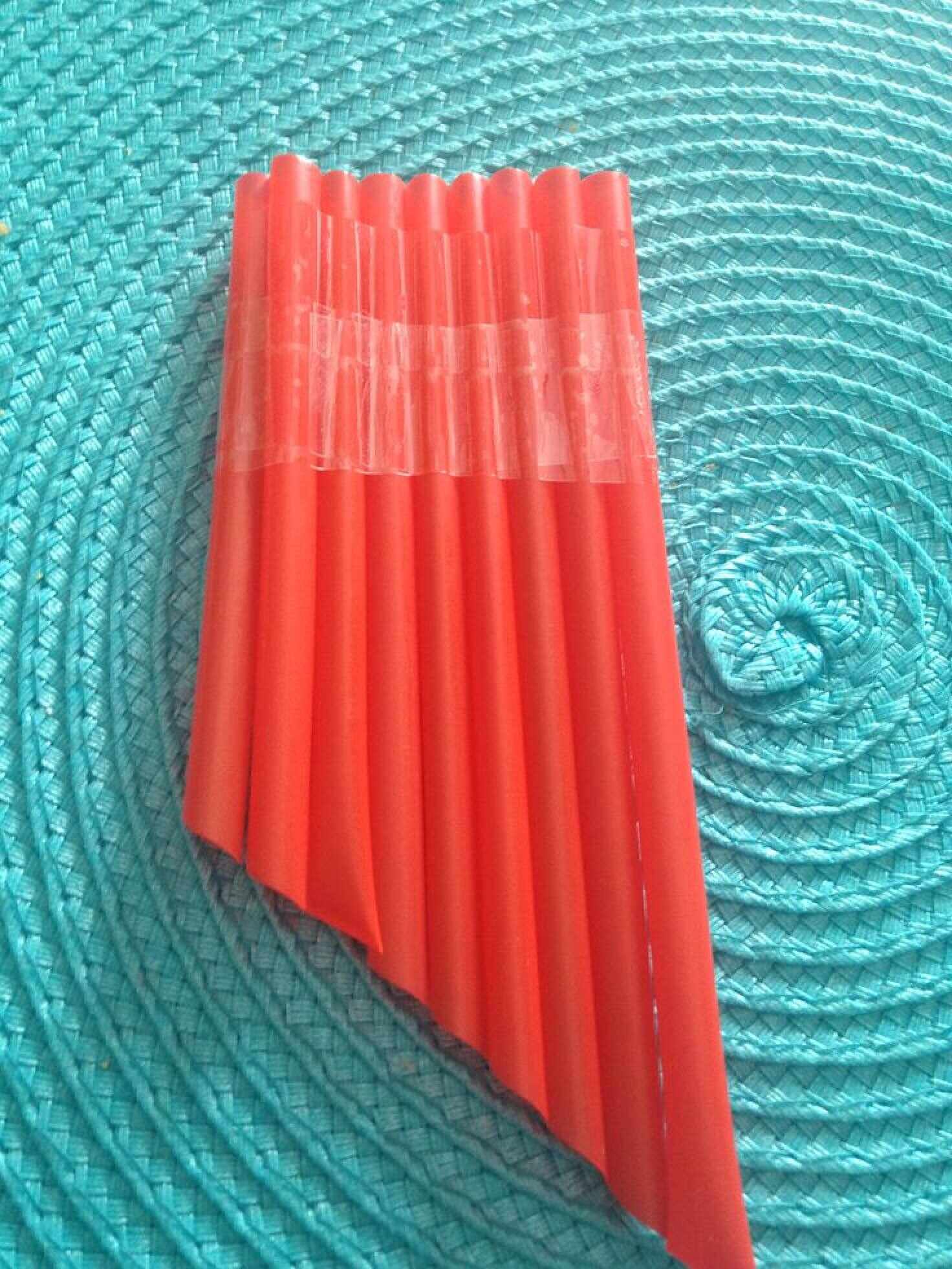
Materials
-
plastic straws (at least four)
-
scissors
-
tape
Instructions
1. Take a straw and cut off 3cm. Take the next straw and cut off 6cm. Continue cutting each straw 3cm shorter than the previous one until you have cut them all.
2. Line up your straws by height, keeping the bottoms in a single straight line.
3. Take a long piece of tape and wrap it around the straws, taping them together. Add one more long piece of tape to secure the sides.
4. Gently flip the straws over and add two more long pieces of tape. Use as much tape as you need to secure the flute.
5. To use your new instrument, hold the even, straight end near your mouth. Place it right below your lips. Angle your mouth downward to blow into each straw. Do you notice a different sound from each one?
Make your own shaker
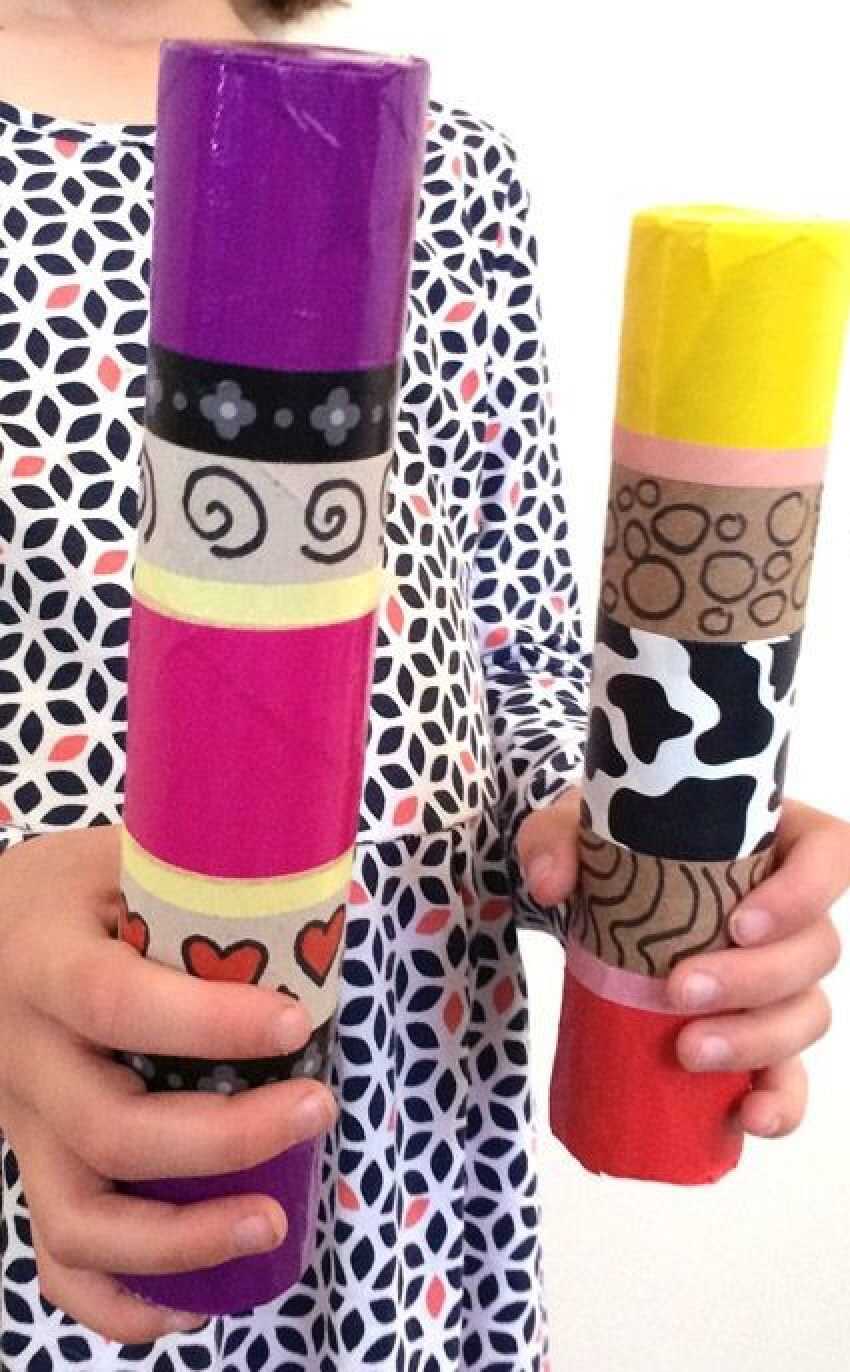
Materials
-
toilet paper rolls
-
markers
-
small items, such as uncooked rice, uncooked pasta, beads or rocks
-
tissue paper
-
tape
Instructions
1. First, decorate the toilet paper rolls with the markers however you like.
2. Once you finish decorating, cover one end of the toilet paper roll with a sheet of tissue paper. Secure it with tape. Make sure to cover the round end with tape so that the tissue paper won’t break.
3. Add your small items to the roll. Make sure to fill it up only one-third of the way.
4. Tape another sheet of tissue paper over the other end of the tube. Try making shakers with different items inside. Do you hear a difference?