Difficulty: Explorer (Level 1)
Did you know that a wolf, a house cat and a hamster are all distant cousins? They once had common ancestors. But after millions of years, they now live in different places around the world.
A creature’s size shows how it survives. Giant animals roam open areas to eat or hunt. Smaller critters slip into small spaces where big predators can’t find them.
Rodents, cats and dogs are three familiar families of land animals. Comparing the biggest and the smallest species shows how evolution helped them solve different challenges. Learn more about why being big or small can be the perfect fit for each animal.
Mega & Mini Animal Chart
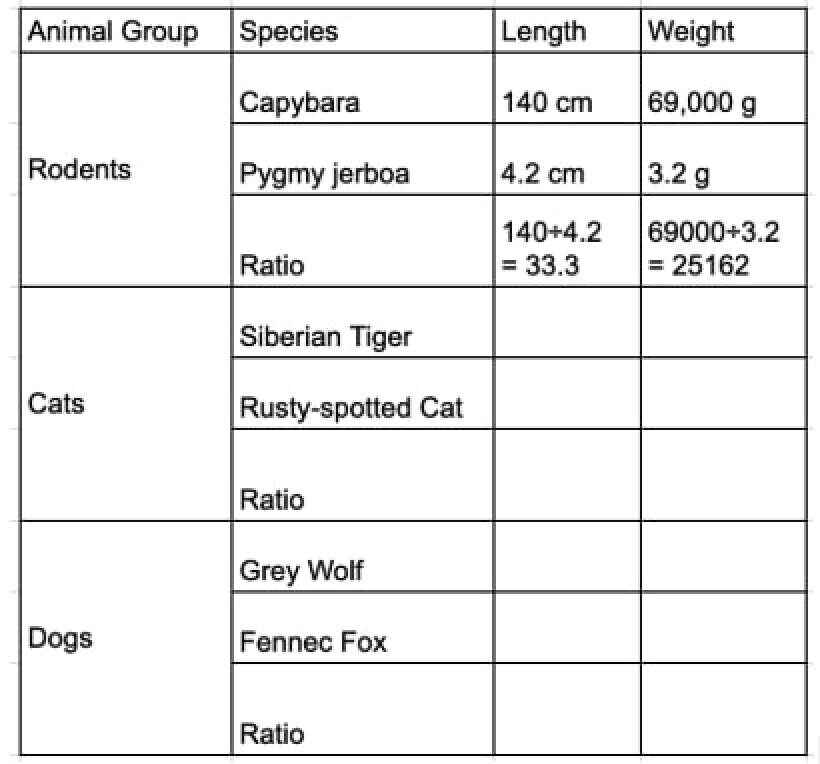
Instructions
1. Use the internet (e.g., NatGeo Kids, Britannica Kids) to find the average adult length (in centimetres) and weight (in grams) for each of these species. Write the numbers in the table.
2. Then, calculate the size ratios for each group. For length, divide the length of the larger animal by the length of the smaller animal. For weight, divide the weight of the heavier animal by the weight of the lighter animal.
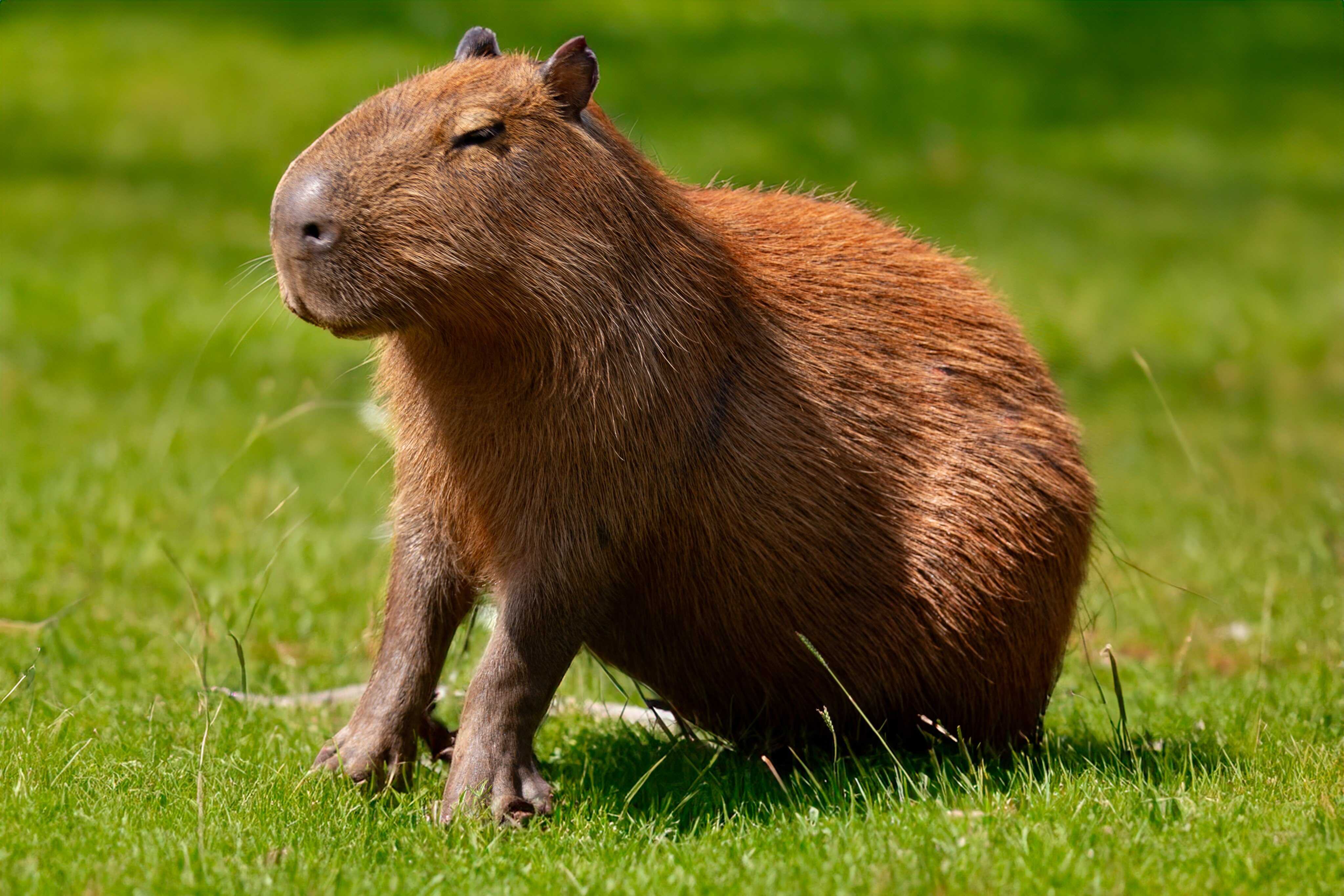
3. Look at the example that has been done for you. The size ratios show that the capybara is about 33 times bigger than the pygmy jerboa. It is also 25,162 times heavier than the pygmy jerboa.
Scale-Sketch Showdown
Materials
-
sheet of paper
-
pencil
-
eraser
-
ruler
-
your chart from the other activity
Instructions
1. Pick a family of land animals: rodents, cats or dogs.
2. Check the “Mega & Mini Animal Chart” for the biggest and smallest species of the family. Find a clear photo of each animal online for reference.
3. Sketch a 5cm by 5cm square for the smaller animal.
4. Multiply 5cm by the length ratio. This will be the size of the larger animal’s square. Then, sketch the larger animal.
5. In your drawing, show their key differences, such as ear size, tail length, paw shape, or fur patterns. Colour the sketches.
6. Label each sketch with the animal’s name and the species’ average weight and length. Can you think of one way its size or features help it survive?