Every week, Talking Points gives you a worksheet to practise your reading comprehension with exercises about the story we’ve written.
Periods, also known as the menstrual cycle, are a natural and important part of life. It is normal to experience unpleasant sensations during this time. These could include cramps, feeling tired and being in a low mood.
Yoga and mindfulness can help you feel a bit better, both mentally and physically.
These yoga poses encourage blood circulation to the legs and pelvis, which can help reduce discomfort in these areas. They promote relaxation by releasing tension in the muscles, especially the back, hips, inner thighs and legs.
These poses can also release endorphins. They are natural chemicals that relieve pain and boost our mood.
To prepare, wear comfortable clothing that allows you to move freely. You can use a yoga mat or place a towel on the floor. Feel free to use pillows or cushions for extra support as needed. You could also listen to relaxing music while you practise these poses.
Remember that yoga should not cause any pain. Only stretch as much as feels comfortable. Hold each pose for about five breaths. You can try for longer if it feels fine to do so.
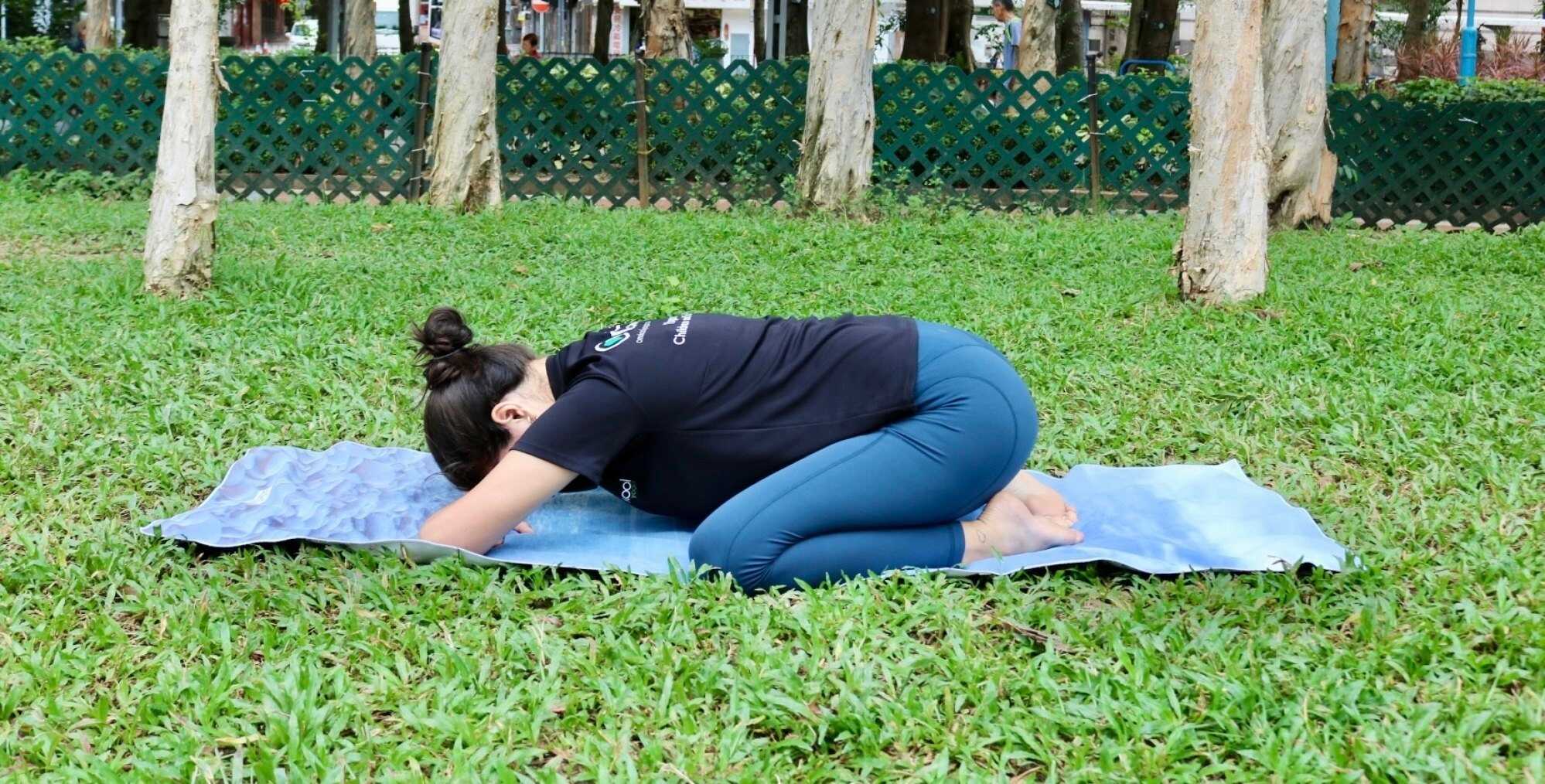
Child’s pose
Kneel on all fours on your mat. Align your hands under your shoulders and your knees under your hips – this is called the table pose. Lie your feet flat on the mat, with your soles facing up. Keep your knees about hip-width apart.
Now, move your hips back and sit on your heels. Leave as much space between your knees as you want. Move your hands forward and bring your chest and head down towards the floor. Put a pillow underneath your chest or head if that feels more comfortable. Your arms can be stretched out in front of you or behind you.
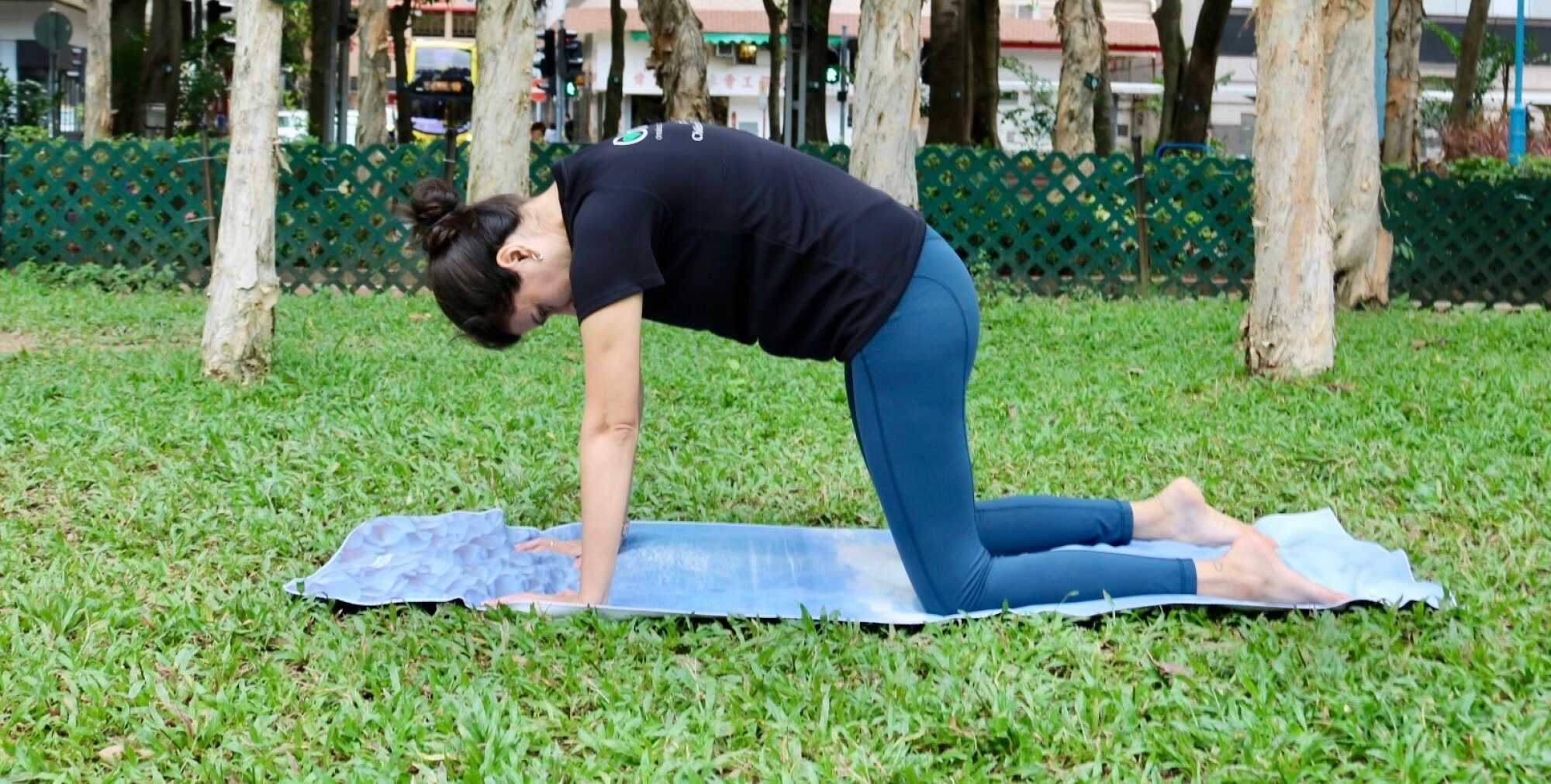
Cat/cow pose
Start in the table pose. Keep your hands shoulder-width apart, with your fingers facing forward. Leave a hip-width distance between your knees. Inhale while tilting your head up. Arch your spine and lower your belly to the ground. Then gently squeeze your shoulder blades together. This is called the cow pose. As you exhale, tuck your chin into your chest and round your spine. It should feel like you are pulling your belly button in towards your spine and rounding your shoulders forward. This is the cat pose. Repeat the poses a few times. Do the cat pose when you inhale and the cow pose when you exhale.
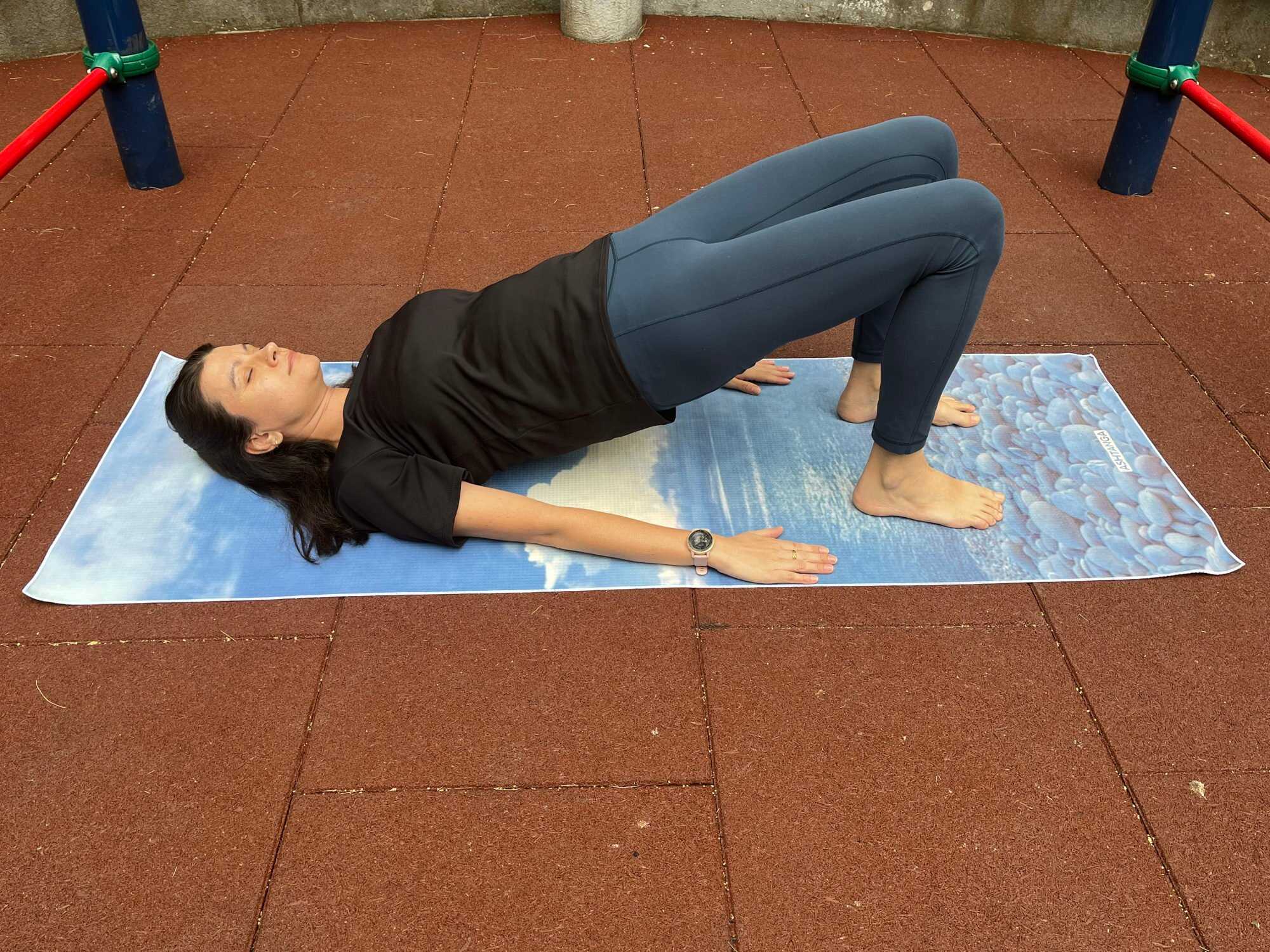
Bridge pose
Lie on your back and bend your knees. Keep your feet flat on the floor. Leave a hip-width distance between your feet. Relax your arms alongside your body, palms facing down.
Keep your feet, arms, shoulders and head on the ground. Then, tuck your pelvis and lift your hips. Press your knees forward in the direction of your feet. Hold the pose for a few breaths before slowly lowering your hips.
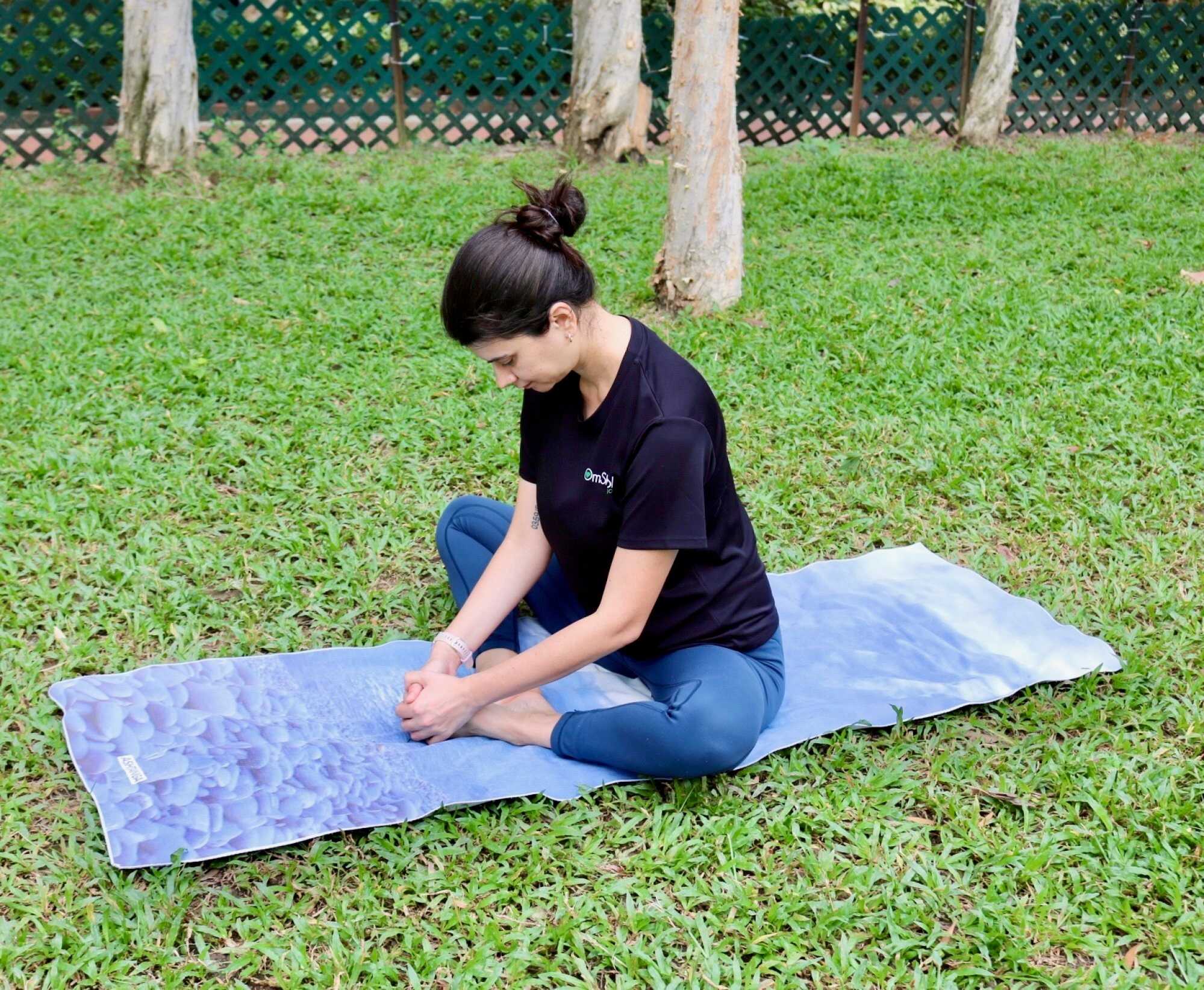
Butterfly pose
Sit down on your mat and bring the soles of your feet together. Take a moment to notice how much space feels good between your feet and your body. You can leave as much space as feels comfortable. Rest your hands on your feet or anywhere along your lower legs. Stay like this, or add some movement to your knees by gently moving them up and down. You can also lean forward if that feels good.
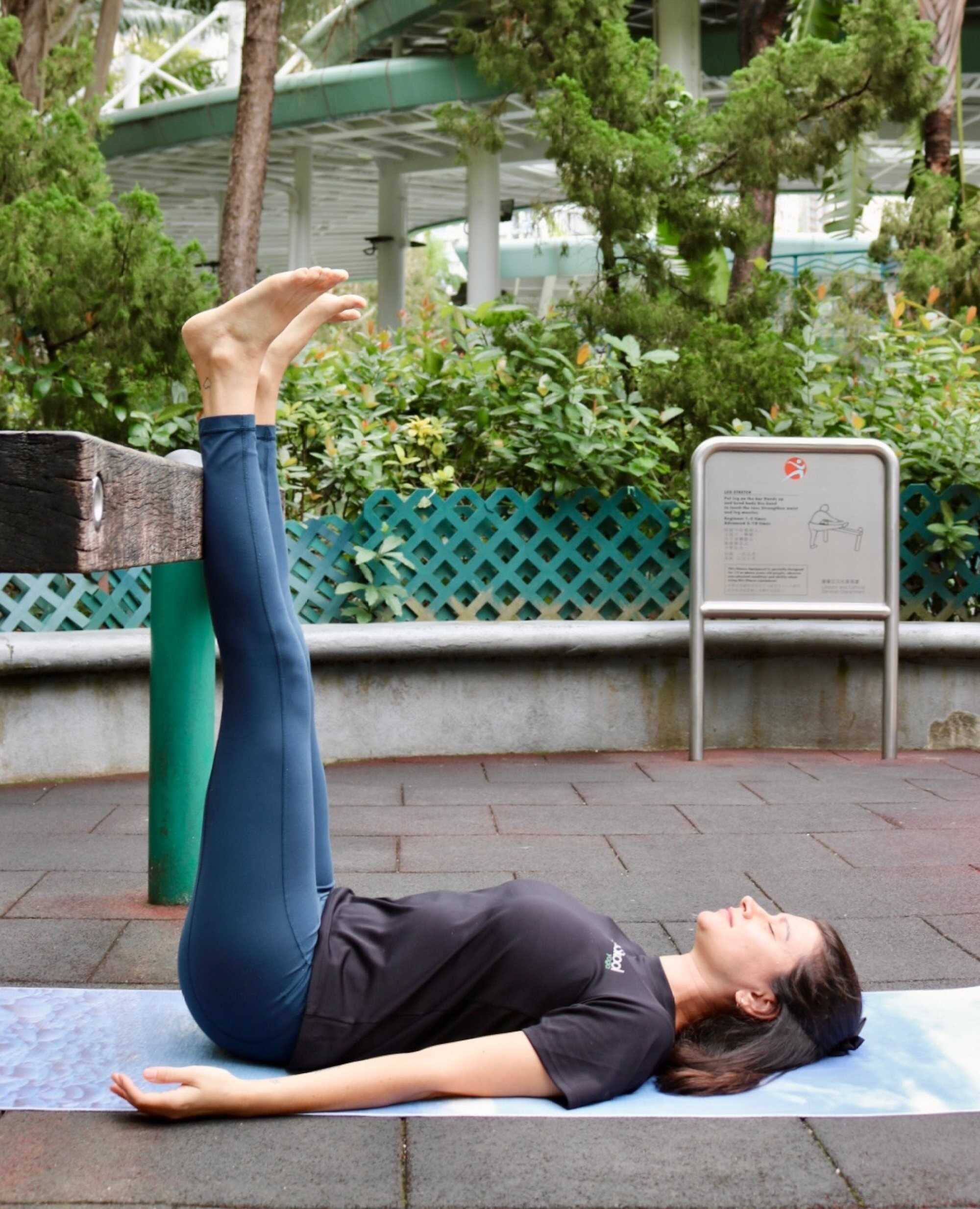
Legs up the wall
Place your mat against the wall and sit down. Move your buttocks as close to the wall as is comfortable. Then, crawl your legs up the wall until they are straight and lie back. If this feels like too deep a stretch, bend your knees and press the soles of your feet against the wall.
To avoid added pressure on your spine, keep your lower back flat on the floor. Relax your arms alongside your body. To get out of this pose, bend your knees into your chest and roll to one side.
Breathing exercise
Deep breathing helps our bodies take in more oxygen, leading to a sense of greater well-being. This breathing exercise can activate the parasympathetic nervous system. It places us in a state of “rest and digest” and helps us feel calm and relaxed.
Lie on your back or in legs-up-the-wall pose. Place both hands on your lower abdomen. Breathe in through your nose for a count of four and then breathe out through your mouth for a count of six. Continue for at least five rounds. Notice how you feel and concentrate on that feeling.