Have you ever seen a mug that changes colour once a hot drink is poured in? Or a ring that is said to change colour with your mood?
Both of these items use thermochromic materials. The colour of these substances is affected by changes in temperature. When the temperature returns to its starting point, the material returns to its original colour.
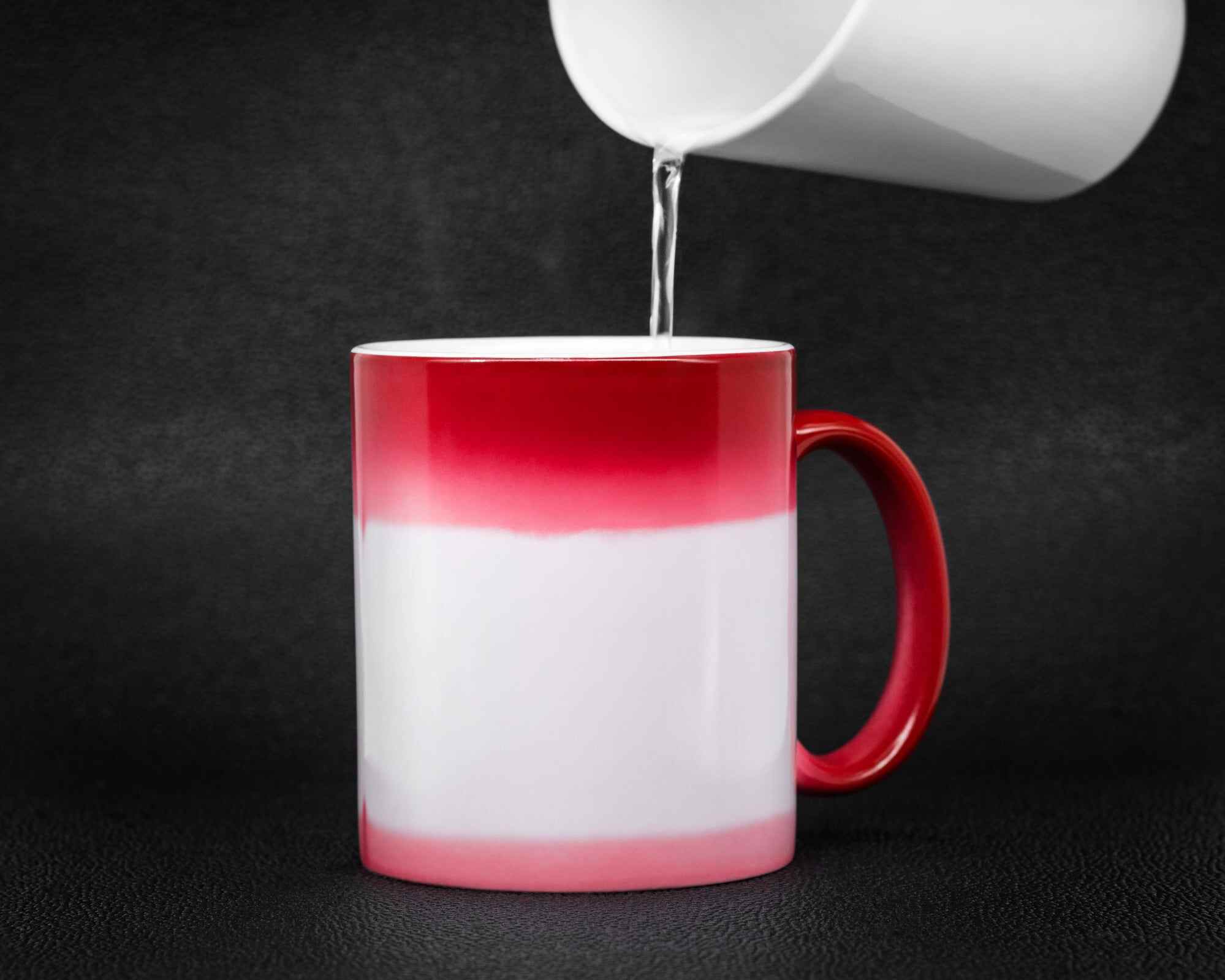
Mugs change their design with heat
Leuco dyes are used in heat-sensitive mugs. The dyes have many tiny capsules. Each capsule holds a dye, a colour developer and an organic solvent. A solvent is used to dissolve other substances. The leuco dye is on the top layer of the mug. When it is at room temperature, the leuco dye covers a lower layer of the mug that has an image. With heat, the layer with the leuco dye becomes transparent, so we see the image below it.
When the mug is cold, the solvent is in its solid state. This allows the dye and colour developer to combine and form a colour. As a hot beverage is poured in, the solvent melts and shifts into its liquid state. This causes the dye to separate from the colour developer and become transparent. This reveals the mug’s hidden image.
Mood rings change with your temperature
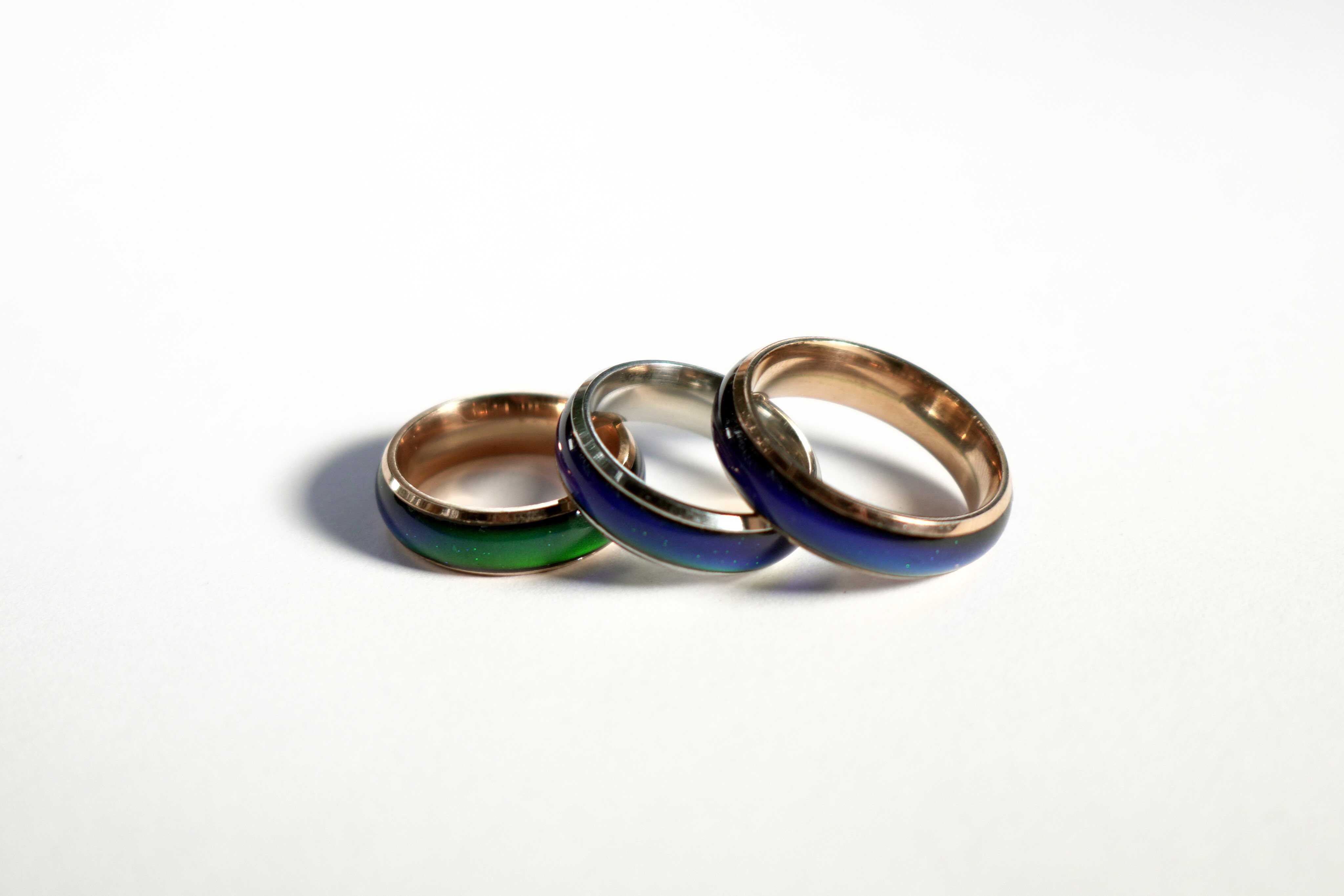
In mood rings, thermochromic liquid crystals create colours that change based on your finger’s temperature.
This is because heat changes how the liquid crystal molecules are arranged. Depending on the arrangement, these molecules reflect light of different colours.
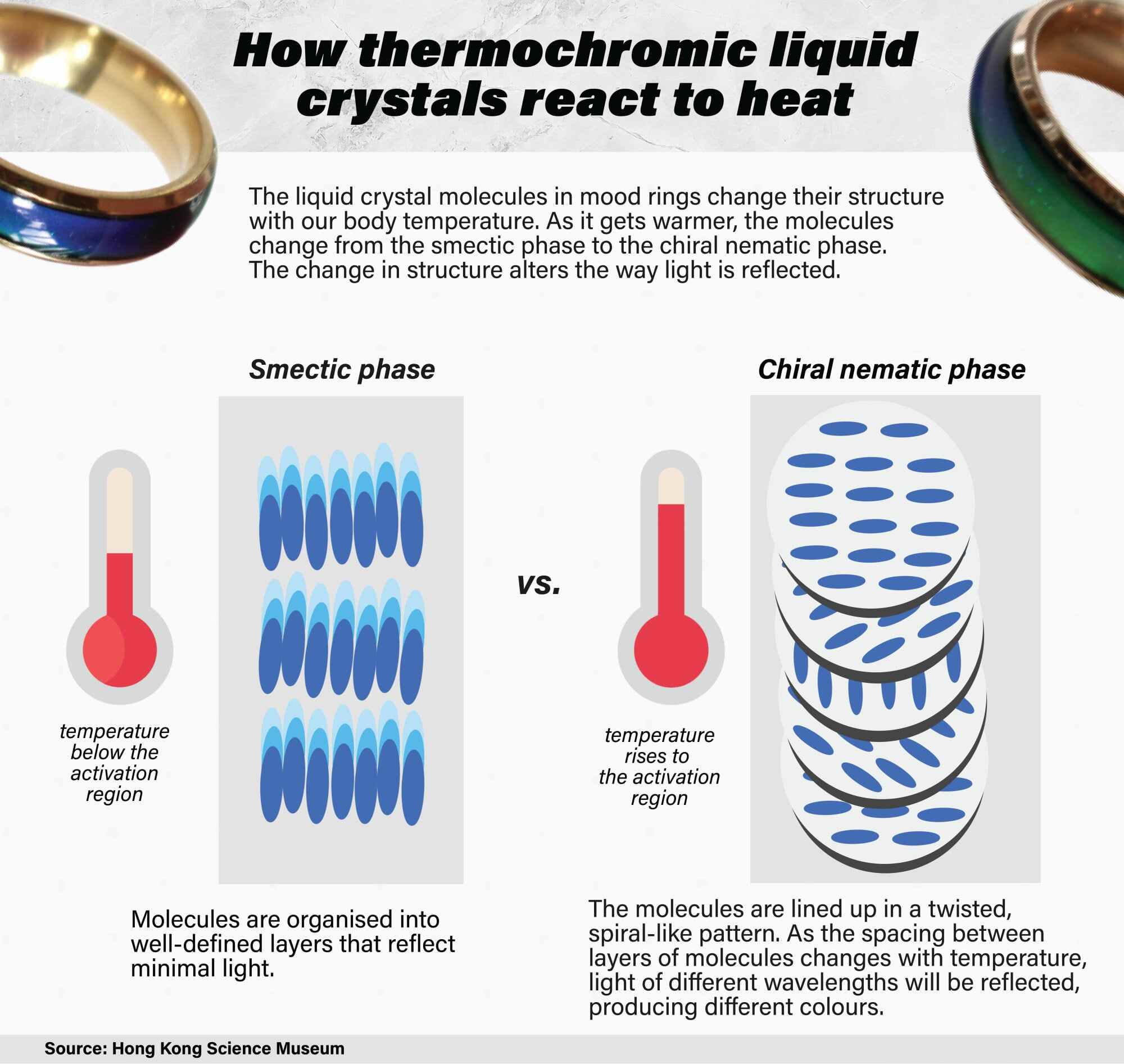
At lower temperatures, the crystal molecules are in layered structures that reflect very little light. Thus, they appear transparent, and you only see the surface below. This is called the smectic phase.
There is a range of temperatures at which liquid crystals change colour. This is the activation region. For mood rings, this region is usually near human body temperature.
When the temperature rises to the activation region, the liquid crystals change to the chiral nematic phase. In this phase, the molecules are arranged in layers. Each layer of molecules is turned in a specific direction. This forms a twisted, helical structure that repeats at regular points.
In this arrangement, the liquid crystal molecules reflect light that we can see.
But as the temperature continues to change, the spacing between the layers of molecules changes. This also changes the colour we see (see graphic).