Science, technology and the arts can come together to light the way for your exploration of the night sky.
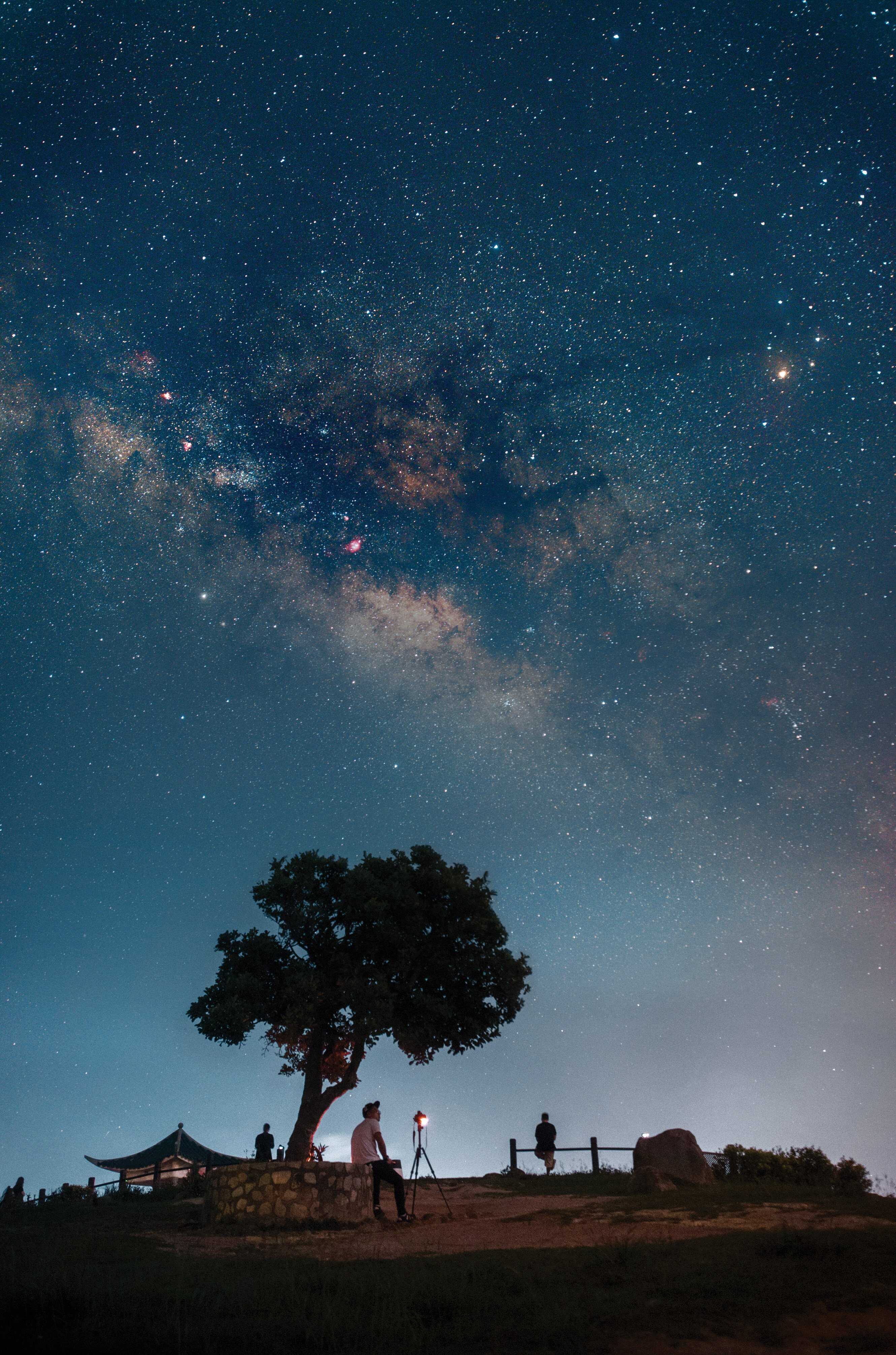
Stargazing is a popular way for people to learn about the universe beyond our planet. To observe the bright stars and the Milky Way in Hong Kong, people usually go to less populated areas such as Sai Kung Country Park or the outlying islands because these are far from the city lights.
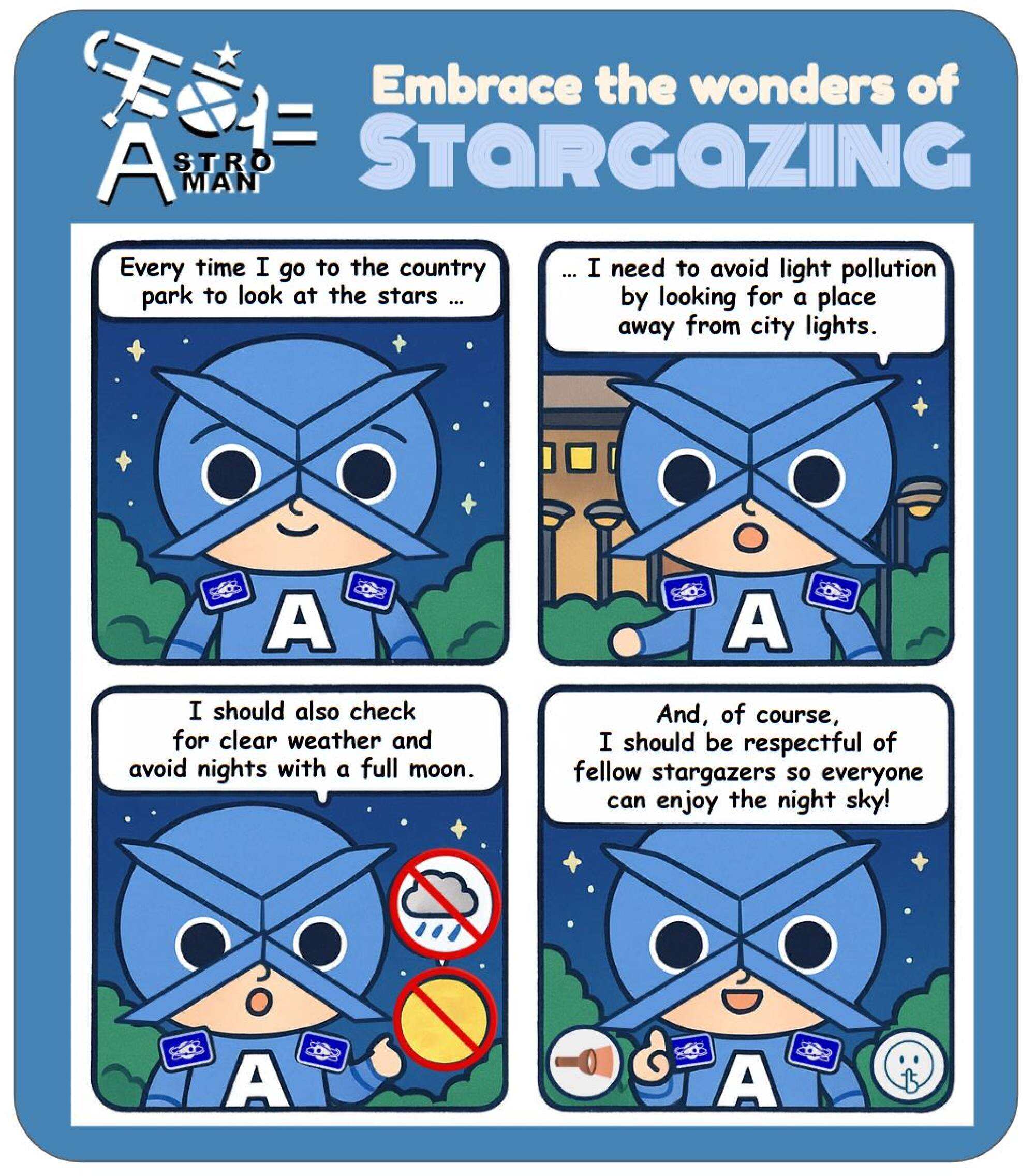
Sky glow refers to the artificial brightness of the night sky as a result of city lights. This makes it harder to see the natural light from stars.
Watching the night sky is a great way to learn about space and feel connected to the cosmos. You can look for the other planets of our solar system, constellations and even galaxies.
So grab your friends and family, find a spot that is far from the city lights and get ready for an unforgettable night under the stars!
How science measures brightness in the sky
Scientists use the term “apparent magnitude” to describe how bright stars or planets appear to an observer on Earth. Smaller numbers indicate brighter objects. Typically, the human eye can see stars with an apparent magnitude of six or below.
For example, Sirius, the brightest star in Earth’s night sky, has an apparent magnitude of -1.5, so it is easy to spot on clear nights in winter. In comparison, a full moon has an apparent magnitude of -12.6.
Technology to guide your gaze
Use the Hong Kong Space Museum’s free app, Star Hoppers, to help you identify constellations and planets in real time. Its augmented reality feature overlays star names on your screen as you point your device at celestial objects in the night sky. This platform makes stargazing easy and fun for everyone.
A red flashlight is another essential tool for a great stargazing experience. Red light protects your night vision and helps your eyes adjust to the dark so that you can see more stars. Avoid bright flashlights or camera flashes, as sudden strong light can harm your eyes and disturb others who are observing or photographing the night sky.
Using a red light is part of stargazing etiquette and ensures everyone enjoys a peaceful night under the stars.
To help you capture constellations and stars, astronomers calculate the best dates and times for stargazing. You can also do research to find out when the skies will be darker because the new moon has not risen.
If your target celestial objects are near the horizon, make sure your viewing location has a clear, open view without buildings blocking your sight.
Stories in the stars
Thousands of years ago, ancient people used their imagination to connect stars into constellations that were easy for them to identify. Each constellation often told a story or represented a myth, turning the stars into a kind of cosmic artwork.
In 1922, the International Astronomical Union (IAU) officially divided Earth’s night sky into 88 constellations, giving each a clear boundary and shape. This system helps astronomers identify stars and navigate the sky more easily.
Exploring these constellations not only teaches us about astronomy but also connects us to human history, culture and creativity. By imagining the shapes and stories behind the stars, we can enjoy the night sky as a beautiful blend of science and art.
Exodus Sit is an astronomy educator, popular science author and science communicator in Hong Kong. He is currently the chair of the National Astronomy Education Coordinator Team for China, Hong Kong, of the International Astronomical Union Office of Astronomy for Education.