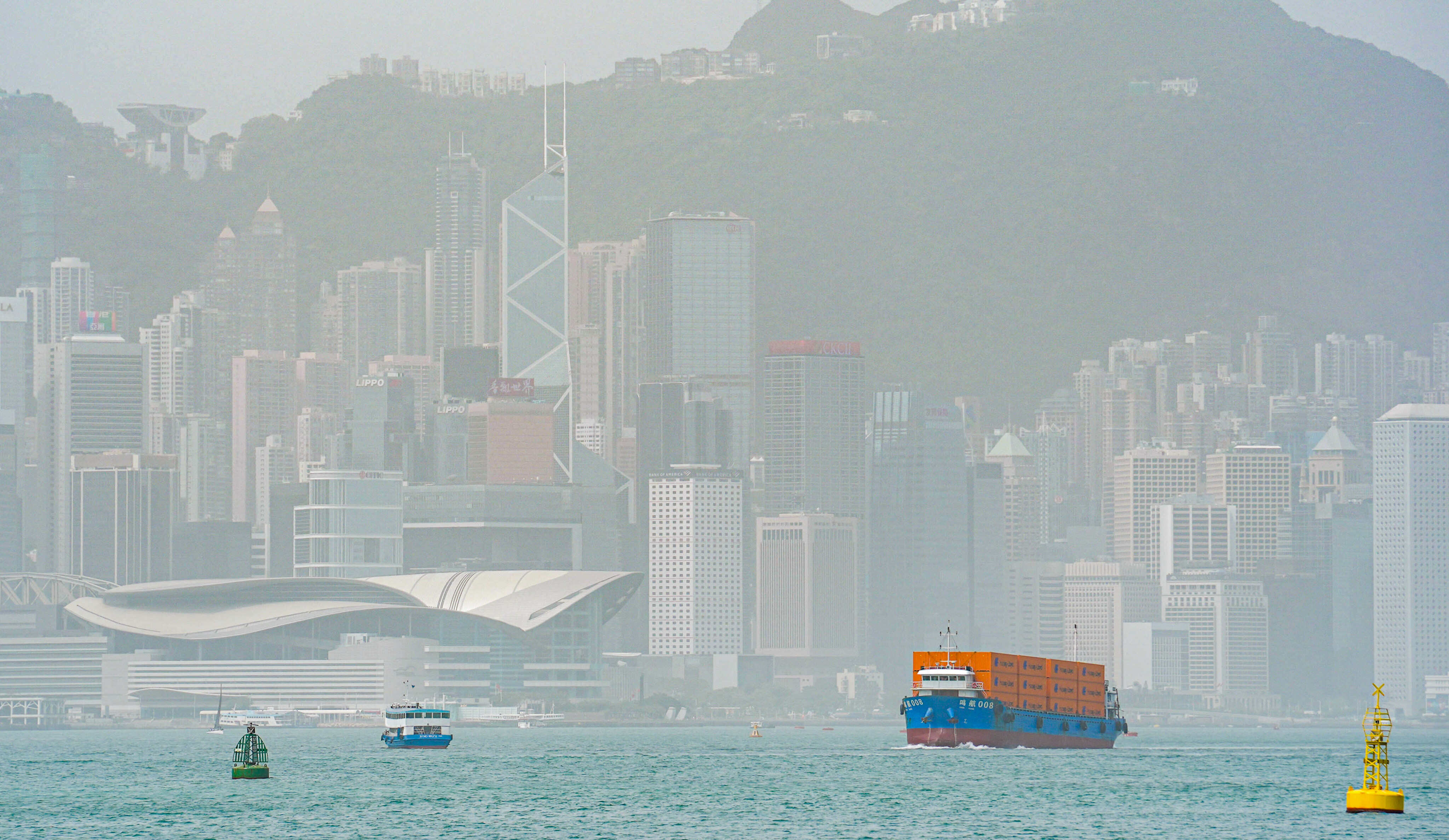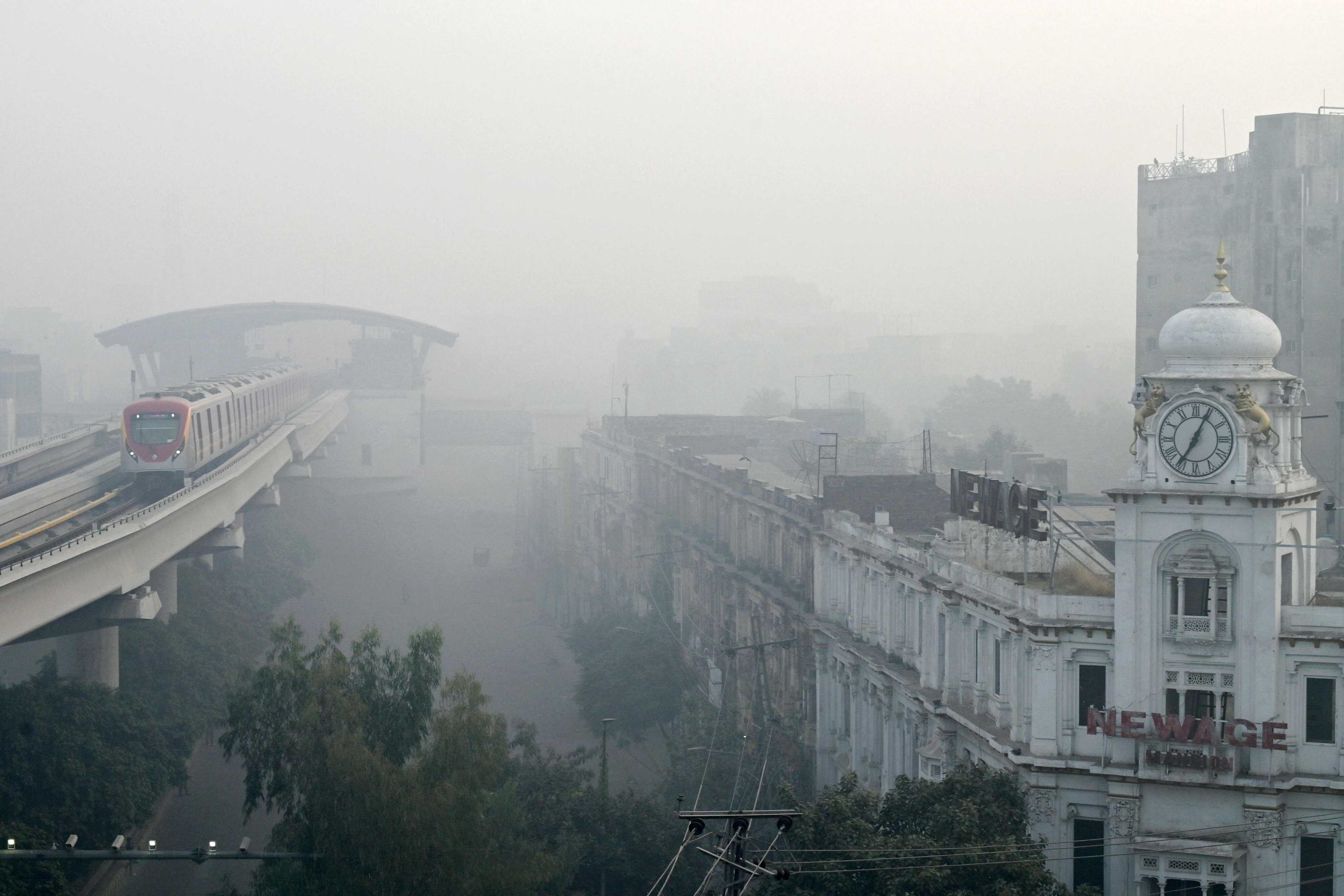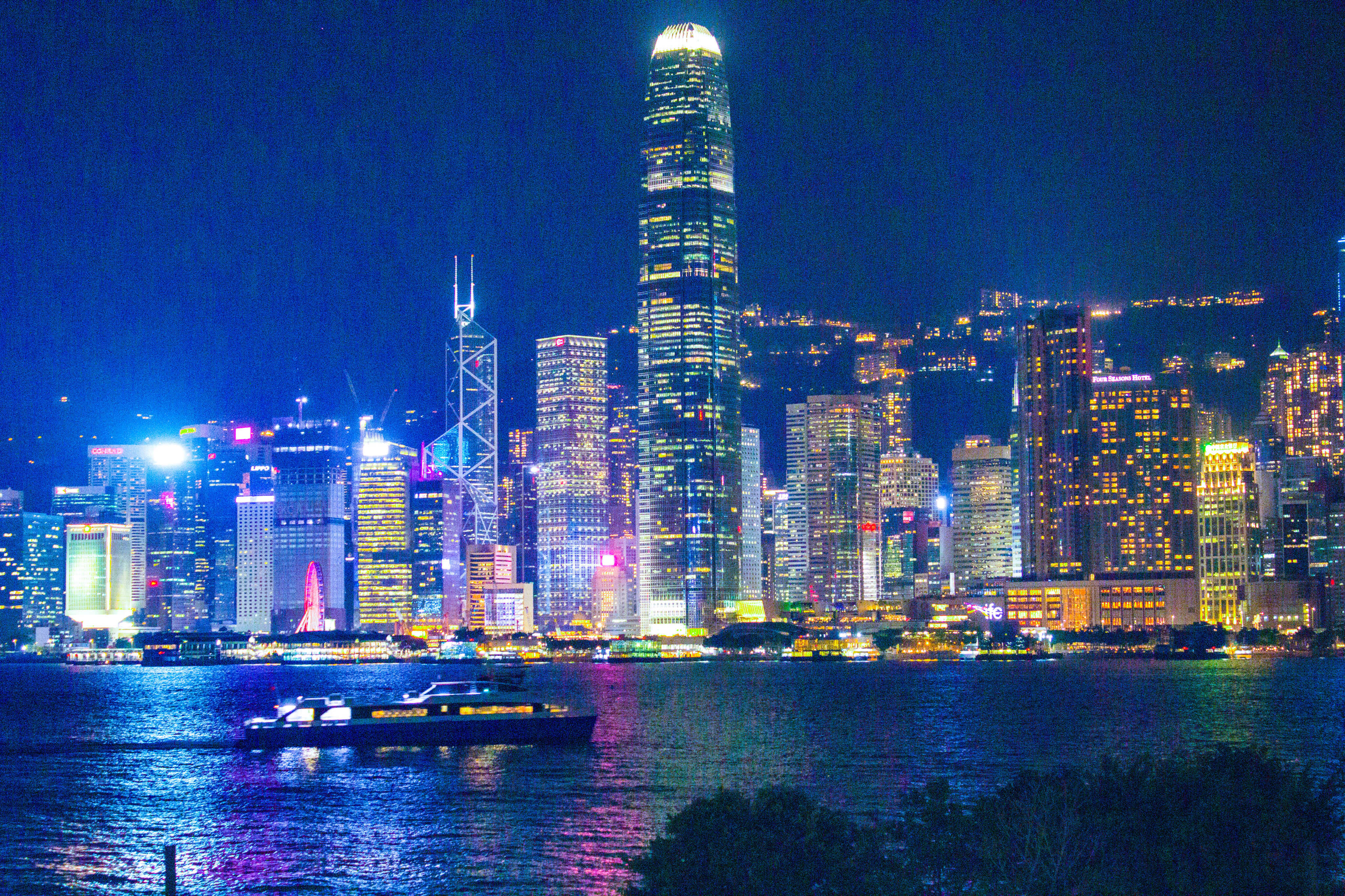
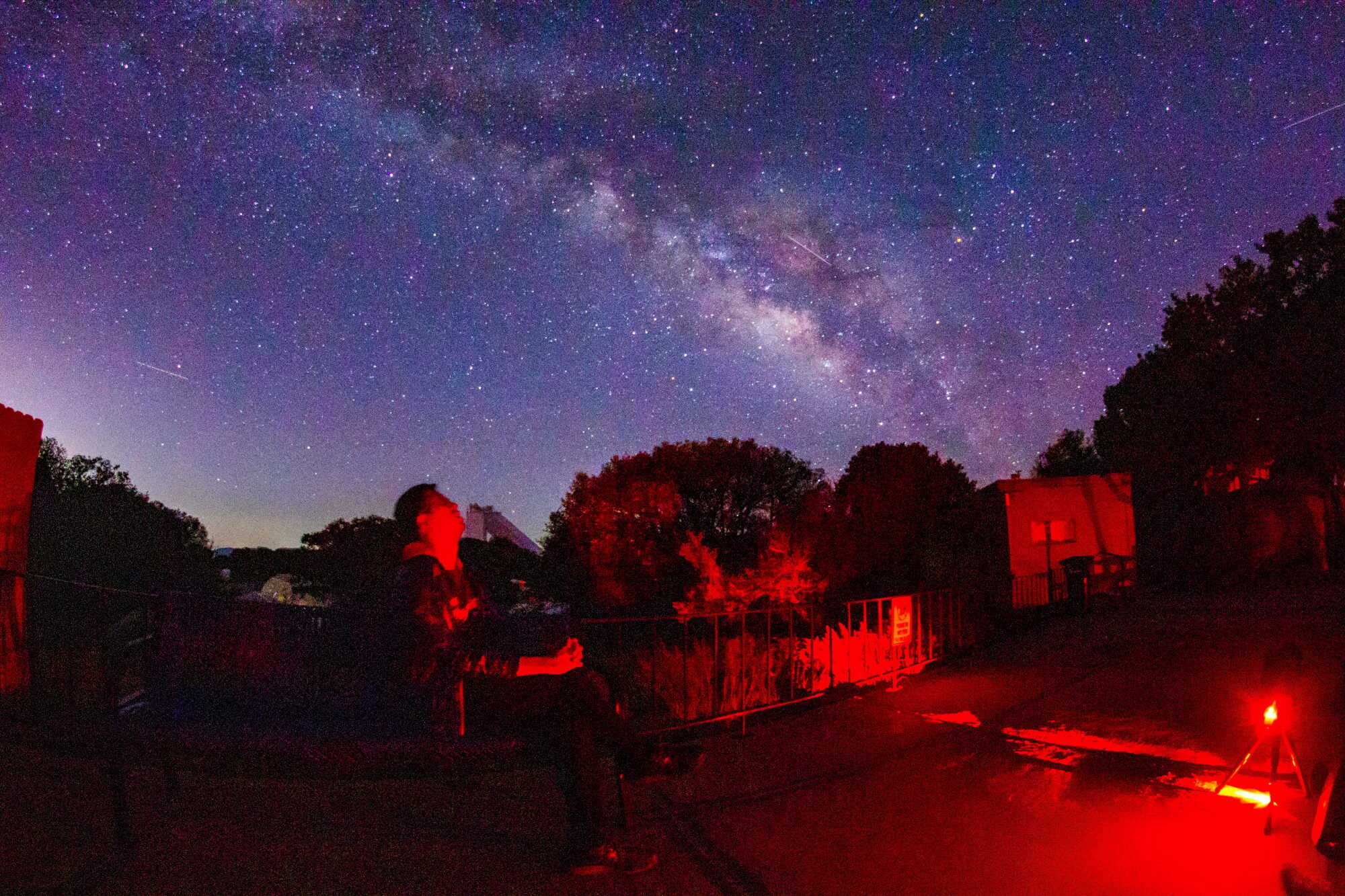
Imagine going back to the 1970s. If you lay down on a patch of grass in Sai Kung on a clear night and looked up at the sky, you could probably make out the Milky Way with the naked eye. However, today, it would be difficult. That is because Hong Kong has serious light pollution.
Exodus Sit is an astronomer, educator and science author. He explained how the environmental problem results from the extensive use of artificial light at night.
He explained how light pollution weakens our ability to see the night sky: “It is excessive outdoor lighting that wastes energy. It’s caused by things like too bright street lights or the neon signs used for advertising on storefronts and skyscrapers.”
Troubling effects
Light pollution can affect human health and wildlife, according to Sit. He is the chair of the National Astronomy Education Coordinator Team for China-Hong Kong of the International Astronomical Union Office of Astronomy for Education.
“It can disrupt sleep, particularly in densely populated areas like Mong Kok and Tsim Sha Tsui, where light from the streets can spill into homes,” he said.
According to the American Academy of Neurology, people who live in areas with more intense light are more likely to sleep less than six hours a night.
Poor sleep can increase the risk of illness and affect how you function.
Light pollution is not only an issue for us. The human-made problem affects the ecosystem, especially nocturnal animals.
Excessive artificial light interrupts the breeding cycles of fireflies and birds. Predators such as bats and frogs may struggle to hunt for food under bright light. Even insects can be affected. They can become disoriented by street lights that do not have proper shielding.
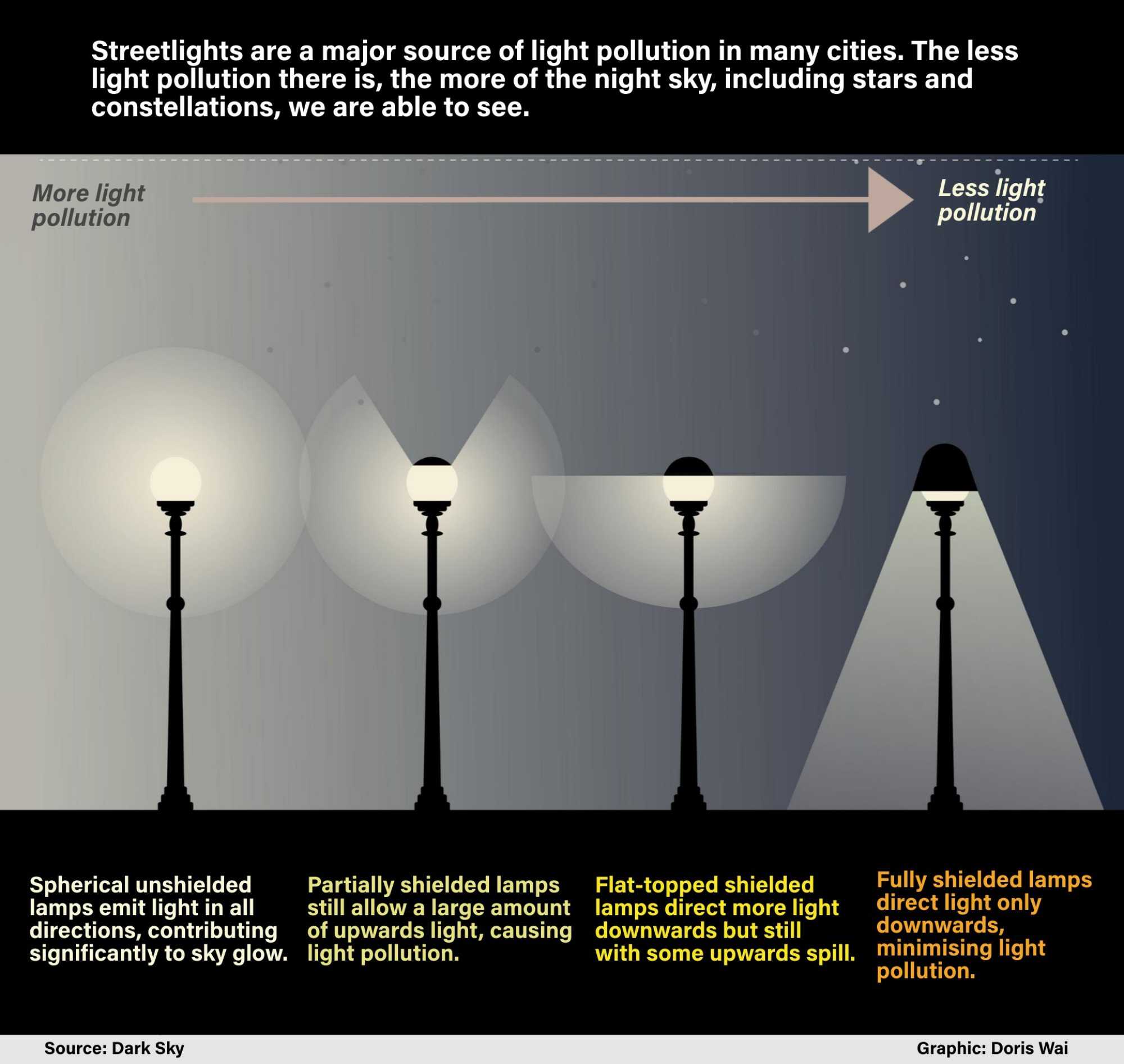
If a street light has proper shielding, its light should focus on the ground. A street light that is not shaded or does not have proper shielding will shine light everywhere. This contributes to the sky glow that makes it difficult to see stars at night (see graphic).
Raising awareness
Sit pointed out the slight sky glow over the sea in Hong Kong that is caused by fishing vessels and other ships. This is a form of light pollution.
Sit said young people who are interested in learning more about issues such as light pollution should read up on astronomy and the dark sky. He is the author of the educational book Explore Astronomy A to Z: Get Hands-on with STEAM Space Science.

Astronomy is the scientific study of space. Light pollution and energy conservation are issues that astronomers can help explain.
“We all have a responsibility to reduce light pollution … [to ensure] the future generation gets to see natural wonders,” Sit said.