
Venus Hung Yat-yiu used to receive multiple calls a day from her grandmother.
But the Form Five student at United Christian College (Kowloon East) often ignored them because she was busy with homework.
She would come to regret not answering her phone.
A few months after these calls stopped, Venus’s grandmother was diagnosed with dementia. The condition can affect a person’s memory, language, problem-solving and other thinking abilities.
“Now, she hardly recognises me,” said the 16-year-old. She recalled how her grandma’s health deteriorated quickly after the diagnosis last November.
After Venus joined a youth entrepreneurial programme at her school last year, her regret inspired a game designed to foster communication between teenagers and their grandparents.
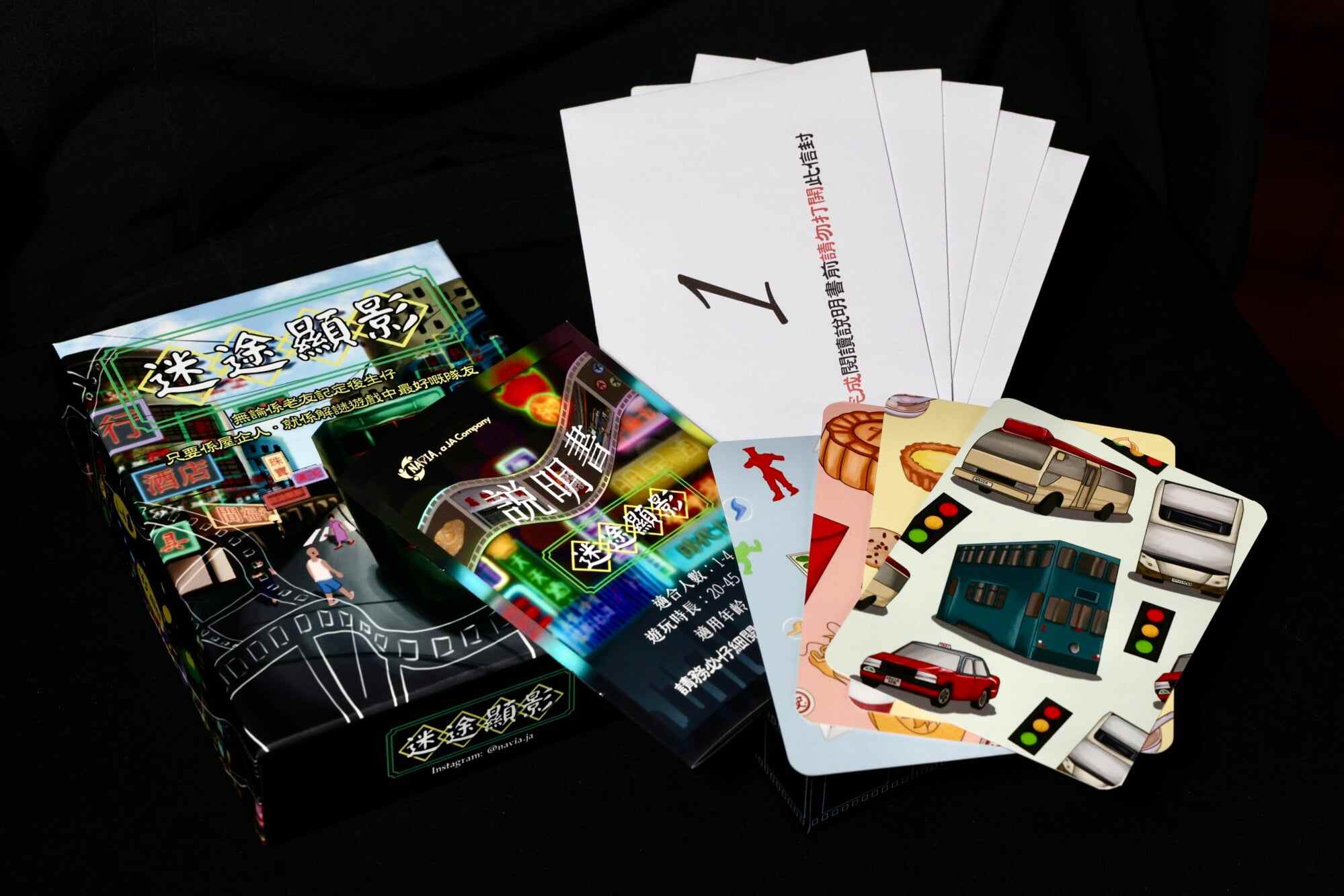
In Lost and Found, elderly and teenage players collaborate to guide a child to a competition venue after the child misses the bus.
“The purpose of our whole journey is to add fun into connection because most teenagers think that connecting with [the] elderly is boring,” Venus said.
Learning from professionals
The HSBC x JA Company Programme is run by HSBC and Junior Achievement Hong Kong. It helps students build entrepreneurial skills by running a business under the guidance of industry professionals.
After months of research and brainstorming, the team decided to focus on a product to help the elderly. They had narrowed their ideas down to two: an escape-room experience at Hong Kong landmarks and a communication-based card game. They merged the ideas to create Lost and Found.
Inside the box are five sealed envelopes. Players open them in order, revealing story cards for each level of the game. They must decode clues to unlock the next stage.
A website, coded by the team, provides a timer, hints and reflection questions after each level is complete.
“Some elderly may be left out by the digital world, so it’s really important to incorporate new technologies,” Venus explained.
Inspiring connections
Prudence Chung Sin-man, 16, the team’s operations director, tested the prototype with her grandfather.
One level of the game features an old system of Chinese numerals, hua ma, that were once common in wet markets and old restaurants.
“At first, we weren’t sure whether to include them as we didn’t know if all elderly people would recognise them,” the Form Five student said.
After seeing the characters, her grandfather started sharing stories from the past.

“He told me how prices used to be cheap, what he used to buy, and how people even wrote phone numbers using those characters,” Prudence said.
When her whole family played together, the conversations kept flowing. Prudence’s mother later told her she had never heard her grandfather talk so much about his past.
After collecting feedback, Prudence and the team made the game more elderly-friendly by enlarging the font and simplifying the instructions.
Lessons about entrepreneurship
For the team, making their idea a reality wasn’t easy. They revised the game repeatedly based on feedback. The frequent changes led to conflicts with their original manufacturer.
The team’s production deadline was approaching. With a teacher’s assistance, they switched to other manufacturers and assembled the game themselves.
“The biggest lesson was [learning to stay] calm to deal with a problem,” Prudence said.
The team won the Best Offering and Digital Entrepreneurship awards from the HSBC JA Company Programme. But for Venus, the real success was creating something that helps families talk before it is too late.
Prudence said that calling your grandparents to show you care might seem unimportant, but “[it] could be the happiest thing for [your grandparents] in an entire week.”