Deep Dive delves into hot issues in Hong Kong and mainland China. Our easy-to-read articles provide context to grasp what’s happening, while our questions help you craft informed responses. Check sample answers at the end of the page.
News: Hong Kong sees a drastic increase in the number of hot days
-
Hong Kong has seen record numbers of hot days and hot nights in recent years
-
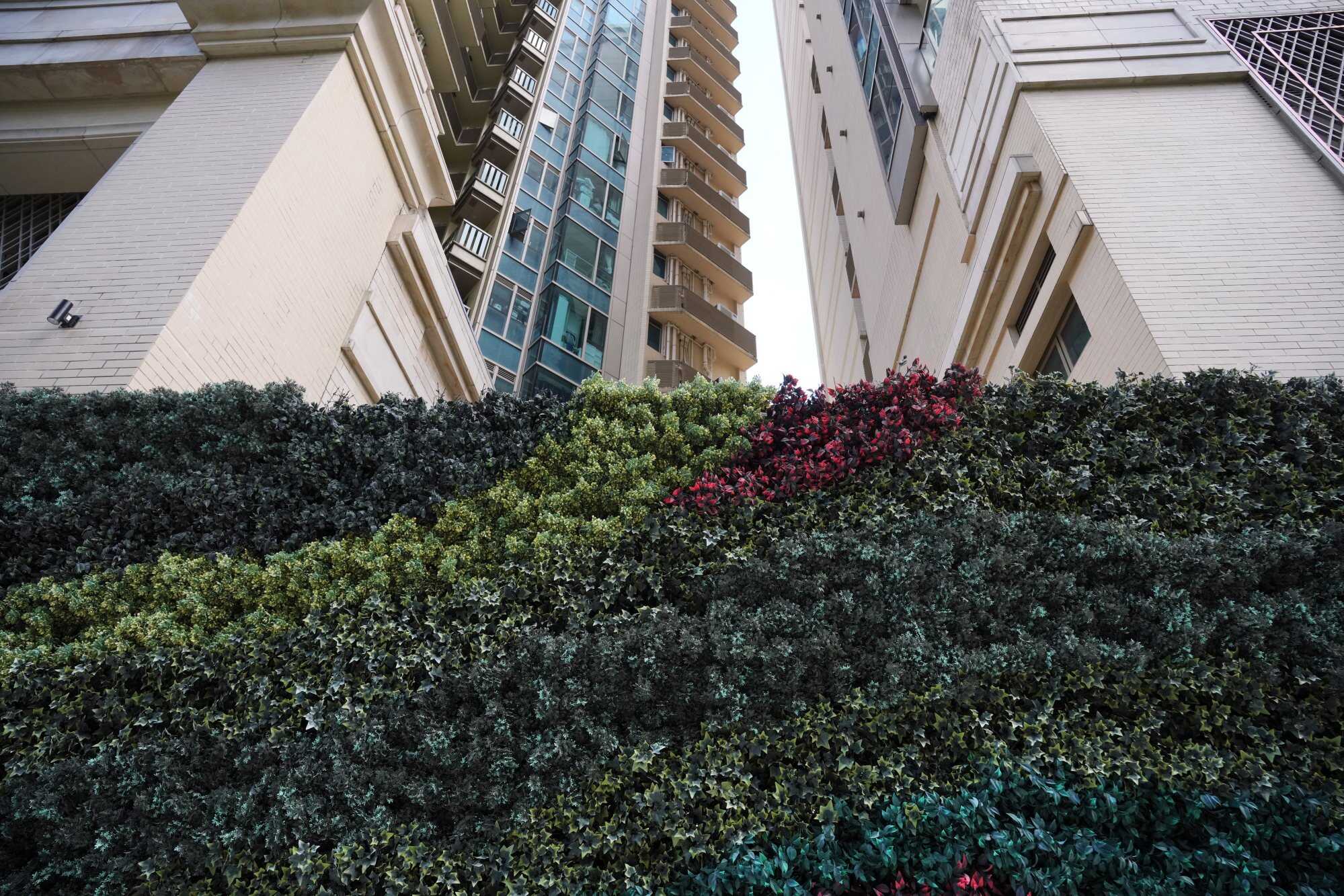
The city’s developed areas have little to no greenery to combat trapped heat
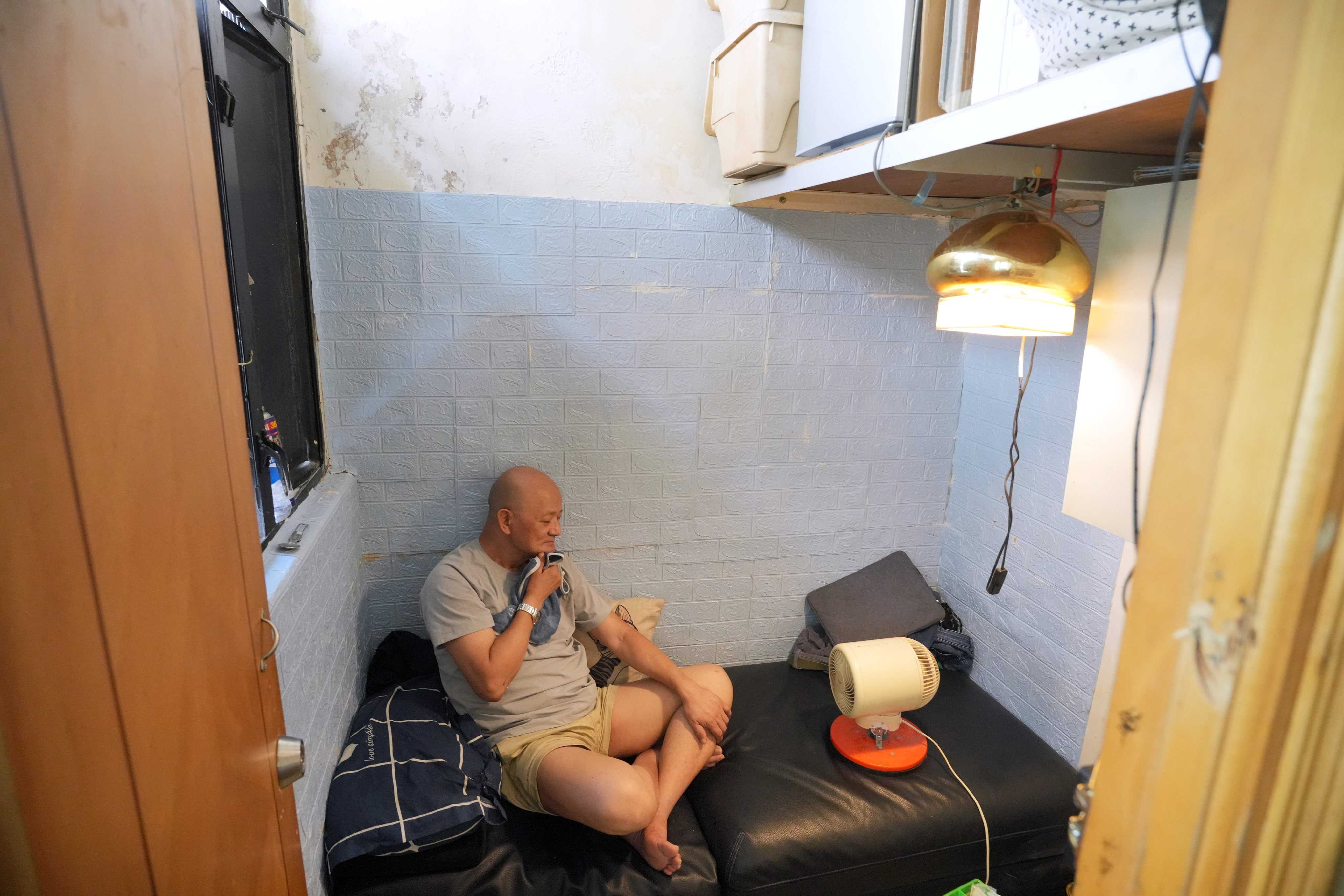
In Sham Shui Po, a densely populated urban area in Kowloon, some residents’ only options for beating the heat are to use wet towels, turn on a small fan or sip a cold drink.
Very hot days – and almost as many hot nights – have become increasingly frequent in Hong Kong. Experts have urged authorities to review their strategies to increase the city’s green coverage to mitigate urban heat more effectively.
But how can Hong Kong’s “concrete jungle” really maximise the benefits of greenery-filled city areas?
Between 2021 and 2024, the city’s weather forecaster, the Hong Kong Observatory, reported between 52 and 54 “very hot” days each year, the most since records began in 1884.
“Very hot” days are periods when temperatures reach at least 33 degrees Celsius (91.4 Fahrenheit).
Between 2020 and 2024, Hong Kong recorded at least 50 “hot nights” – evenings and nights with a temperature of at least 28 degrees – each year. The observatory recorded a high of 61 hot nights in 2021.
Ren Chao is an urban climate expert and a professor at the University of Hong Kong’s faculty of architecture. She said the effects of the city’s hot nights were concentrated in developed areas. She also noted that the situation was more alarming due to the number of hot nights on an annual basis increasing faster than the number of hot days.
The annual average number of hot nights between 1992 and 2021 was 25, which is 42 times higher than the 0.6 nights recorded between 1885 and 1914.
In terms of very hot days, the annual average between 1992 and 2021 was 18.9 – a ninefold increase from the average between 1885 and 1914.
Ren said the city also had an increasing number of areas suffering from hours of daytime temperatures of at least 33 degrees and nighttime temperatures of at least 28 degrees.
Ren cited heat maps from 2011 to 2015 and 2018 to 2022. The densely populated neighbourhoods of Tsim Sha Tsui, Yau Ma Tei, Mong Kok, Kwun Tong and Causeway Bay all had areas suffering from more than 800 hot night hours. Tuen Mun has recently joined the list.
To mitigate urban heat, Ren said it was essential to increase pedestrian-level ventilation and greenery. As concrete structures trap and slowly release heat, well-connected greenery could spill a cooling effect over to surrounding developed areas.
The academic noted that much of the existing urban greenery, such as parks, was “isolated” and “surrounded by concrete jungles,” making little impact.
While the latest publicly available government data, issued in 2018, shows that 76 per cent of Hong Kong’s land is vegetated, the city’s developed spaces have only 7.6 per cent greenery coverage.
Staff writer
Question prompts
1. Which of the following is true, according to the information in the news?
(1) A “very hot” day is when temperatures hit at least 33 degrees Celsius.
(2) The annual average of hot days between 1992 and 2021 was 25.
(3) Temperature records in Hong Kong began in 1894.
(4) Between 2021 and 2024, there were at least 50 “very hot” days each year.
A. (1), (3) only
B. (2), (3) only
C. (1), (4) only
D. (2), (4) only
2. What does Ren Chao suggest can be done to mitigate the heat?
3. Based on the information in the news, which areas face the brunt of the heat and why?
Illustration
Question prompts
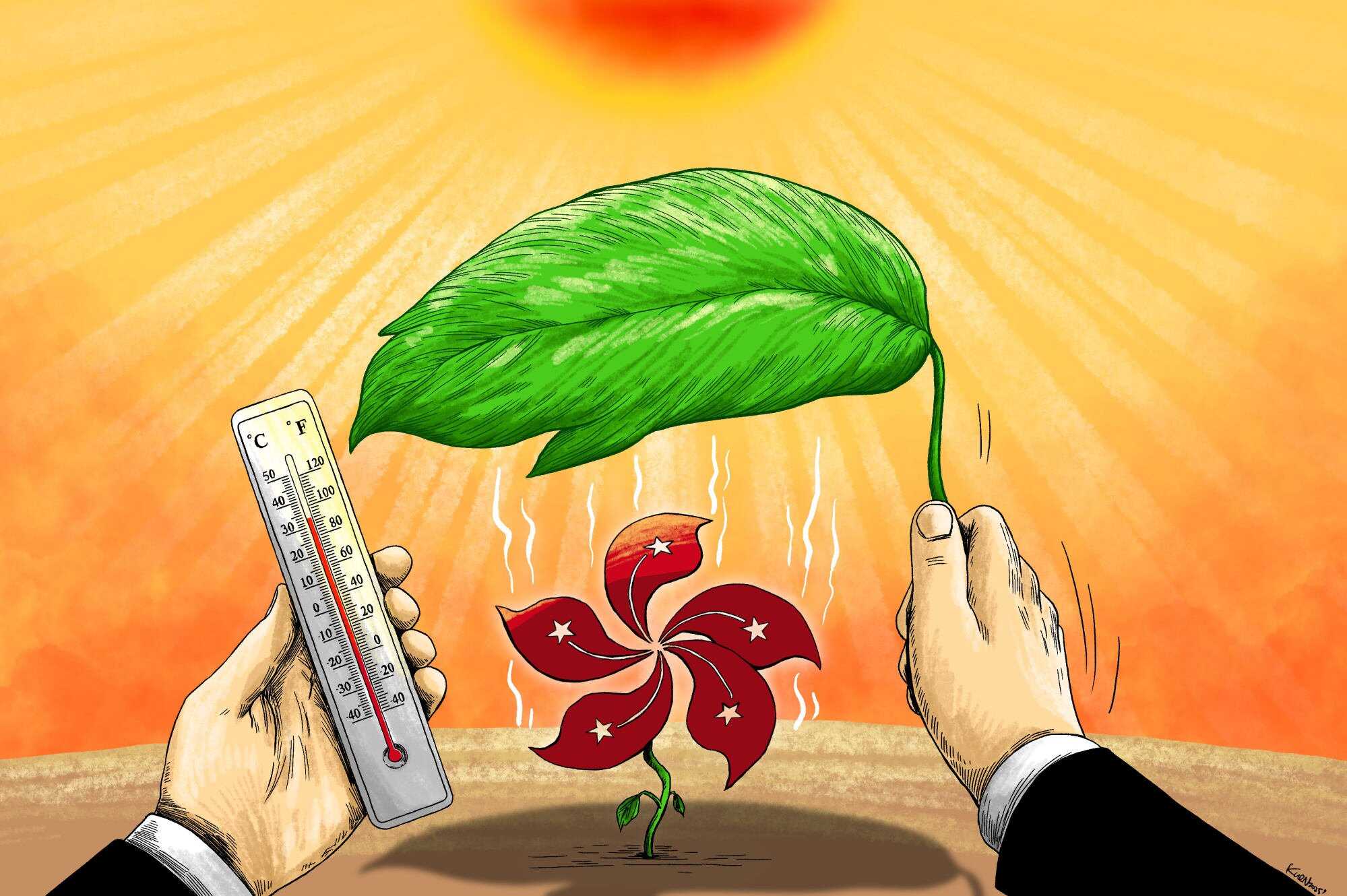
1. Describe what you see in this illustration and how it relates to the news.
2. Use the news and your own knowledge to explain why an increasing number of hot days is a problem.
Glossary
concrete jungle: a phrase that describes an urban area that has a high density of large, modern, concrete buildings, often perceived as an unpleasant living environment
urban climate expert: someone who specialises in the relationship between urban environments and the climate. They study how urbanisation affects weather patterns, climate change and more. They use this information to raise public awareness and inform policy development. Areas of focus include heat, air quality and green infrastructure.
Sample answers
News
-
C
-
To mitigate urban heat, Ren Chao said it was essential to increase pedestrian-level ventilation and greenery. Concrete structures trap and slowly release heat, but well-connected greenery could spill a cooling effect over to its surrounding developed areas.
-
The effects of the city’s hot nights were concentrated in developed areas. Citing heat maps, the densely populated neighbourhoods of Tsim Sha Tsui, Yau Ma Tei, Mong Kok, Kwun Tong and Causeway Bay all had areas suffering from more than 800 hot night hours. Tuen Mun has recently joined the list. As these areas are developed, the concrete structures trap and slowly release heat. Existing urban green spaces, such as parks, are often too isolated to provide relief. The latest public data from the government confirms that the city’s developed spaces have only 7.6 per cent greenery coverage.
Illustration
-
This illustration depicts a strong, hot sun and a hand holding a thermometer with a temperature reading of 33 degrees Celsius and around 92 degrees Fahrenheit, making it a “very hot” day. Hong Kong has seen an increase in very hot days. Hong Kong is represented by a red bauhinia, the flower on the city’s flag, and stars to resemble the flag. The flower is directly under the sun and burning up, struggling to survive – just as the city’s people are suffering in the extreme heat. The person’s other hand holds a single green leaf and is trying to shade the flower – Hong Kong – from the sun. This represents how greenery can mitigate the heat, but we have too little of it in the city. (accept all similar answers)
-
Heat is an environmental and health hazard. High heat can lead to people overusing air conditioning, fans and refrigerators, consuming more energy and harming the environment. Heat is detrimental to crops and Hong Kong’s natural ecosystems, posing a threat to our wildlife. Heat also harms humans, causing the body stress and heatstroke and increasing the effects of other illnesses. (accept all reasonable answers)