Deep Dive delves into hot issues in Hong Kong and mainland China. Our easy-to-read articles provide context to grasp what’s happening, while our questions help you craft informed responses. Check sample answers at the end of the page.
News: A new innovation hub in Hong Kong
-
Development of an Tin Technopole is underway, expected to create over 300,000 full-time jobs for Hongkongers
-
New tech hub will be rolled out in five phases and could take 10 years to complete
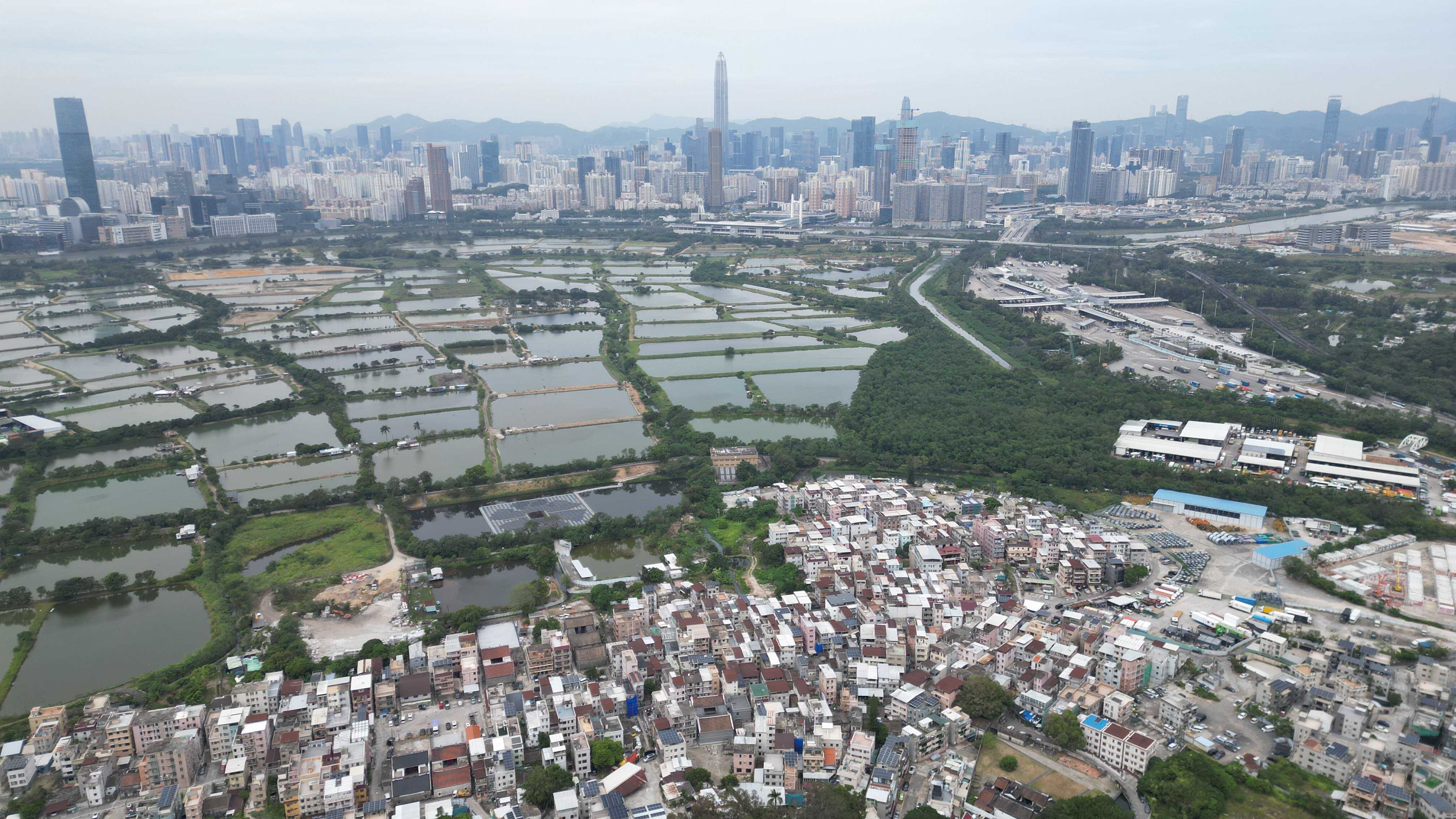
Hong Kong plans to build a new innovation and technology (I&T) hub near the city’s border with mainland China. The 300-hectare technopole will be built inside the Northern Metropolis mega-development. The entire scheme will transform 30,000 hectares of land into an economic hub and house at least 2.5 million people.
Sun Dong is the secretary for innovation, technology and industry. He said the San Tin Technopole will be developed in five phases. It will take at least 10 years to complete.
Sun added that the tech hub is expected to bring HK$250 billion or more to Hong Kong’s economy.
It should also create around 300,000 full-time jobs.
The project aligns with China’s 14th five-year plan to build Hong Kong into a regional innovation hub.
According to a plan shared last month, the technopole will be a base for advanced manufacturing and I&T industries. The government said it hoped the hub would attract global resources and talent.
“Given our unique advantages and determination in developing the I&T industry, the San Tin Technopole will offer land that the city has been lacking. It serves as an ideal condition in luring the leading enterprises for our next step,” Sun said.
The government has marked 627 hectares of land for the technopole. Around 300 hectares are specifically designated for I&T.
Authorities have said the technopole will be divided into “three hubs and three corridors”.
The three “development” hubs are Hetao, Chau Tau and Ki Lun, organised geographically from north to south. These will be joined by three corresponding “industry development” corridors. These will include life and health technology, artificial intelligence and robotics, and microelectronics and advanced industry.
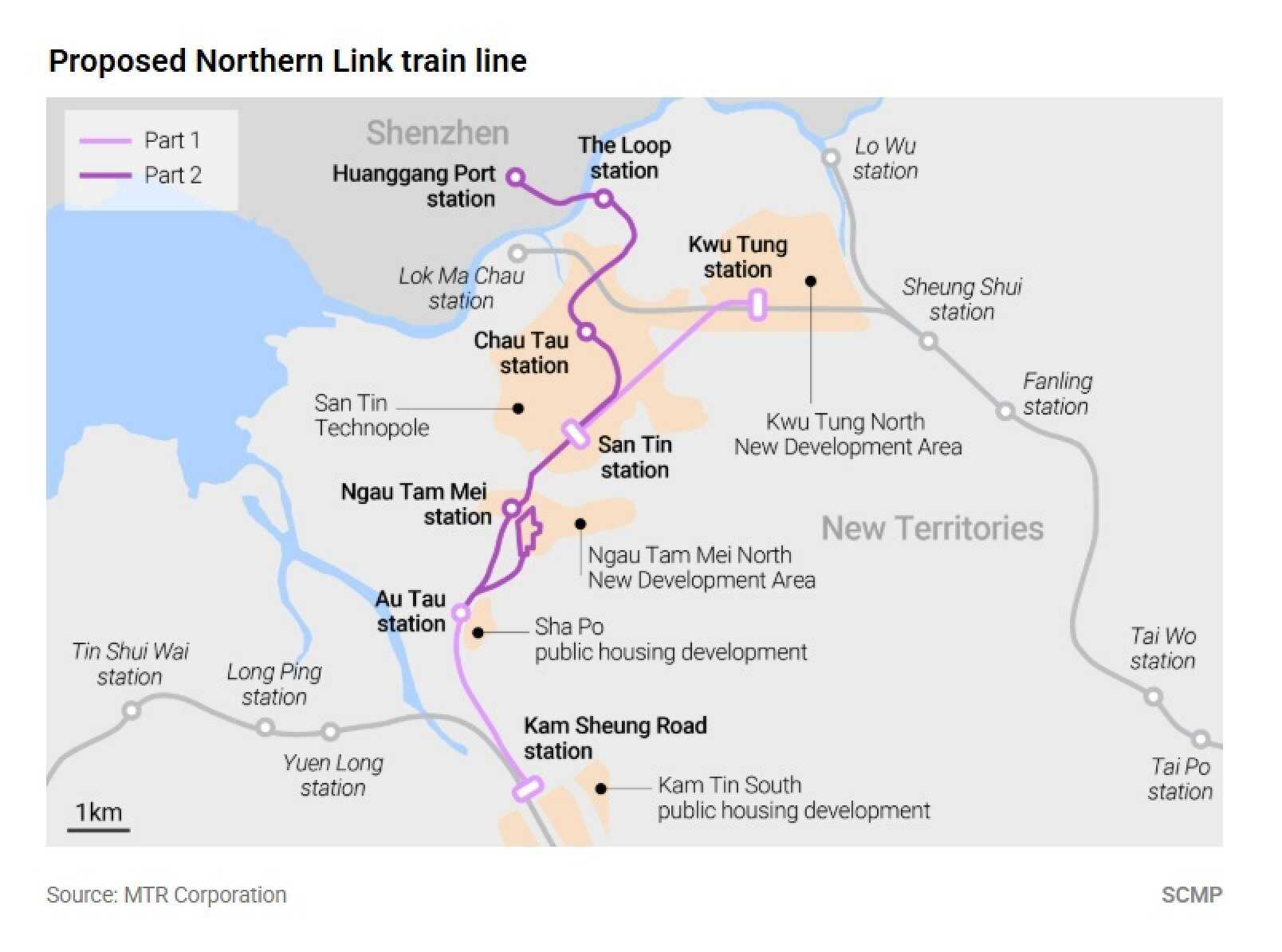
New enterprises are expected to operate from 2031 or earlier. The Northern Link, which will provide railway services to San Tin, is scheduled to be completed by 2034.
Sun said the technopole can work with the Hong Kong-Shenzhen Innovation and Technology Park in the Lok Ma Chau Loop. It could also integrate with industry supply chains in mainland cities in Guangdong.
The concept of the Northern Metropolis featuring an I&T hub was first raised in 2021. Hong Kong’s then Chief Executive Carrie Lam Cheng Yuet-ngor announced it in a policy address.
Staff writers
Question prompts
1. Which of the following is true, according to the news?
(1) The San Tin Technopole’s primary focus will be innovation and technology.
(2) The technopole is expected to take 20 years to become fully operational.
(3) The technopole was first mentioned by a former chief executive.
(4) The technopole is not part of the Northern Metropolis mega-development.
A. (1), (2) only
B. (1), (3) only
C. (2), (4) only
D. (3), (4) only
2. List TWO possible benefits of the San Tin Technopole.
3. Why is the San Tin Technopole being built near the border with mainland China? Explain using the news, glossary and your own knowledge.
Map
Question prompts
1. Based on this map, explain how the proposed Northern Link train line could benefit residents living in the Sha Po area.
2. How will the new train line connect Hong Kong with mainland China, and how could this be helpful? Explain using the news, glossary and your own knowledge.
Glossary
enterprises: projects or undertakings; businesses or companies
Northern Link: a proposed Hong Kong MTR line which would connect the Tuen Ma line and the Lok Ma Chau Spur Line of the East Rail Line. It would complement the Northern Metropolis mega-development.
Hong Kong-Shenzhen Innovation and Technology Park: a new innovation and technology hub co-developed by Hong Kong and Shenzhen, located in the Lok Ma Chau Loop

Sample answers
News
-
B
-
It is expected to generate HK$250 billion or more for Hong Kong’s economy and create around 300,000 full-time jobs, boosting economic growth and employment. The hub will help attract global talent and advanced enterprises to Hong Kong, strengthening the city’s innovation and technology (I&T) industries.
-
The San Tin Technopole is being built near the border with mainland China to enable closer collaboration with mainland cities such as Shenzhen, which are major technology and manufacturing centres. It will help transform and commercialise research from the Hong Kong-Shenzhen Innovation and Technology Park and integrate supply chains from nearby Guangdong, enabling stronger regional cooperation and resource sharing. This location supports the goals of China’s 14th five-year plan, which promotes cross-border innovation and aims to develop Hong Kong as a regional innovation hub within the Greater Bay Area. Being near the border facilitates talent exchange, logistics and industrial collaboration between Hong Kong and mainland China. (accept all reasonable answers)
Map
-
The proposed Northern Link train line will reduce travel times to places such as the San Tin Technopole and the Kwu Tong North development area, which are set to become job-creating areas. It will also strengthen internal transport links within Hong Kong and effortlessly connect to border control points such as Lok Ma Chau and Huanggang Port. (accept all similar answers)
-
The new train line will support the Northern Metropolis and the San Tin Technopole, both located near the Hong Kong-Shenzhen border, making travel between Hong Kong’s innovation hub and mainland cities like Shenzhen and other parts of Guangdong smoother. It will link to The Loop station and Lok Ma Chau station, which are cross-border gateways to Shenzhen, enhancing cooperation in innovation, trade and talent exchange. This will make it much easier for residents, workers and enterprises to move between Hong Kong and Shenzhen, supporting the development goals of the Greater Bay Area and China’s 14th five-year plan. (accept all reasonable answers)