Deep Dive delves into hot issues in Hong Kong and mainland China. Our easy-to-read articles provide context to grasp what’s happening, while our questions help you craft informed responses. Check sample answers at the end of the page.
News: Hong Kong’s wild boars see large decline in population since 2021
-
Human feeding and the city’s urban design have exacerbated wild boar-human conflicts
-
Authorities have resorted to culling the animals to address urban encroachment
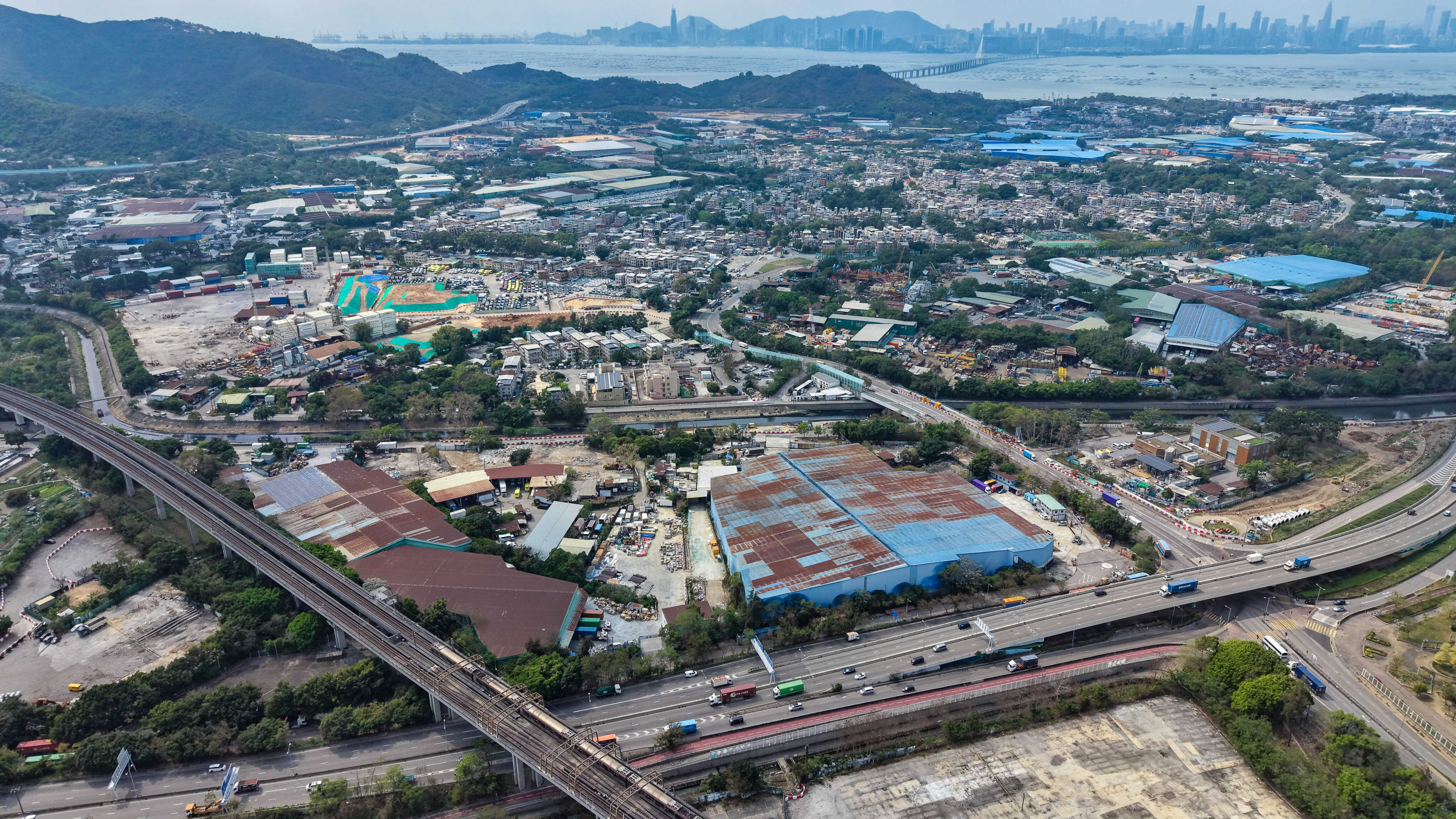
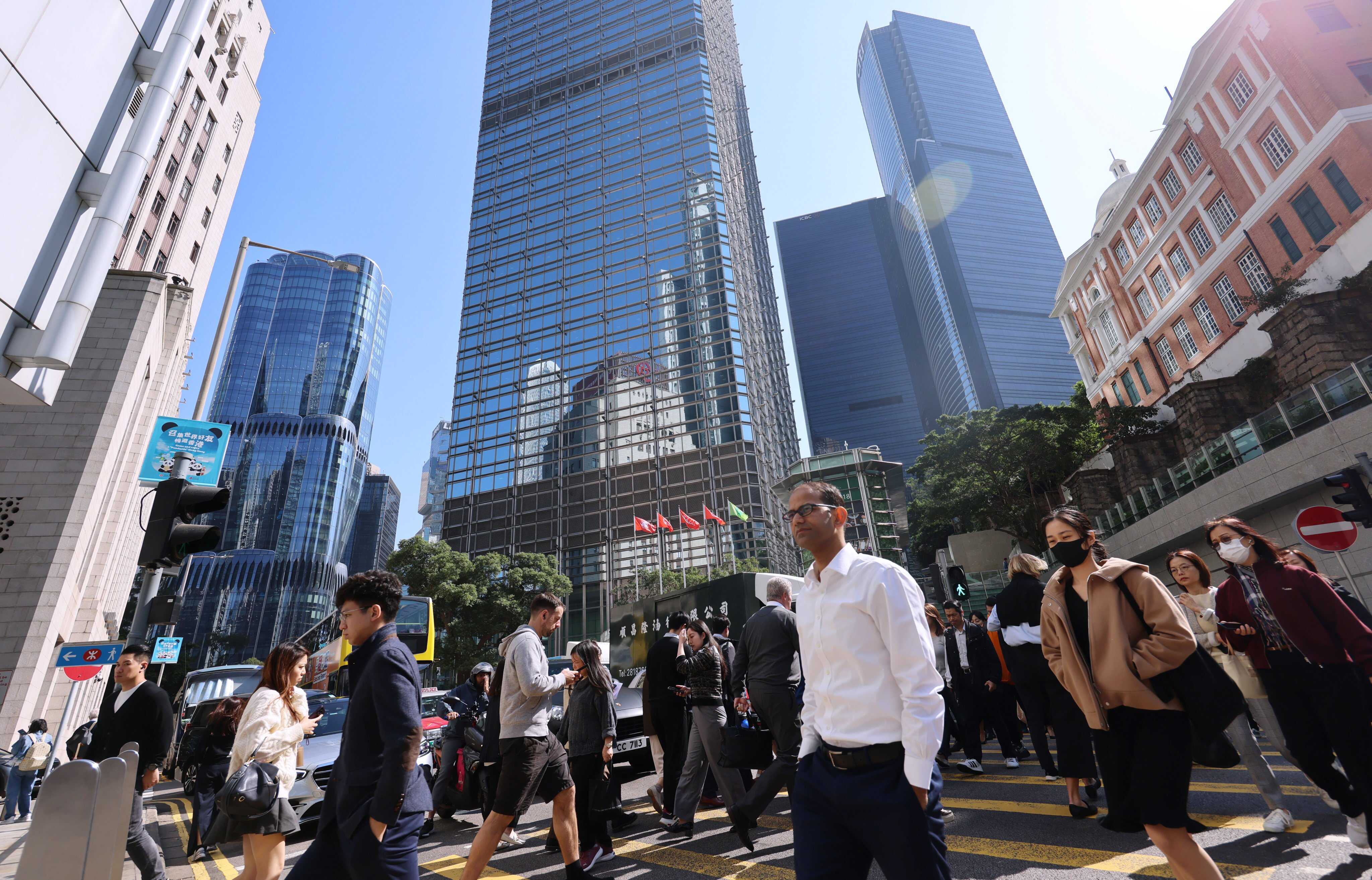
In Hong Kong, wild boars that once roamed the hills are now encroaching on areas of human habitation. Wildlife experts attribute this shift to habitat loss caused by urban expansion and to people feeding the animals illegally. These wild boar-human conflicts have led authorities to implement aggressive control measures, including culling.
The most recent data from the Agriculture, Fisheries and Conservation Department showed that the wild boar population decreased from 2,000 in 2021 to 1,830 in 2022 and 1,360 in 2023. The number further plunged to 900 in 2024. More than 2,200 wild boars were culled between 2021 and 2025.
Hang Hau’s Sheung Yeung Village is on a hillside surrounded by greenery. There, wild boars root through rubbish bins in search of food.
Lau Kai-hong, chairman of the Hang Hau Rural Committee and the village’s resident representative, said the animals were spotted searching bins about 20 times a month on average.
“Because the areas next to the rubbish stations are quite dark, some residents or domestic helpers who are scared of boars will place the waste next to the station but not inside the rubbish bins, causing boars to find food waste,” he said.
Larger boars could knock over bins, he said, adding that they also ate crops planted by residents.
But most boars were afraid of people and would retreat into the woods, he noted.
“Normally, boars don’t attack people, but some boars are not scared and continue munching [on] food waste even when a car flashes their headlights at them,” he said.
Gary Ades is the head of the fauna conservation department at Kadoorie Farm and Botanic Garden. He noted that one reason for the recent increase in sightings was the difficulty boars faced in finding food during winter, which led them to wander into urban areas in search of it.
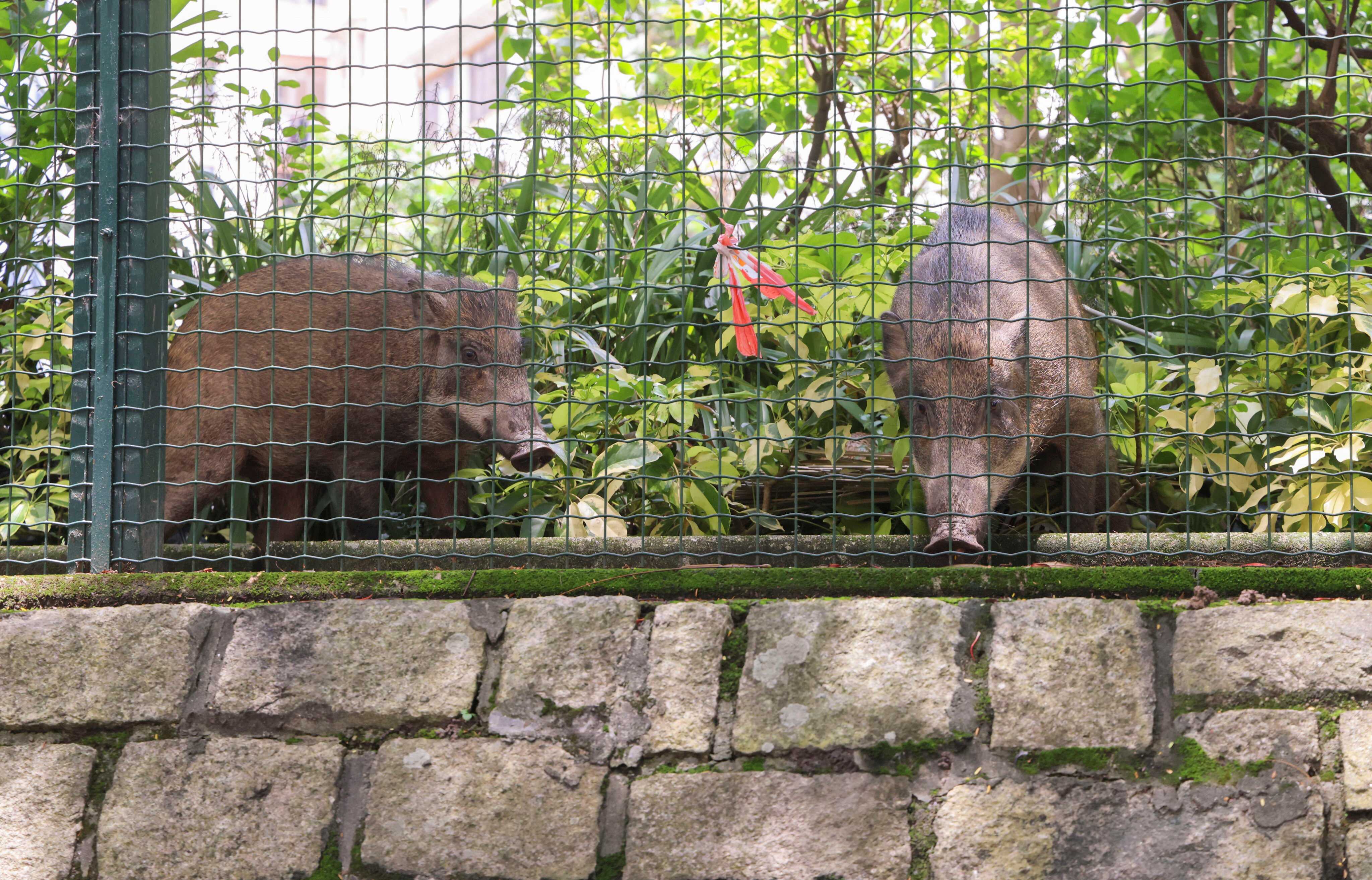
He said that because city planning does not account for wildlife, boars can get trapped in urban centres when they leave the forests.
For example, boars often get their heads stuck in railings because the design only considers humans, not boars.
Ades added that boars mainly defended themselves during encounters with people, which could be triggered by people getting too close to young ones or by blocking their escape.
Staff writers
Question prompts
1. Which of the following statements is false, according to the information in the news?
(1) The number of wild boars is declining in Hong Kong.
(2) Wild boar sightings in Hang Hau’s Sheung Yeung Village occur about 20 times each year.
(3) Wild boars typically attack people when they are frightened by a car’s flashing headlights.
(4) It is more difficult for boars to find food during the winter, which leads them to search in urban areas.
A. (1), (2) only
B. (1), (4) only
C. (2), (3) only
D. (3), (4) only
2. According to Lau, what TWO actions by residents attract wild boars into the neighbourhood?
3. How does the city’s unfriendly urban design towards animals exacerbate wild boar sightings and nuisance problems? Explain using the news and your own knowledge.
Illustration
Question prompts
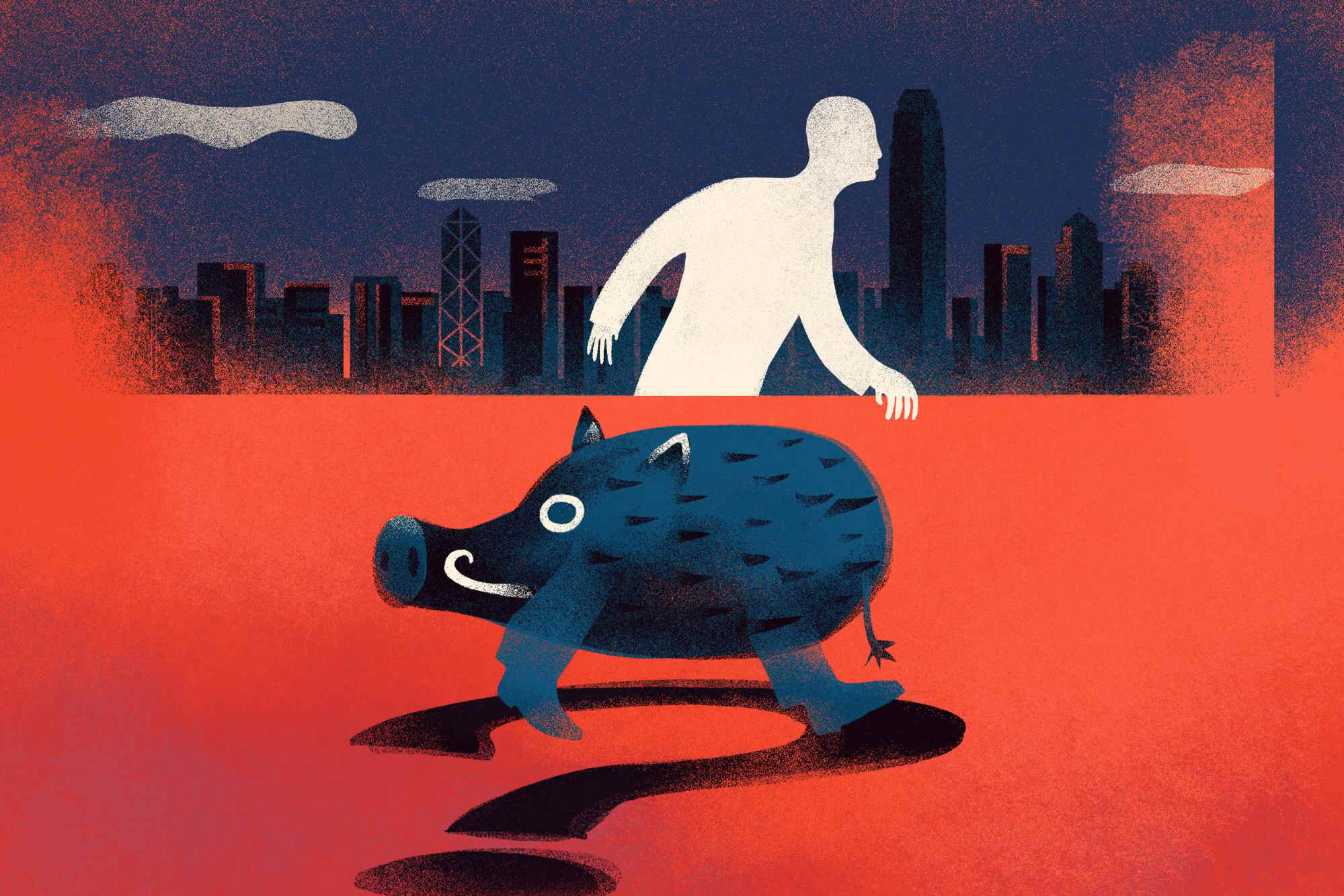
1. What is being shown in the illustration, and how does it relate to the information in the news?
2. Why might wild boars wander into urban areas? Explain using the information in the news and your own knowledge.
Glossary
-
urban expansion: creating new homes, offices and other buildings in previously undeveloped natural landscapes
-
wild boar-human conflicts: the direct, often negative interactions that occur when the boundaries between wildlife territory and urban living spaces collapse
-
culling: to reduce or control the size of a population. In this case, it describes the deliberate, government-sanctioned killing of wild boars to reduce their population density and minimise the risks they pose to the public.
Sample answers
News
-
C
-
When residents place waste beside the station instead of in the rubbish bins, it attracts wild boars searching for food. They might also plant crops that attract boars.
-
The city’s unfriendly urban design worsens wild boar sightings and nuisance problems in several ways. First, physical barriers are poorly designed for wildlife movement. As mentioned in News, railings in Hong Kong are designed keeping only humans in mind, which can cause wild boars to get stuck when trying to pass through. When boars cannot return to forests freely, they become trapped in urban areas, increasing the likelihood of encounters with people. Second, wild boars experience habitat loss due to urban expansion, which reduces their habitats and pushes them closer to human settlements. When forests are reduced or disturbed, boars are forced to adapt by entering cities to survive. Specifically, they must navigate roads, estates and other infrastructure to find food or shelter. Third, the city’s spatial design can worsen conflicts between wild boars and humans. For example, dimly lit rubbish stations lead residents to leave trash outside bins, indirectly attracting boars. Over time, these conditions lead them to associate urban areas with food, encouraging repeated visits and reducing their natural fear of humans. Overall, the city’s design not only fails to accommodate wildlife but also attracts wild boars into urban areas and traps them there, leading to more frequent sightings and nuisance problems.
Illustration
-
The illustration serves as a visual metaphor for the encroachment and conflict described in the news report. The image is split into two distinct zones. The top shows a human silhouette against a backdrop of recognisable Hong Kong landmarks, representing urban expansion. Below the city line, a wild boar is depicted walking over a question mark. This relates directly to the text’s mention of the “wild boar-human conflicts” and the uncertainty regarding their management. The boar’s shadow, forming a question mark, reflects the uncertain nature of these encounters, such as residents being scared to approach rubbish stations at night. (accept all reasonable answers)
-
Boars are increasingly drawn to urban areas due to several factors, with one significant reason being the reduction of their natural habitats caused by urban expansion. Human intervention, particularly through illegal feeding, encourages these animals to associate people with food, which decreases their natural fear of humans. They are also attracted to “food waste” found in rubbish bins. For instance, in places like Sheung Yeung Village, discarded waste left outside bins offers an easy meal for them.