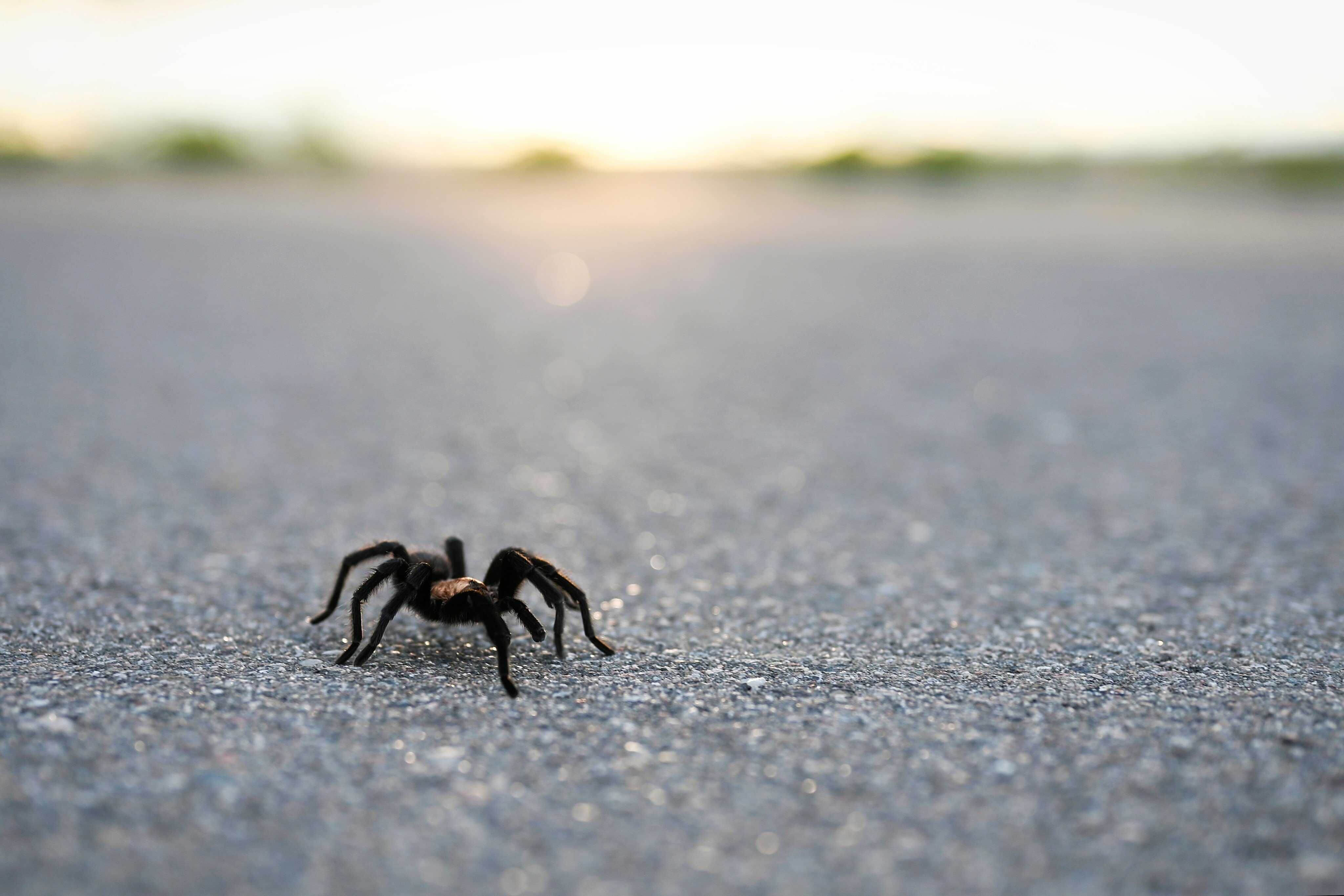
[1] It’s that time again when thousands of tarantulas crawl out to find a mate in the southern part of the US state of Colorado. Each year, between late August and October, male tarantulas are on the move. First, they emerge in southeastern Colorado throughout September. Then, they come out in a later wave that peaks in southwestern Colorado in October. While this natural phenomenon is often referred to as a “migration”, that is not the case. The tarantulas are not moving from one place to live in another. They are looking for a mate.
[2] According to a report from USA Today, male spiders can take up to 10 years to reach maturity. They attempt to find a female mating partner hidden in a burrow about 30cm beneath the ground. They use their hairs and legs to detect vibrations. Sadly, male tarantulas mate once and die. Sometimes, they are even killed by the female spider they mate with. Female tarantulas can live up to 20 years or more.
[3] If you want to catch a glimpse of this natural phenomenon, go near the Colorado Front Range, a mountain range. Head to the Comanche National Grassland, near the town of La Junta, an hour before sunset.
[4] Tarantulas are not much of a threat to humans. However, it is important to avoid interfering with them in any way. Tarantulas usually do not hurt humans, and their bite is relatively harmless, unless you are allergic. But it is not a good idea to pick them up. It is stressful for the spider. They also have spiky, itchy hairs that can get stuck in your skin. Their bite can feel as painful as a bee sting.
[5] Five different species of tarantulas are found in Colorado. These include Aphonopelma coloradanum, Aphonopelma echinum (Colorado chocolate brown tarantula), Aphonopelma hentzi (Oklahoma brown tarantula), Aphonopelma vogelae and Aphonopelma marxi (Grand Canyon black tarantula). They eat beetles and insects that they capture from their burrow.
[6] This “migration” is expected each year. However, certain things can affect how many tarantulas there are and where they can be found. Before dusk, there should be enough light to watch them move. You can also bring your own light source to spot the tarantulas. Each spider can wander up to 800m each day. It can take some time to find them, but once you do, the scene can be truly shocking.
Source: Tribune News Service, September 9
Content provided by British Council