Content provided by British Council
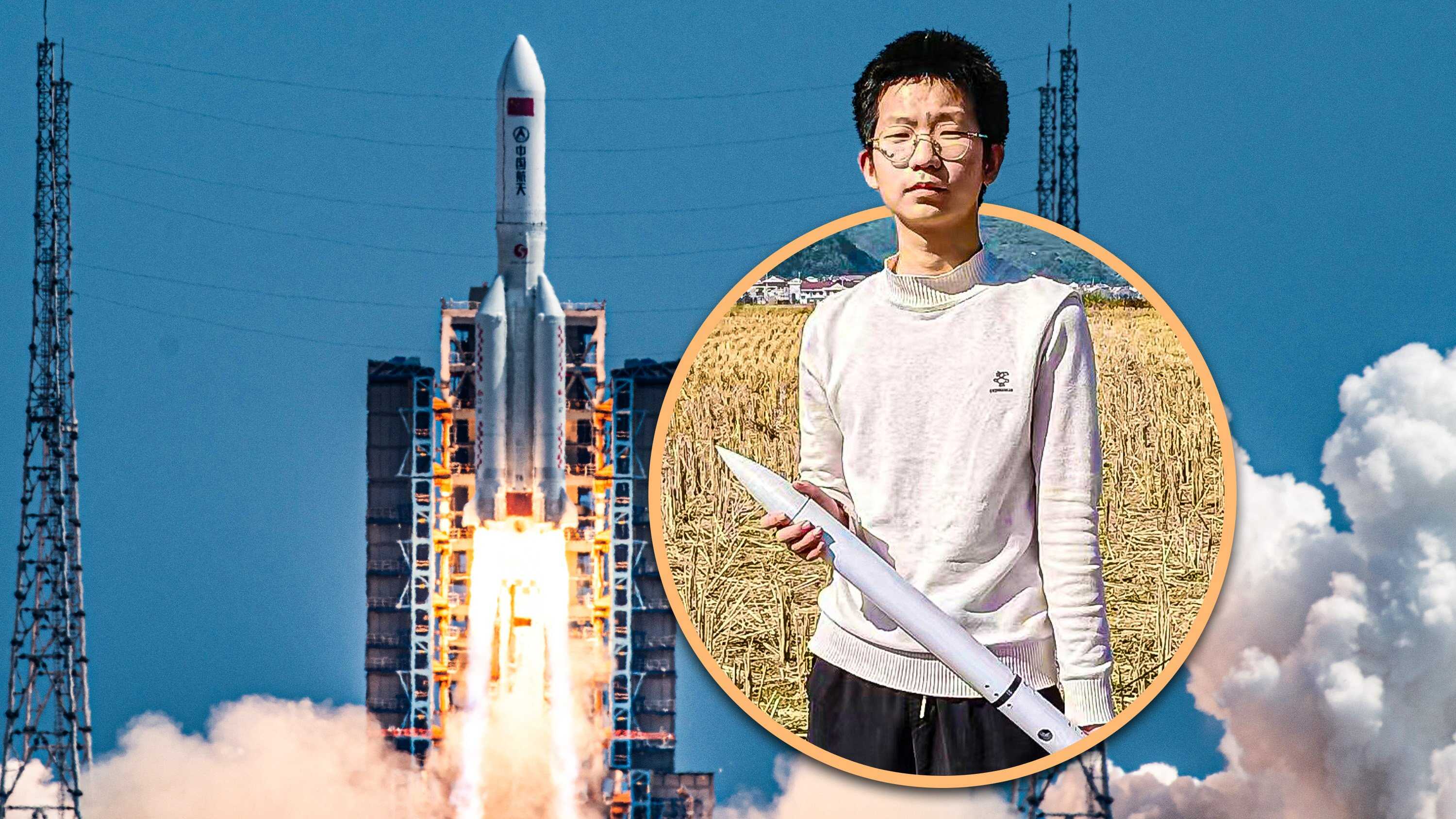
[1] A teenage Chinese boy has gained admission to a premier university’s aerospace engineering programme. Zhang Shijie is 18 years old. He is from a village in China’s central Hunan province. Zhang is dedicated to making rockets. His passion ignited at 14 when he watched a live broadcast of a rocket launch with his father. Recently, Zhang joyfully announced that he had been accepted at Shenyang Aerospace University. It is one of China’s most prestigious aerospace institutions.
[2] Zhang had no prior knowledge of making rockets. He turned to short video platforms to learn. He began absorbing information from DIY rocket content shared by others. Douyin is the mainland Chinese version of TikTok. By November 2023, the platform had 4.3 million science experiment videos. Water-powered rocket videos in particular had increased rapidly that year.
[3] Long Yanjiao is Zhang’s secondary school teacher. She has been at the school for 30 years. She noted there were limited resources at the village school. The internet had been “immensely helpful” in nurturing Zhang’s passion, the teacher said. Zhang used every tool he could find to improve his skills. He used a second-hand laptop from his sister to explore various forums about science innovation.
[4] Zhang scraped nitrate from his family’s pigsty and cooked it with sugar and water in the kitchen to make rocket fuel. The mixture was impure, so he used what he had learned in school to make a purer fuel from fertilisers. Zhang also experimented with materials he could afford, such as PVC tubes and cement, to make rocket engines. He also taught himself how to use 3D modelling and design software. To build rocket parts, he bought a second-hand 3D printer with his Lunar New Year red packet money and loans from classmates.
[5] For Zhang’s birthday in June 2023, he invited his father and classmates to witness his first test launch. Despite a failed trial that day due to rain, Zhang successfully launched the rocket the next day. After more than 100 test runs, Zhang developed four types of engines and multiple rockets. One of these was a two-stage rocket that reached an altitude of 400 metres.
[6] Zhang’s school provided him with 3,500 yuan (HK$3,820) in funding, helped him recruit fellow students and supplied him with an adapted office space originally designed for calligraphy. Long said that Zhang is the first student she has seen with such passion for science.
Source: South China Morning Post, September 22