




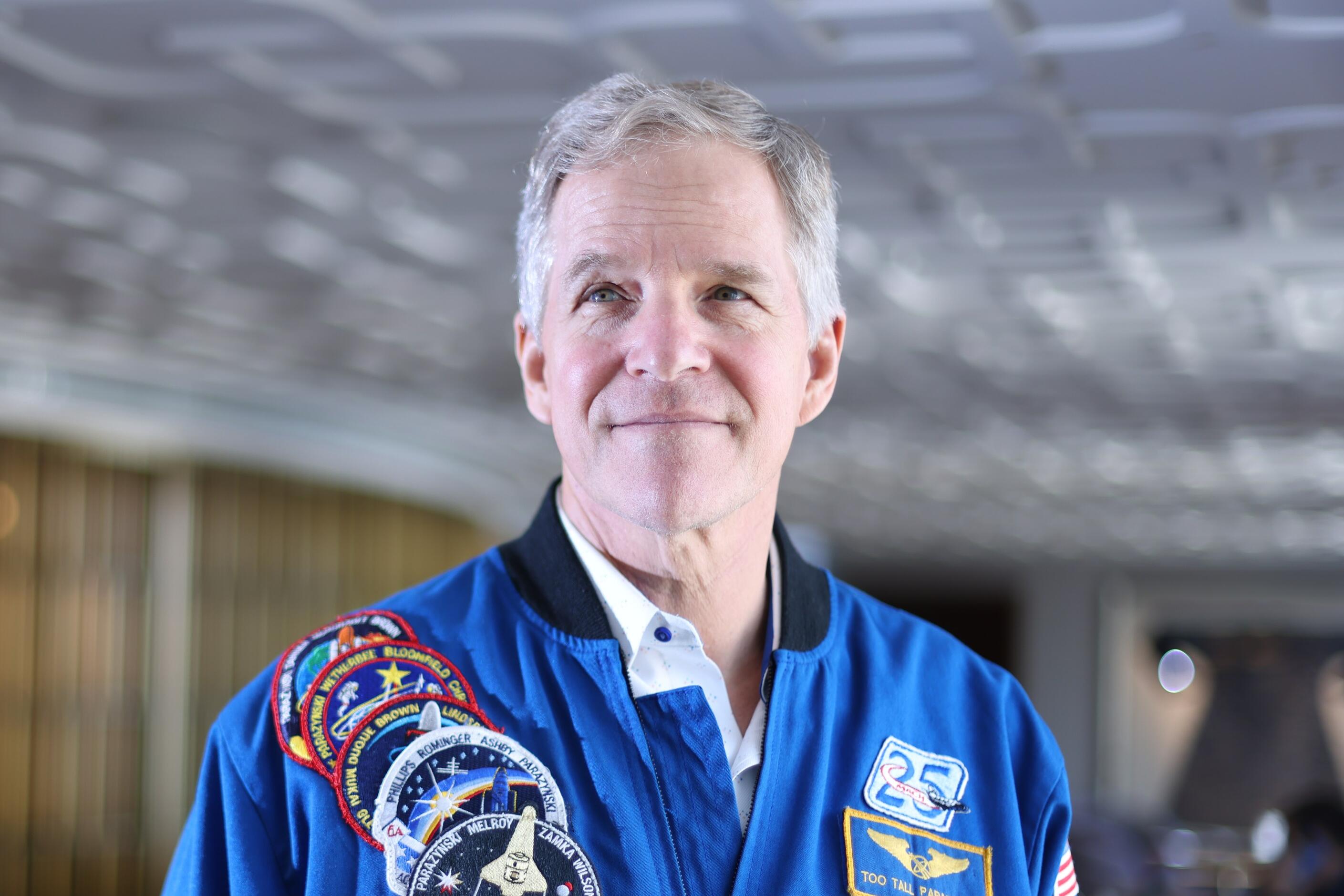
Do astronauts drink their urine in space? Yes, says former American astronaut Scott Parazynski, explaining that the urine is purified so it becomes water that is safe to drink.
Parazynski, 63, said he was impressed with questions like this one, asked by students he met while in Hong Kong this month.
During his visit, Parazynski said he enjoyed speaking to hundreds of the city’s students about his experiences. He wanted to inspire kids to work towards their dreams.
“As a kid, I had the opportunity to have some great mentors,” he said. “I’m so appreciative of the people ... [who] didn’t dissuade me from having this crazy dream of [going to space].”
Life in space
Ever since he was a child, Parazynski had dreamed of going into space. His father helped build the first rockets that sent astronauts to the moon.
“Every kid on the block wanted to become an astronaut in those days,” he said. “So I always had in the back of my head [that] I’d love to do this.”
In his career as an astronaut with Nasa, the US space agency, he went to space five times.
Whenever Parazynski went on a mission, he would take every chance to stare at stars, the moon and his home, planet Earth.
“This view out the window ... it’s life-changing,” he said.
Parazynski said he and his crewmates had fun when they were not working. For example, they played tennis using books as rackets and duct tape as a ball.
Lows and highs of his career
While being an astronaut can be exciting, it is also very dangerous.
In 2003, the STS-107 Columbia crashed, killing all seven crew members.
At the time, Parazynski was supporting the crew’s family. He called the tragedy “one of the worst days of my life”.
“A piece of foam ... punched a hole in the left wing of the shuttle, and as a result, the spacecraft disintegrated about 16 minutes before landing,” he said.
After this event, Parazynski considered retiring.
In the end, he stayed with Nasa for several more years. This decision led him to his “proudest day ever”.
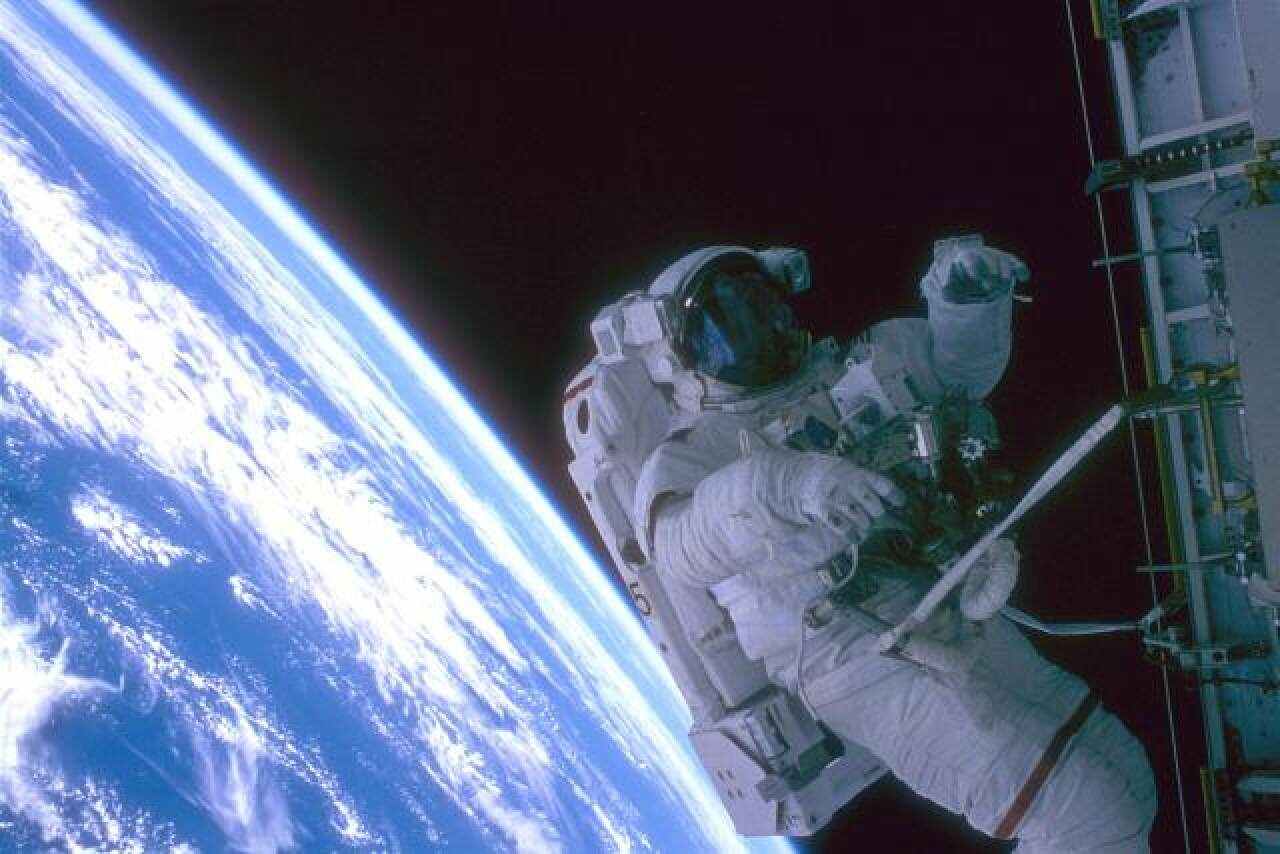
On his last mission in 2007, he had to leave the spacecraft wearing only a spacesuit to protect him while he fixed a solar panel. This can be very dangerous.
“It was a very challenging spacewalk,” he said. “We were successfully able to stitch it back together. So that was, by far, the high point of my career.”
After this event, Parazynski retired.
He has since continued challenging himself to do new things. In 2009, he summited Mount Everest. In 2016, he was admitted to the United States Astronaut Hall of Fame. For the past few years, he has been using his knowledge to develop new technology for space travel.
From dark matter to black holes, explore dark sides of the Milky Way
What’s next?
Looking forward, Parazynski said he was excited for the future of space travel.
Current space missions usually recruit STEM experts, but Parazynski believes the next generation might have more opportunities.
“We’re going to be colonising Mars [one day], and so we’re going to need people from all walks of life,” he said.
“We’re going to need journalists, we’re going to need lawyers, we’re going to need teachers and artists and musicians ... There’s a place for everyone.”
With that in mind, he encouraged students to follow their passion, whether it leads to space travel or elsewhere.
“I would definitely encourage people to follow their dreams, whatever it is. I think it’s the most exciting thing,” he said.
-
Reflect: Would you want to travel to space? Why or why not?
-
Why this story matters: There is a lot to learn about our universe. Astronauts help make discoveries in science that affect our daily lives. Hearing from the people who explore space can show us the importance of being curious and working hard to achieve our dreams.
