Content provided by British Council
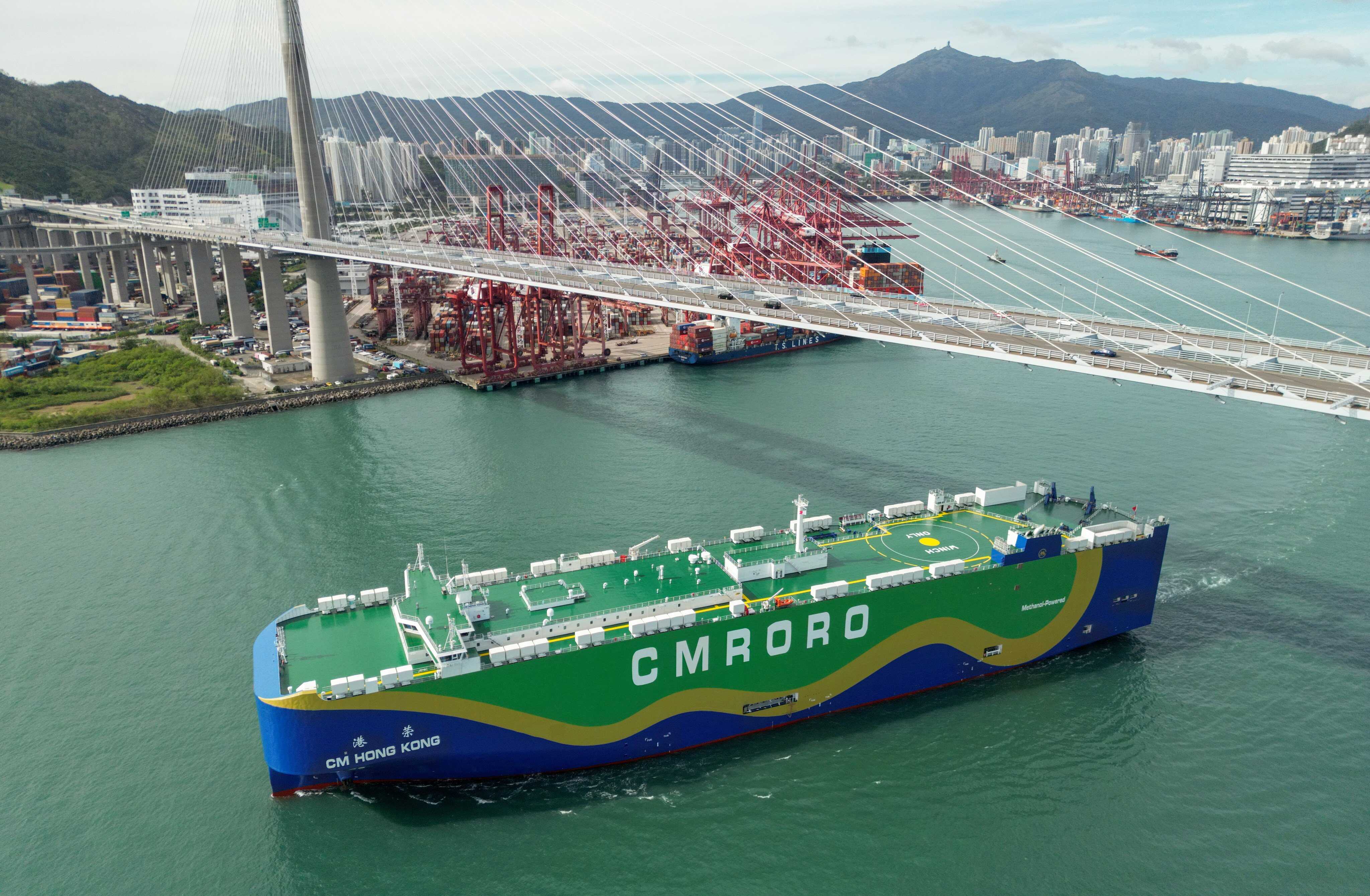
[1] Last month, the world’s first methanol dual-fuel car carrier vessel visited Hong Kong. It docked in Tsing Yi on its maiden voyage to Europe. The event was important because Hong Kong aspires to become a green maritime fuel bunkering centre. The vessel, called CM Hong Kong, was built in mainland China’s southeastern Jiangsu province. It was commissioned by a unit of China Merchants Group.
[2] A ceremony marked the vessel’s maiden voyage. At it, Hong Kong’s chief secretary, Eric Chan Kwok-ki, said authorities were actively supporting the shipping industry’s green transition. He also said they were promoting the use of more environmentally friendly fuels.
[3] Hong Kong supplied more than 130,000 tonnes of green marine fuels to ocean-going vessels between February and mid-September. Chan said the government would propose tax concessions for outbound vessels that use methanol as fuel.
[4] Chan also said they had explored developing green maritime fuel storage facilities on a site in Tsing Yi South. “In the future, Hong Kong will increase the quality of our green marine fuel bunkering services,” he said. Chan also added that the government would strengthen cooperation with ports worldwide and provide a platform for the trading of green marine fuels in the city.
[5] The CM Hong Kong is 220 metres long, 38 metres wide and has 13 cargo decks. It has 78,000 square metres of deck space, equivalent to 11 football pitches. The vessel can carry up to 9,300 vehicles. Chan said its dual-fuel operation could reduce greenhouse gas emissions by more than 70 per cent.
[6] Mable Chan is Hong Kong’s transport secretary. She said the vessel would carry mainland China-made electric vehicles. They will be exported to Europe.
[7] Hong Kong Chief Executive John Lee Ka-chiu touched on sustainability in last month’s policy address. He said Hong Kong would develop bunkering facilities for fuels such as green methanol, green ammonia and hydrogen. All vessels providing methanol bunkering services in Hong Kong waters will be required to install a mass flow meter.
[8] The International Maritime Organisation is a UN agency. It is responsible for international shipping regulations. It aims for net-zero emissions from all vessels by 2050.
Source: South China Morning Post, September 28