Content provided by British Council
Read the following text and answer the quiz below.
[1] Hong Kong authorities have developed a landslip warning system based on artificial intelligence (AI). It will predict landslides with more than 90 per cent accuracy. It will also improve risk assessment and the issuance of warnings in bad weather.
[2] The Geotechnical Engineering Office of the Civil Engineering and Development Department said it aimed to use the new system next year. It will assess landslide risks in real time and enhance Hong Kong’s warning procedures.
[3] Raymond Cheung Wai-man, head of the office, said the new AI model is the fifth generation of the government’s landslip warning system. He added that it could estimate the number of landslides with more than 90 per cent accuracy. In comparison, the current system has nearly 70 per cent accuracy.
[4] The new system features prediction models that are specific to slopes. It is tailored to Hong Kong’s geological conditions. Its analysis includes more factors that contribute to landslides, such as rainfall characteristics and man-made slopes. “Early warning is a crucial component in responding to extreme weather events,” Cheung said, adding that by using “new technologies, we hope to better understand Hong Kong’s overall landslide risks”.
[5] Edward Chu Kei-hong is a senior engineer at the office. He said the new system would use real-time rainfall data from instruments that measure the rain. The AI model would use the data to predict the number of landslides. It would automatically generate reports. These would help assess rainfall and landslides across the city. He added that the system’s improved performance would help issue more accurate landslip warnings.
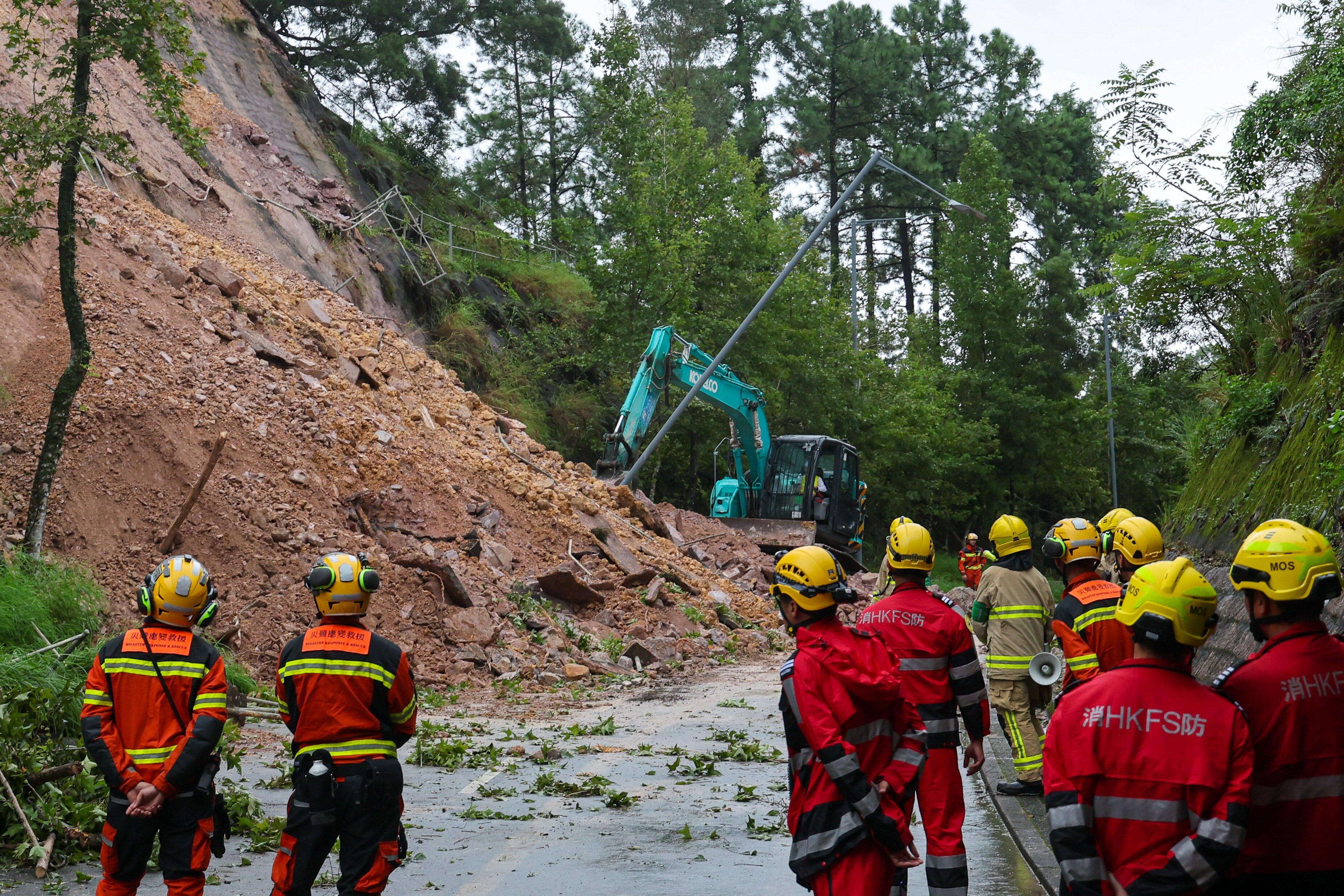
[6] The office and the Hong Kong Observatory jointly manage the landslip warning system. Warnings are issued when continuous heavy rainfall is likely to cause many landslides. The warnings alert the public to danger. They also trigger emergency responses within government departments.
[7] The current system is in its fourth generation. It categorises man-made slopes across the city into four types. The office uses real-time data and forecasts from the Observatory. It identifies when landslide risks are high and issues warnings. Authorities issue citywide landslip warnings and regional special notices. This advice comes when there is constant heavy rain in certain areas.
[8] Cheung said the office would continue to update and improve the AI model. He also said the office would explore machine learning algorithms to upgrade landslide risk assessment.
Source: South China Morning Post, October 14