Read the following text and answer the quiz below.
[1] Scientists and designers revealed a new handbag this month. It is made from collagen taken from T. rex fossils found in the US. This special bag is meant to show how important lab-made leather can be.
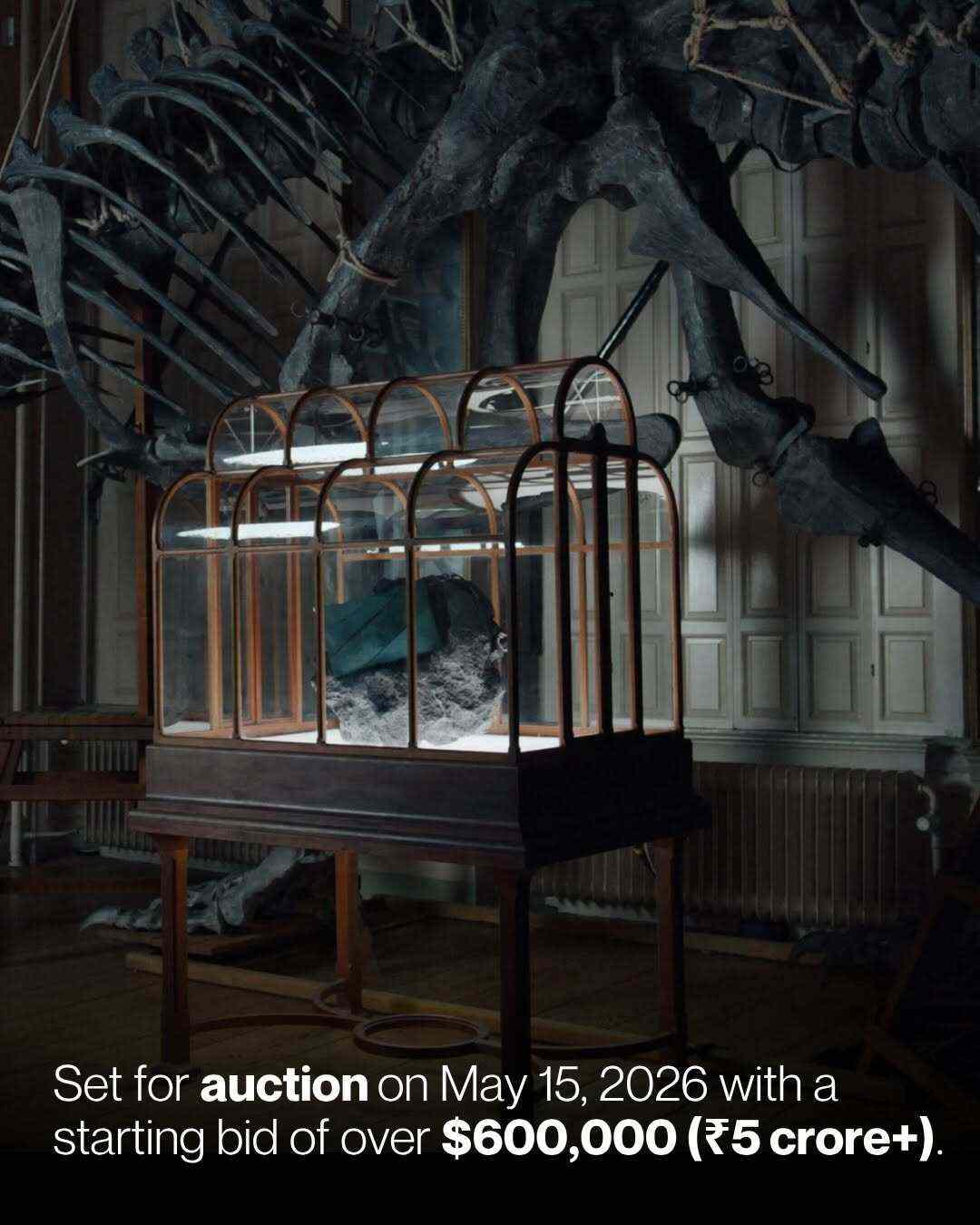
[2] A teal bag is being shown on a rock inside a cage under a model of a T. rex at the Art Zoo museum in Amsterdam. It will be there until May 11. After that, it will be sold at an auction, starting at more than US$500,000 (HK$3.9 million).
[3] Scientists said they made a new material using old protein pieces taken from dinosaur bones. They put these pieces into the cells of a different animal to create collagen, which was then made into leather.
[4] “There were a lot of technical challenges,” said Thomas Mitchell. He is CEO of The Organoid Company, one of three companies behind the so-called “T. rex leather” bag. Organoid, a genomic engineering firm, and creative agency VML, another of the firms behind the project, have previously worked together. They created a giant meatball in 2023 by combining the DNA of a woolly mammoth with sheep cells.
[5] Che Connon is the CEO of Lab-Grown Leather, which worked on producing the leather for the handbag from the engineered collagen. The T. Rex origin gave it extra “oomph”, she said. “It’s not just about a green alternative to leather; it’s a technological upgrade.”
[6] Some scientists who are not part of the project are unsure about the term “T. rex leather”. They say that materials from other animals would be necessary. Melanie During, a scientist at Vrije Universiteit Amsterdam, said that collagen can remain in dinosaur bones, but only in small pieces. These small pieces alone cannot be used to create T. rex skin or leather.
[7] Thomas R. Holtz Jnr is a palaeontologist at the University of Maryland. He similarly said that any collagen identified in T. rex fossils comes from inside the bone, not the skin, and that even perfectly matching proteins would lack the larger-scale fibre organisation that gives animal leather its distinctive properties.
[8] “I would say that when you do something new for the first time, there is always criticism,” Mitchell said in response. “And I think we’re really grateful for that criticism. It’s the bedrock of scientific exploration … I think this is the closest anyone has gotten and will probably ever get to create something that’s T. rex.”
Source: Reuters, April 2
Content provided by British Council