Content provided by British Council
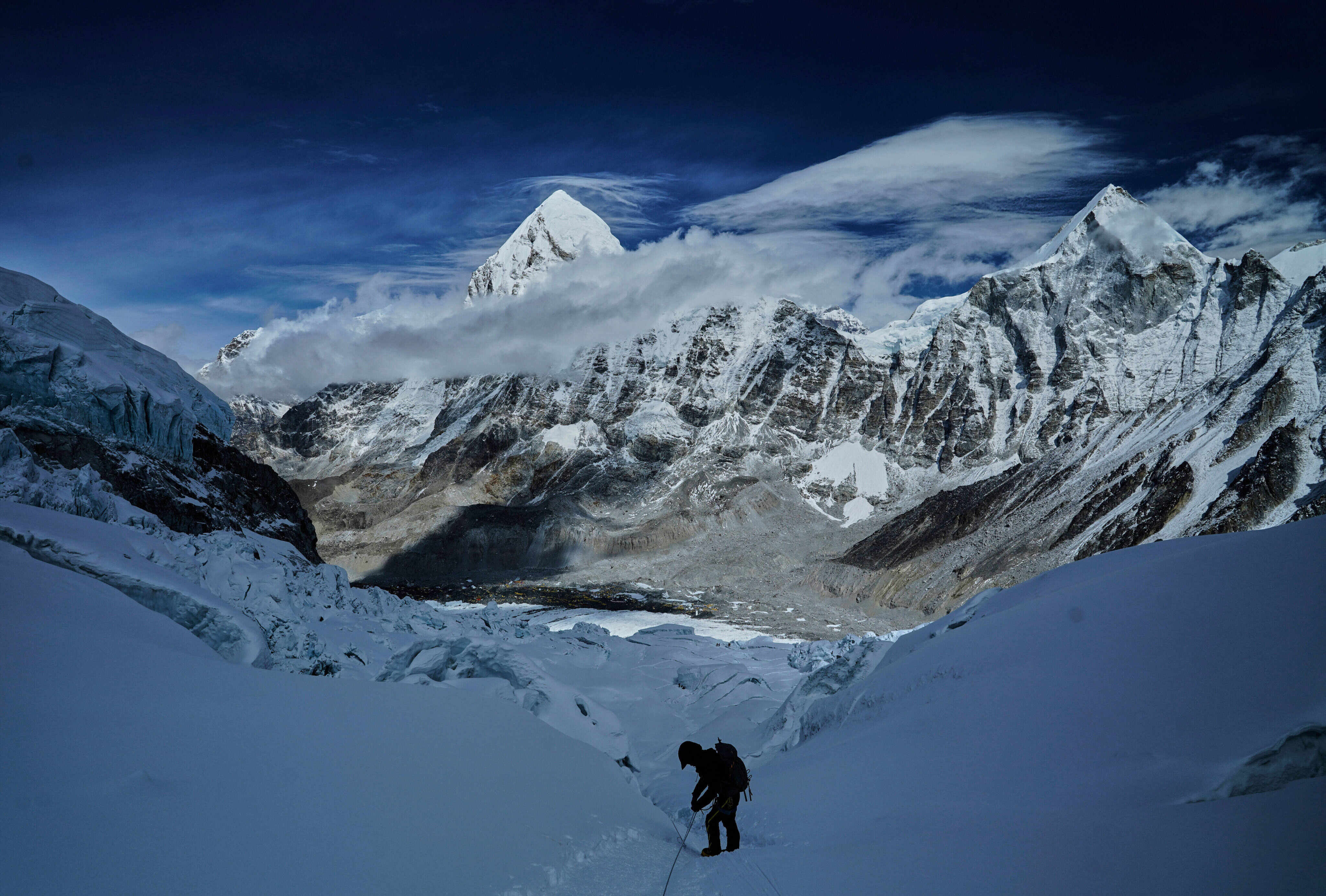
[1] Nepali guides last month opened the route past the icefall on Mount Everest. It was blocked for two weeks by a large chunk of dangerous ice. A team of highly skilled mountaineers, known in Nepal as “icefall doctors”, began fixing ropes and ladders on Everest in March to prepare for the spring climbing season.
[2] But a serac – a block of glacial ice – above the already dangerous Khumbu icefall disrupted their work. It also sparked fears of delays in the limited summit season on the world’s highest peak. “A team of 21, including eight icefall doctors, went up … [to open] the route up to Camp 1,” said Lakpa Sherpa of 8K Expeditions, who coordinated the effort. “The serac is still there, so the risk persists [as of April 28] … We expect it will melt soon.” Sherpa said teams would work to set up the route to the summit to prevent further delays.
[3] The government has issued more than 900 climbing permits for various Himalayan mountains this season, including 425 for Everest. A sea of tents to host more than 1,000 people, including foreign climbers and support staff, has been built at the foot of Everest, readying to scale the 8,849-metre summit.
[4] Climbers at the base camp have been anxiously watching the developments on the route. They must cross the icefall, a constantly shifting maze of crevasses and ice blocks, to reach higher on Everest. “We are not yet sending people up,” said Lukas Furtenbach of Furtenbach Adventures. He said he would await a decision from the committee that mobilises the icefall doctors.
[5] Nepal is home to eight of the world’s 10 highest peaks and attracts hundreds of climbers each spring, when temperatures are warmer and winds calmer. A climbing boom has made mountaineering a lucrative business since Edmund Hillary and Tenzing Norgay Sherpa made the first ascent in 1953.
[6] Around 700 people reached Everest’s summit last year from the Nepali side, according to the tourism department. Another 100 climbers are believed to have reached the peak from the northern side, via China. In 2023, three Nepali guides were killed when a falling block of glacial ice swept them into a deep crevasse as they were crossing the Khumbu icefall with supplies.
[7] Autumn summits on Everest in 2019 were also stopped by a serac. In 2014, an immense tumbling wall of snow, ice and rock killed 16 Nepali guides on the icefall, one of the deadliest accidents in the Himalayas.
Source: Agence France-Presse, April 28