Content provided by British Council
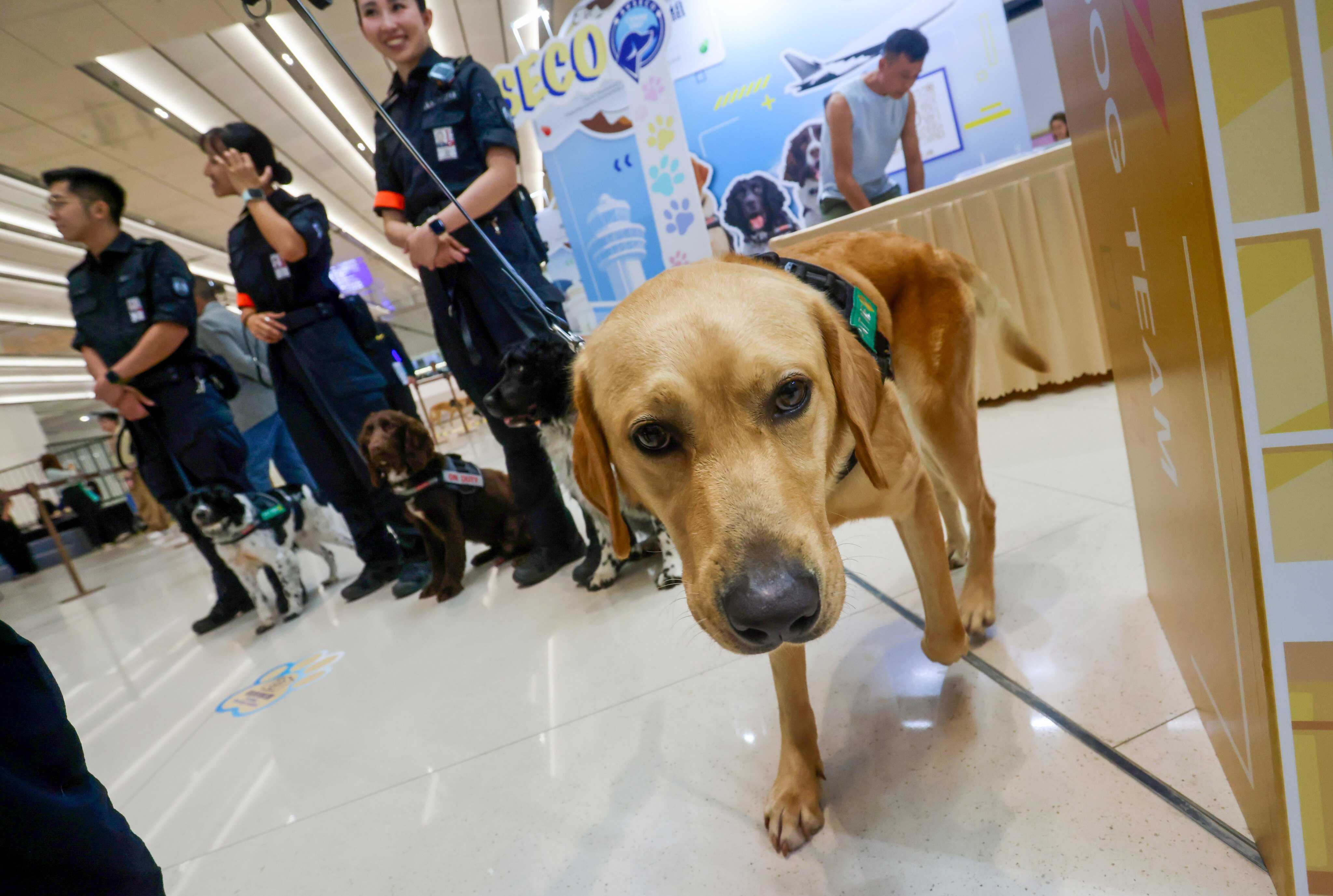
[1] The Hong Kong airport’s security contractor has expanded its canine patrol unit to the newly relaunched Terminal 2. It has deployed 20 dogs and their handlers to cover the upgraded facility as needed.
[2] Jacob Cheung Tat-keung is the executive director of the Aviation Security Company (Avseco). He said that operations at Terminal 2 had been generally smooth. However, passenger numbers had increased as 15 airlines had moved in over the past few weeks.
[3] Cheung said the deployment of the dogs would depend on traffic at the two terminals of Hong Kong International Airport. The company would add more dogs as needed. He added that the company had hired only a small number of staff for the new terminal, as some employees who had worked in Terminal 1 were transferred there. All security screening facilities were being upgraded to advanced systems.
[4] The Avseco Canine Unit (ACU) was established in January 2021 to enhance the airport’s capacity to detect explosives, firearms and ammunition. The animals serve a dual security and representative role focused on non-restricted areas.
[5] The unit was set up with backing from the Airport Authority and support from the Hong Kong Police Force and the Customs and Excise Department. They helped select dogs and design kennels and training facilities. They also trained the dog handlers.
[6] Authority CEO Vivian Cheung Kar-fay said that the dogs had contributed significantly. “I hope the canines will thrive and contribute more to the airport,” she said. Cheung added that the unit had grown from just two dogs five years ago to 20 today. The animals switch roles, shown by their vests. Those marked “On Duty” conduct patrols and check for illegal objects or suspicious people. Those wearing “Pat Me” vests act as goodwill ambassadors for passengers to interact with. They serve as a friendly face for the airport and Hong Kong tourism.
[7] The expanded Terminal 2 debuted on May 27, with its departure concourse to be completed by the end of next year. It is part of the airport’s HK$141.5 billion (US$18.1 billion) three-runway system.
Source: South China Morning Post, June 12