Every week, Talking Points gives you a worksheet to practise your reading comprehension with exercises about the story we’ve written.
For most 18-year-old men in Singapore, Friday afternoons mark a break from the rigours of national service training.
However, for Leo Cheng, this time is spent exchanging his combat boots for ballet slippers, as he practises in intense six-hour sessions in a dance studio.
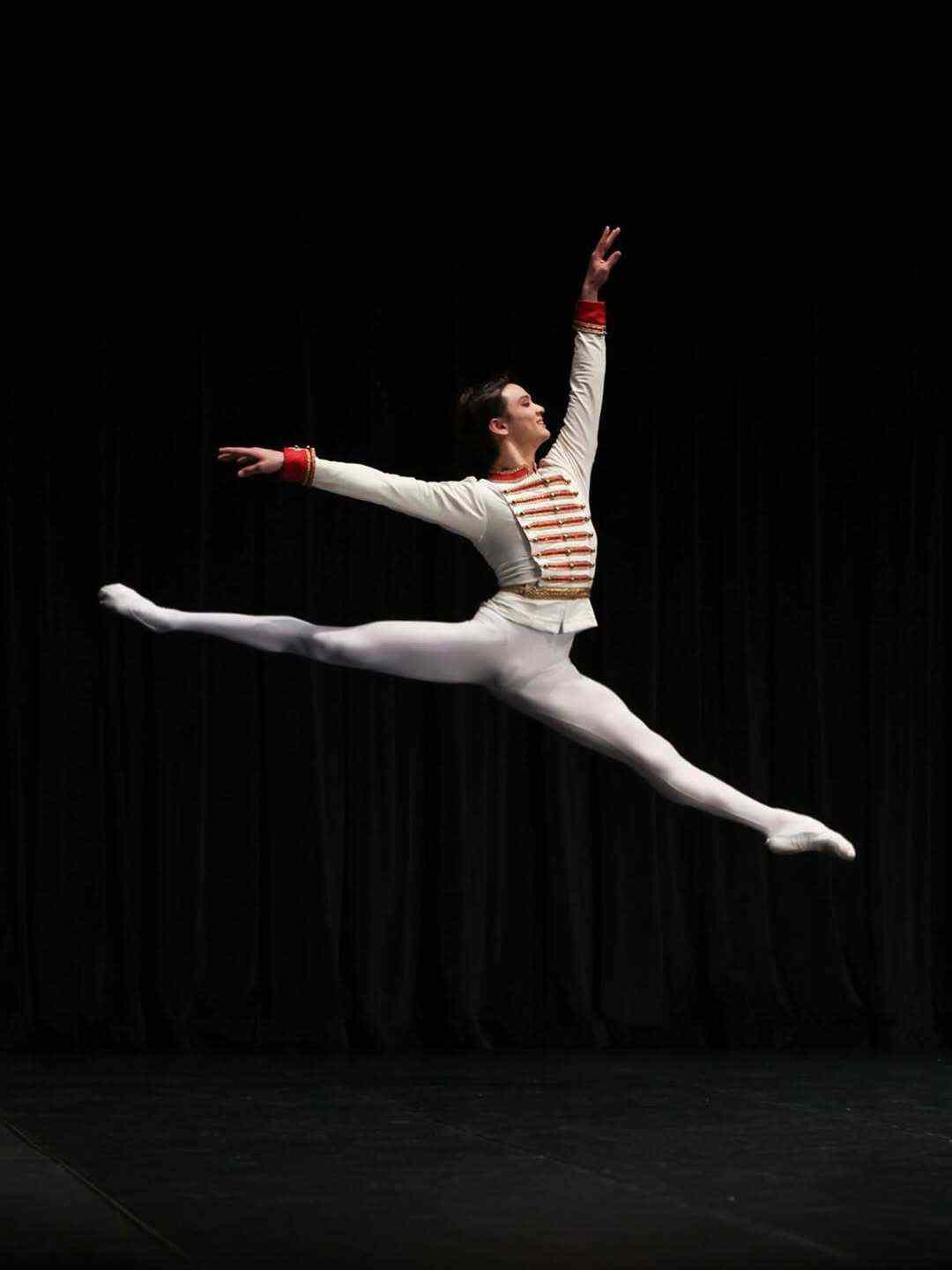
Cheng is a talented ballet dancer. Last year, he was the first person from Singapore to take part in the Prix de Lausanne, a big ballet competition that has over 1,000 top dancers from around the world.
Only about 80 of these dancers are chosen to compete.
His impressive performance earned him a contract offer from the Birmingham Royal Ballet, one of Britain’s leading ballet companies.
But he said no to the offer after he learned that he had to do 24 months of national service.
This national service is a full-time military duty that all male citizens and permanent residents in Singapore must complete when they turn 18 years old.
In rare cases, the government permits elite athletes to defer their national service to represent Singapore in major international competitions.
Despite being urged to try to delay his enlistment, Cheng felt that it was important to serve his nation.
Although pausing his career at such a crucial time was disappointing, he embraced the challenge and brought the determination he developed in ballet to the military.
“This mindset of not quitting when things
get tough mirrors the army’s core values,” he said.
“Also, the military helped to improve my strength and taught me responsibility and self-care.”
Grace meets grit
Born into a family of ballet dancers, Cheng started training professionally at age 11. Having been shaped by the demanding world of dance from an early age, he views the current challenge as a necessary rite of passage.
Still, the dancer is grateful for every bit of practice he gets and understands that this sacrifice is the foundation for his career.
“And I am very lucky. Being
a dancer is a rare career nowadays. Unlike a nine-to-five office job where one is stuck to a desk, dancing opens doors and gives me the opportunity to travel the world, perform on international tours and meet important people,” he said.
While serving in the army has its challenges, he noted that ballet is also punishing.
He explained that the dance form forces the body into unnatural positions. That is why professional dancers spend long hours training their muscles to adapt to things they are not built to do.
“Most people don’t see that side of it. They only see the final product on stage. We can spend three months training just for three minutes on the stage,” he said.
“It is all about making the impossible look effortless.
We can’t exactly show the audience how hard we’re working because that’s not enjoyable to the eye. So when people watch us and think, ‘Oh, that looks easy,’ it means we’ve actually done our job perfectly.”
Dancing beyond stereotypes
Beyond the stories he tells on stage, Cheng hopes to rewrite the narrative of masculinity.
“Today, we see much more diversity in dance, but people still misunderstand male ballet dancers. Many think ballet is not masculine, but we have these powerful masculine Russian and Soviet dancers in history,” he said.
“I feel that ballet for men is a display of true masculinity. It takes a lot of strength and drive to show pure passion from the heart to the audience.”
Even if he were not a ballet dancer, Cheng said he would still be drawn to the arts.
“I would definitely try to be a Broadway dancer,” he shared.
“I love jazz, and I am a good singer.”
Until he can officially resume his dancing journey, Cheng is taking things one step, both marches and pirouettes, at a time.