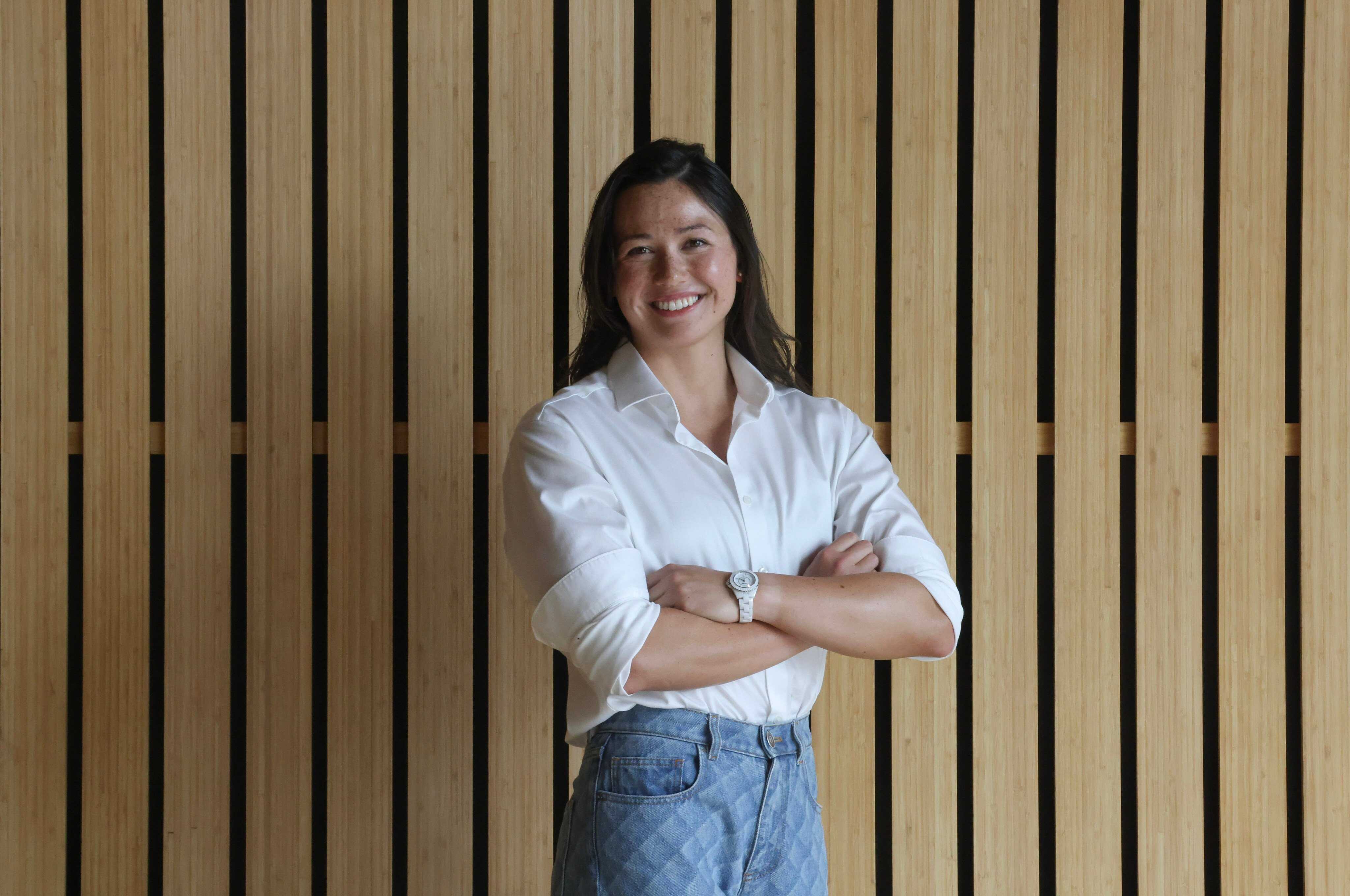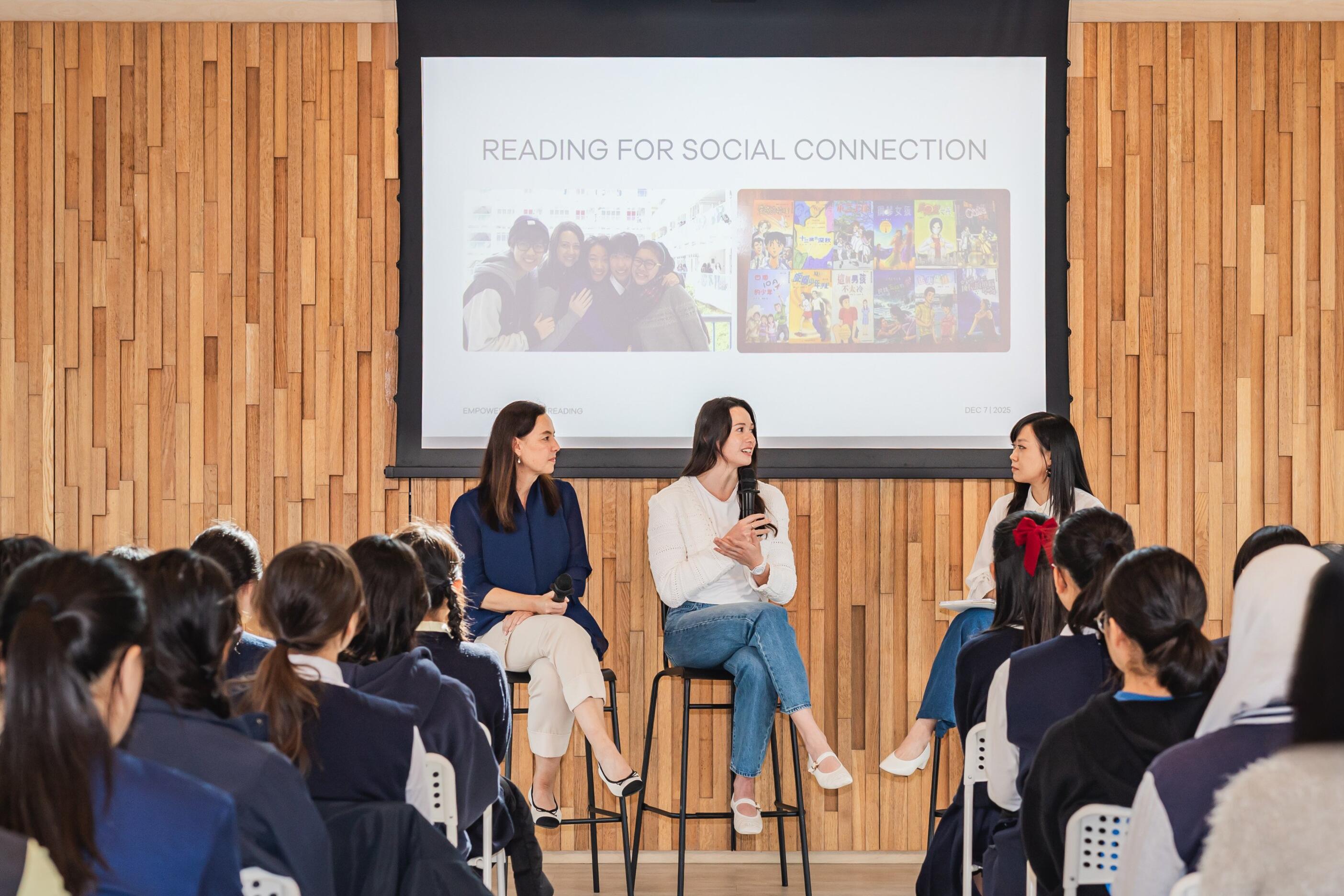
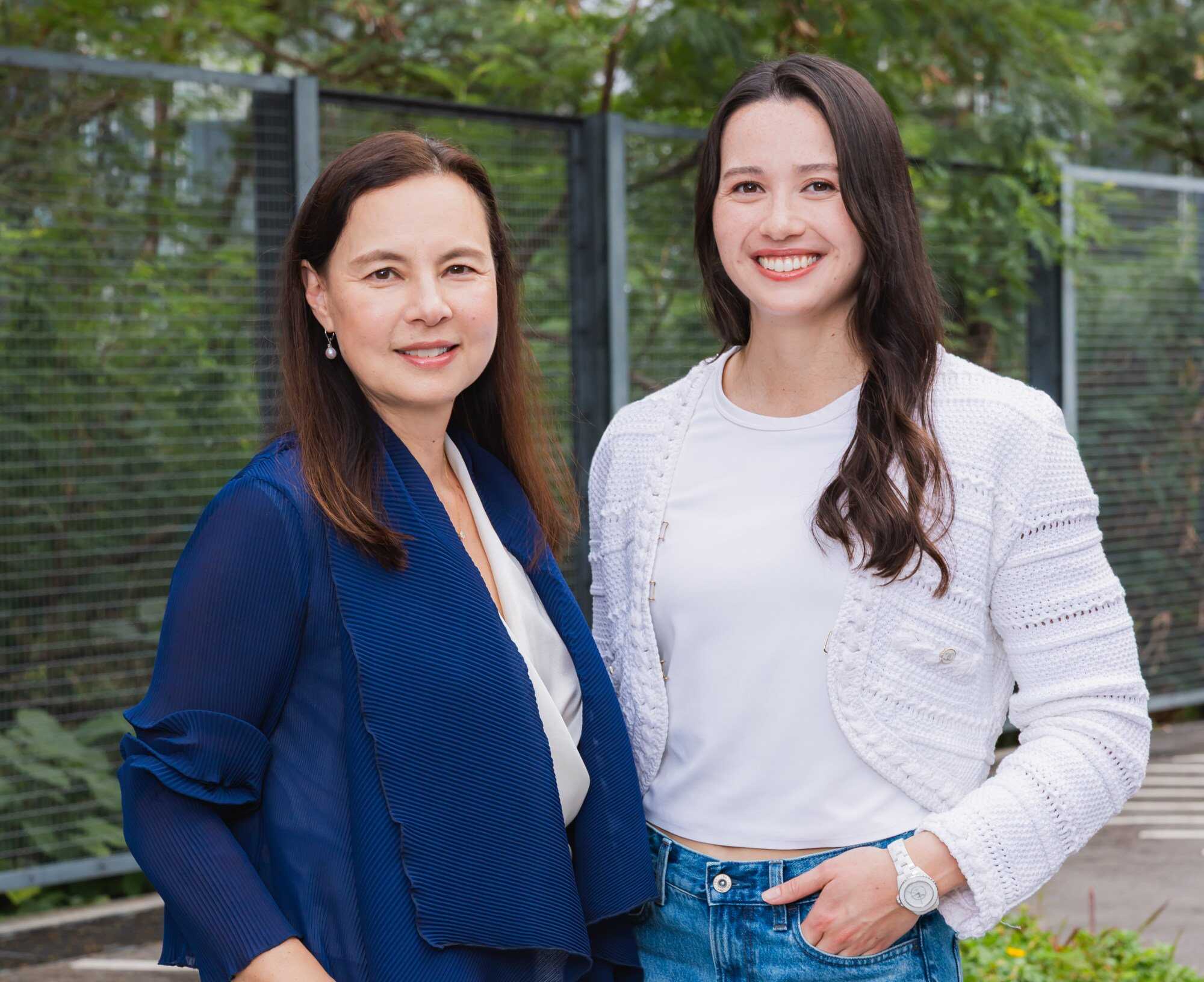
Hong Kong Olympic medallist Siobhan Haughey and entrepreneur Joanna Hotung recently came together to share their thoughts about how reading creates human connection. They also urged students to prioritise deep reading over the convenience of artificial intelligence (AI).
“AI can give you logic and something that is objective, but it really leaves a big part of the emotions out,” Haughey told students at the “Empower Through Reading” panel. The fireside chat was supported by Chanel.
For Haughey, the difference between a bot and a book is the difference between a checklist and a heartbeat.
She gave an example from a book she recently read, The People We Keep by Allison Larkin. The main character is a struggling teenager desperate to reach a singing audition. In one scene, she steals her neighbour’s car.
“If AI were to summarise this ... I would say, ‘oh, she did a bad thing, she stole her neighbour’s car, and it’s wrong’,” Haughey explained.
The star swimmer noted that AI operates in black and white; it sees a crime and categorises it. But humans live in the grey areas. Because Haughey read the text herself rather than relying on a summary, she lived the character’s struggle page by page: “I was really rooting for her; I have this empathy for her,” Haughey said.
The message highlighted how AI is a tool for memory, but reading is a tool for thought.
“We cannot outsource our thinking to machines,” Joanna Hotung said. She is the founder of KG Group Education and the director of the Hotung Mills Education Foundation.
Hotung challenged students to consider the “curiosity gap”.
She said that AI is excellent at retrieving existing data, but it kills the creative spark needed to imagine what is yet to come.
“We read to prepare for a world we cannot [imagine]. So when we are stuck with something we’ve never seen before, we choose to think instead of just remember,” she said.
Learning about life
Before she was breaking records in the pool, Haughey was simply a girl trying to fit in. Her reading journey began with comic books like Old Master Q (老夫子).
“There are a lot of pictures, but not a lot of words. It’s quick and easy ... and it’s very fun as well,” she said.
As she grew older, books became a mirror for her own life. Haughey shared how Dolly Alderton’s memoir Everything I Know About Love affected her.
“When I first read it, I thought this book was about my life,” she said. She described how the author recounts the messy, relatable evolution of growing up.
“You see her go through her life through all these different chapters ... Love is not just about romantic love. It’s also about love between your friends, your family, self-love,” Haughey said. It was a connection she could never have forged through an AI summary.
Lessons in resilience
Books can act as companions during lonely times and help you develop your identity, Hotung explained.
They can also teach us about skills like resilience. For example, when a character in a book faces a disaster, such as a break-up, a failure or a loss, the reader does not close the book and assume the story is over. The reader knows it is just the middle of the tale.
Hotung urged students to apply that same mindset to their own lives: “When things go wrong, hang in there. It’s just a plot twist,” she said.
“Just imagine yourself as being the lead character in your own life, in your own book ... Things are going to come back and get back on track.”