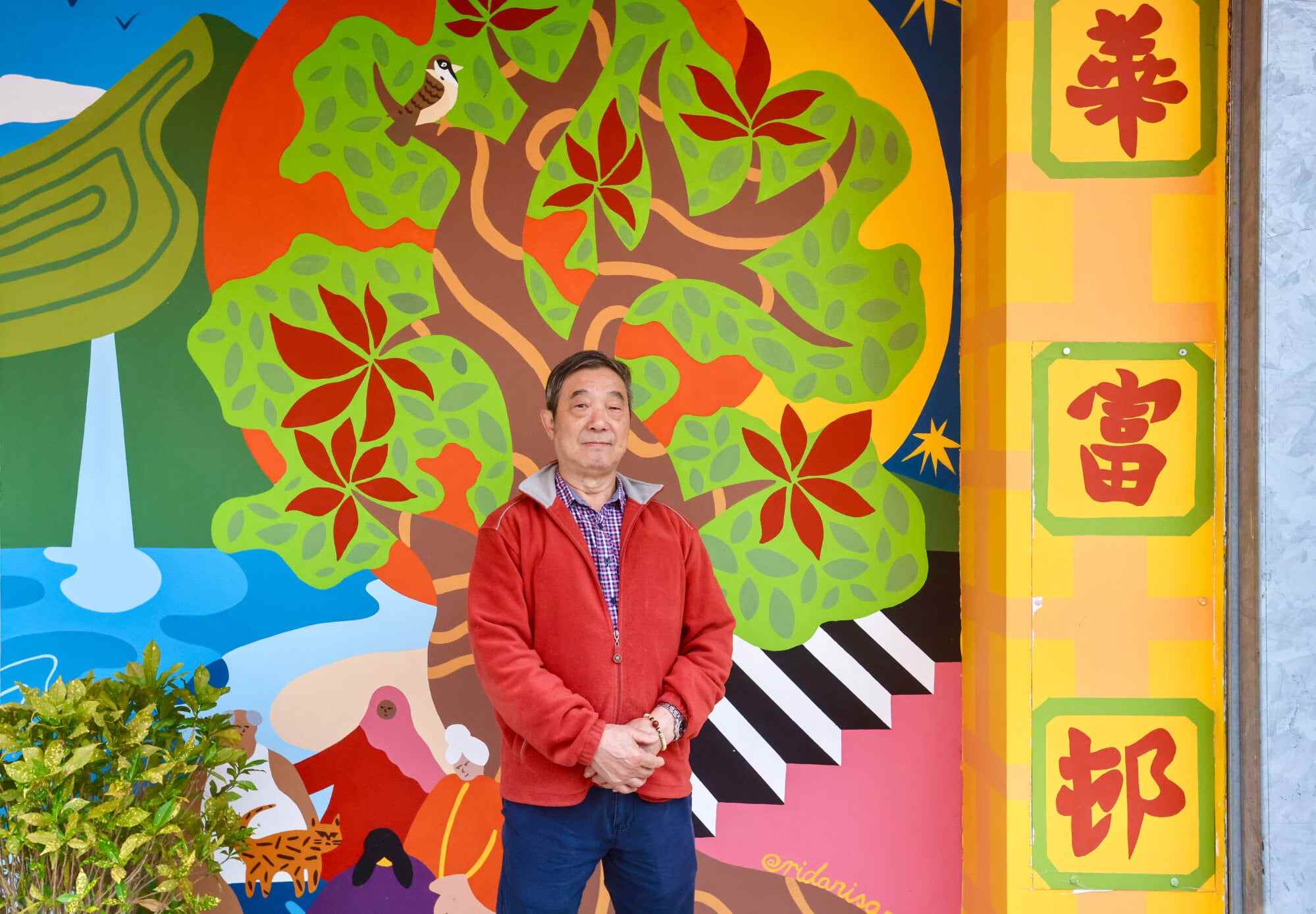
Strolling beneath the ageing blocks of Wah Fu Estate, Kwok Yau-ming reflects on how each building has changed over the years.
The 77-year-old has lived in the estate in Pok Fu Lam for more than five decades. A former engineer, he worked on several maintenance projects for the Housing Department in the 1980s, including renovation on the estate.
“Because of the renovation projects, I had the chance to work on all the buildings,” Kwok said. “I am very familiar with all the facilities here.”
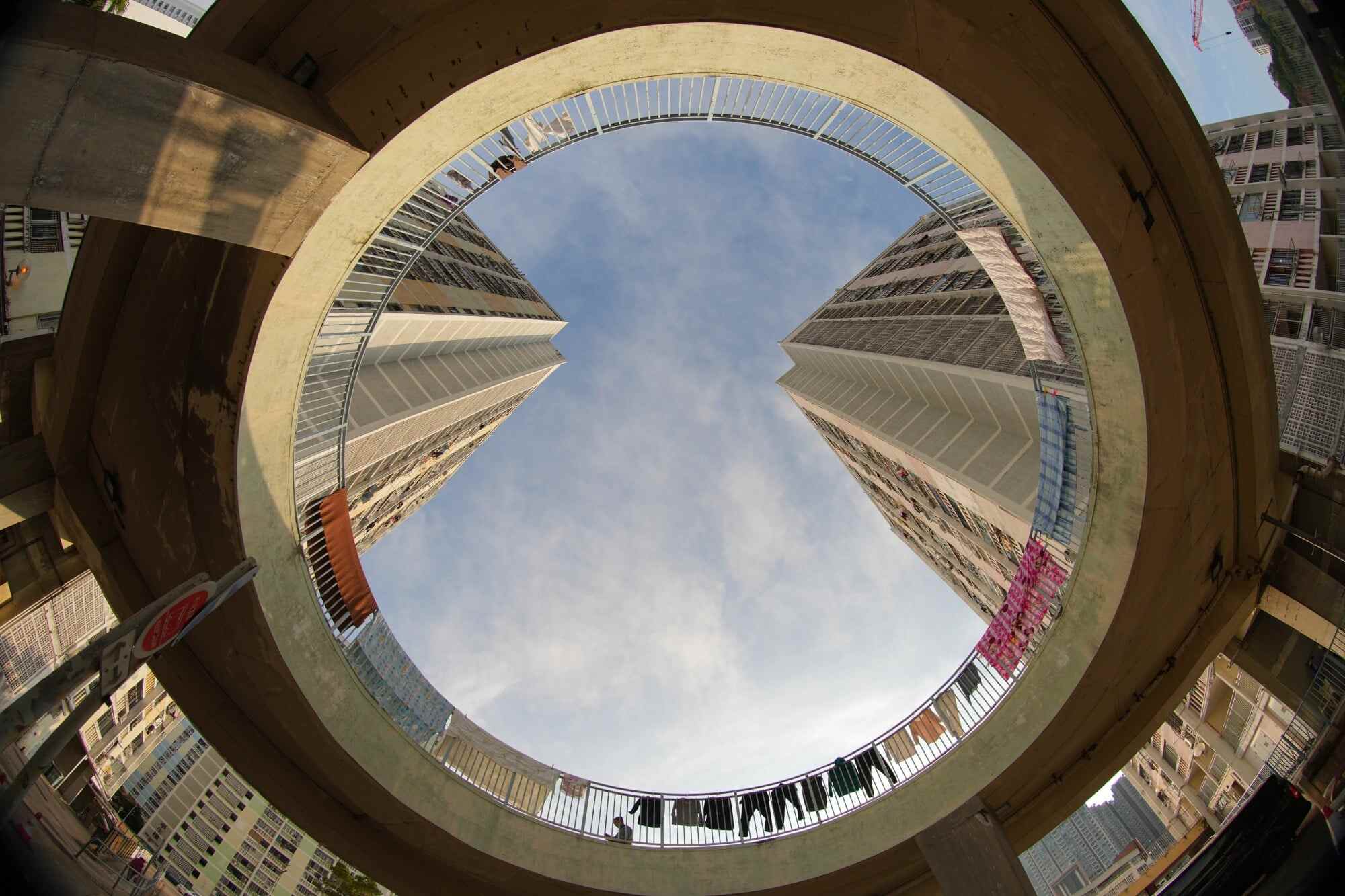
Wah Fu Estate was built in the 1960s. It was Hong Kong’s first public housing estate to feature self-sufficient facilities, such as a shopping centre and restaurants.
The neighbourhood that Kwok has called home for half a century will soon change dramatically.
This year, the government will roll out the first phase of its plan to redevelop Wah Fu Estate. The second phase will run from 2027 to 2030.
Kwok’s building will be targeted in the second phase.
He is one of roughly 25,000 residents from this 18-block estate who will need to relocate under the plans.
Lifetime rooted in Wah Fu
“Wah Fu Estate is the place where I settled down and thrived,” Kwok said. “I can confidently say that this is where I’ve put down roots.”
Kwok moved into Wah Fu Estate around 1973.
“The living environment was good, and we were happy,” he said, describing the estate as a community built on mutual support. He also joined the Wah Fu Credit Union when he moved in, eventually becoming the head.
The union is a community-based financial cooperative located within the estate. It is run by its members and offers banking and credit services.
Under the union, members pool their savings to provide each other with low-interest loans.
Preserving the past
Kwok has taken steps to share the stories of Wah Fu Estate. He helped the community centre, Wah Fu Living Hall, contact former and long-time residents to collect meaningful items. These objects, such as cameras, weighing scales and tools, were used in an exhibition to teach people more about life in the estate.
“Old things have commemorative value,” he explained, saying these objects help people remember the past.
Kwok also volunteers as a tour guide for Wah Fu, sharing stories about the estate and the credit union.
While he is working to preserve memories, he is not opposed to change: “Of course, there are things I’m reluctant to let go of when we relocate, but starting anew isn’t necessarily a bad thing, right?”
He believes that because residents will relocate nearby, community ties can continue.
Memories that cannot be rebuilt
Janne Tsui Fung-ha is hesitant to imagine living in her “new home”. Her father passed away five years ago. Tsui, 26, fears that relocating will sever her last connection to him.
She said: “Redeveloping Wah Fu Estate is not just rebuilding [it]; it erases my only memories of me and my family.”
Residents of Tsui’s block will be relocated by 2026 under the plan.
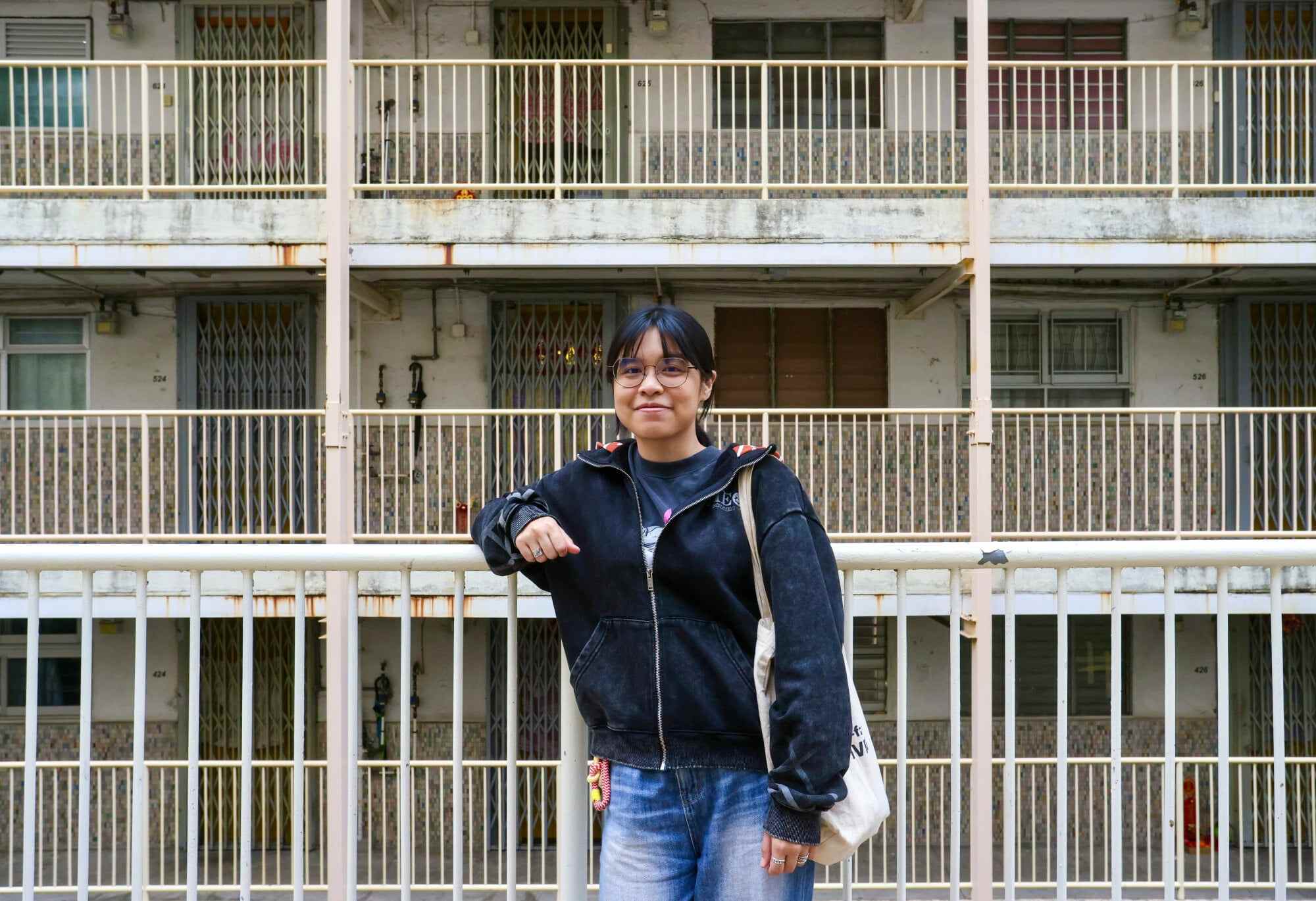
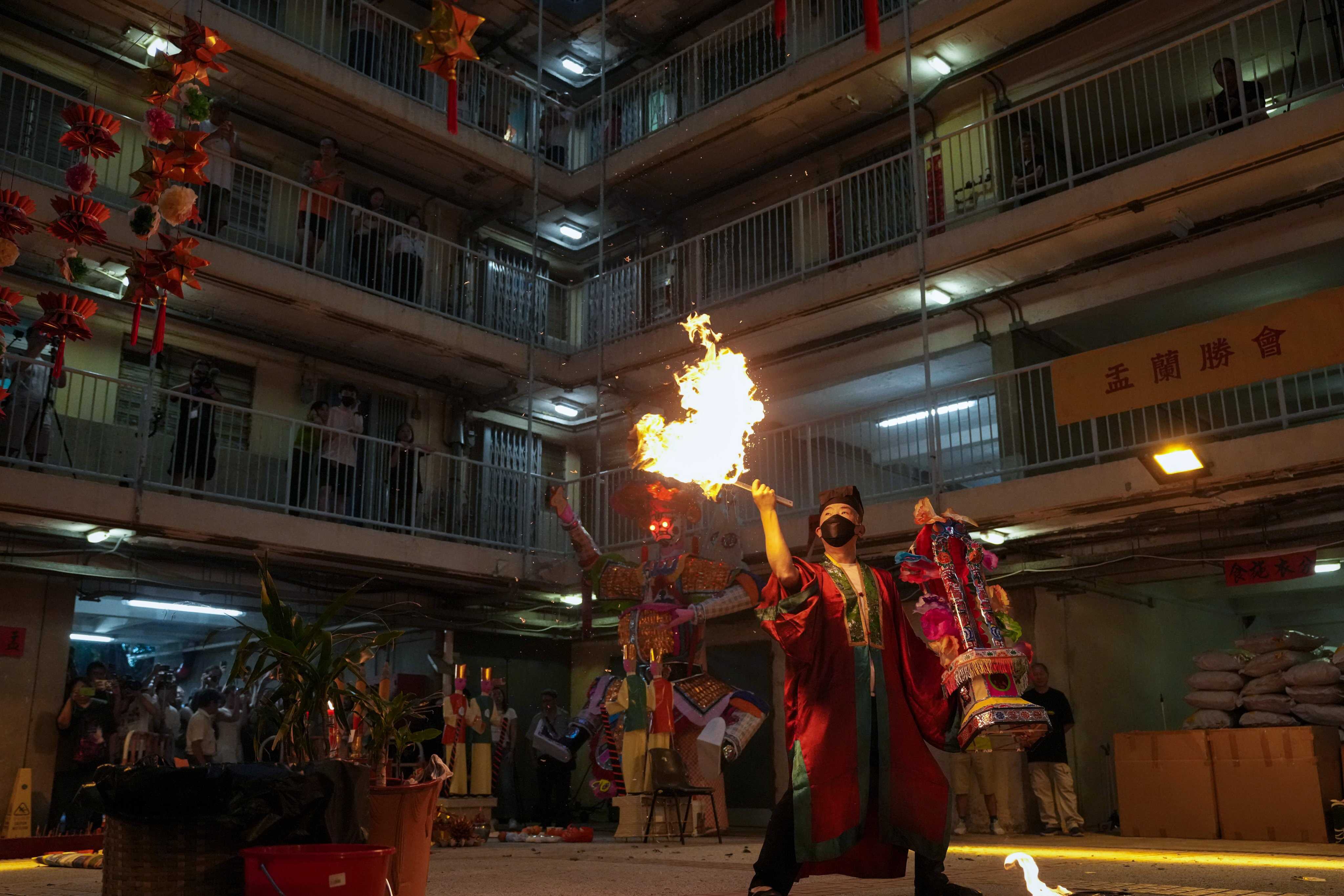
Tsui has tried to build more memories of the neighbourhood by joining more community activities, such as the Pok Fu Lam Village Fire Dragon Dance during the Mid-Autumn Festival: “I saw many residents standing in the corridors to watch it; it’s stunning. This ... just couldn’t be seen in other parts of Hong Kong,” she said.
In March 2025, Tsui led a tour on shopfront typography across Wah Fu estate. She guided participants through old CD stores, barbershops and shops selling Papier-mâché offerings, highlighting the history and design features from the 1960s and 70s.
“This place connects people of different ages and backgrounds,” she said. “It not only [allows people to remember], but it also lets newcomers feel how people lived before.”