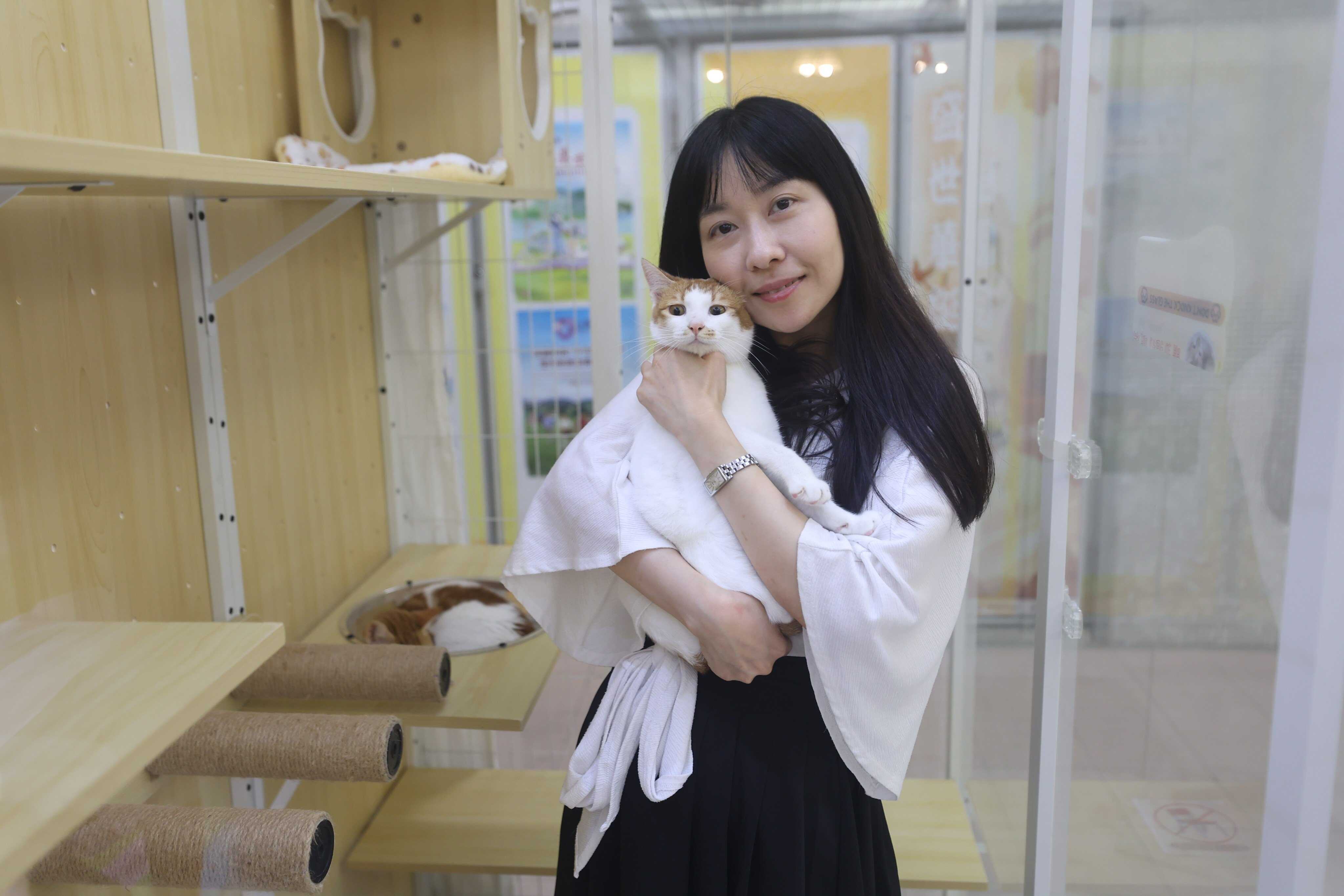
At a cat cafe in a Hong Kong school, the animals lend a comforting paw to pupils as they practise English.
“Speaking here doesn’t feel like a test ... because the cats give me the reason to talk,” said 13-year-old
Hei Hei Chan Ka-hei. He is a Form Two pupil at the Yuen Yuen Institute MFBM Nei Ming Chan Lui Chung Tak Memorial College.
The idea for this space began about two years ago when Yen Chan Yuen-yan joined the school as its English language panel head for junior forms.
“The cat cafe idea was ... inspired by using a more relaxed, social space to make English feel less like a test and more like real communication,” Chan said.
“The problems it ... aimed at solving are common in traditional English learning – too little speaking time, too much memorisation and correction, weak pronunciation practice and student anxiety about making mistakes.”
How the cafe helps students learn English
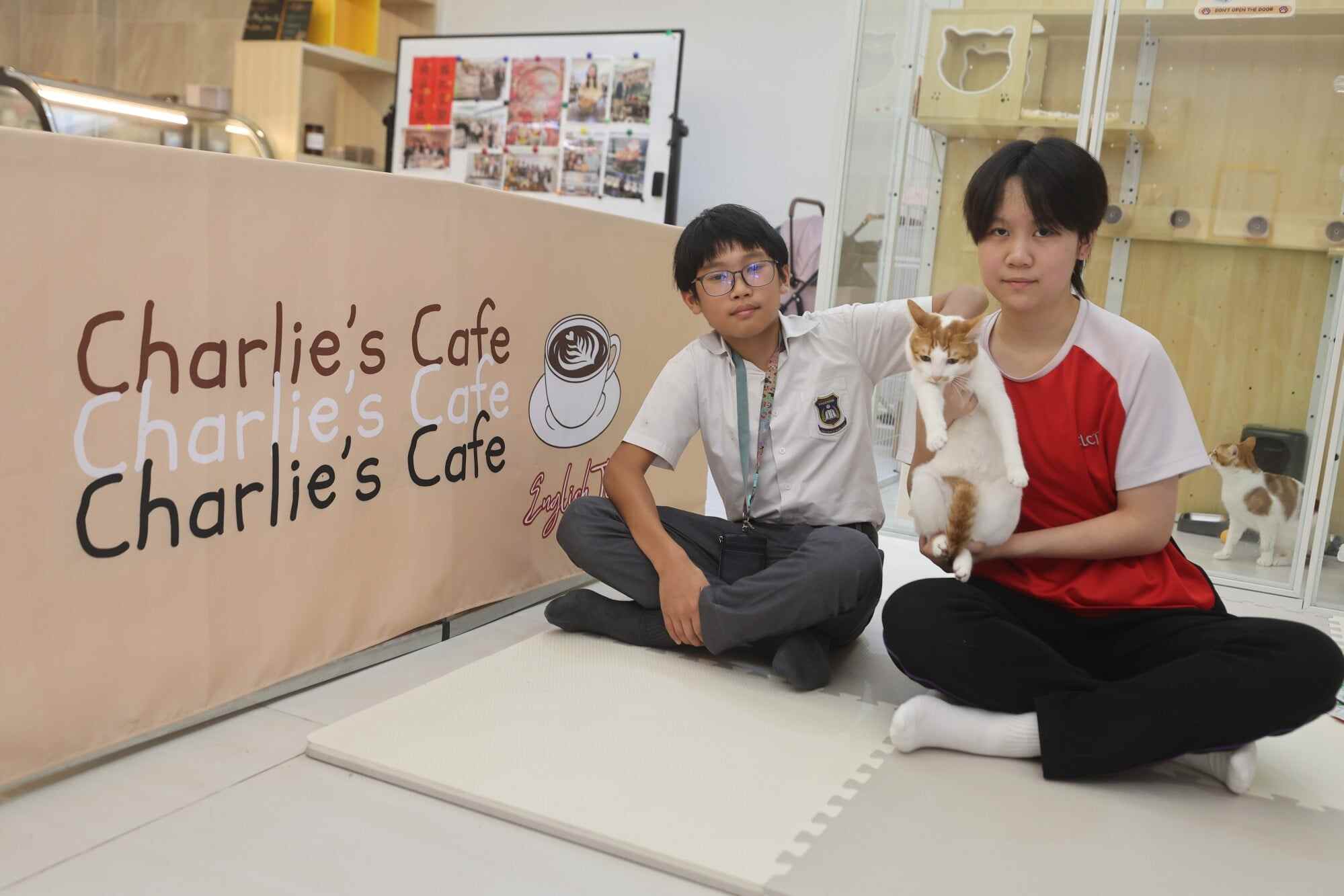
The cafe opened in March and was named after Charlie, an injured stray that the school adopted. The teachers also added two kittens, Coco and Lala, who were rescued and then adopted by the school.
This is also part of the school’s English courses. One set of lessons introduces the story of the school cats and teaches students to care for animals.
In the cafe, students speak English when chatting with teachers, ordering drinks or taking part in activities.
A reward system even allows them to collect stamps that can be added to their English marks.
During lunch, the English panel head serves drinks. Other teachers gather with students. On some days, they play English songs. Other days have film screenings and games.
The space feels different from the usual school canteen.
“This is such a supportive environment,” said 16-year-old Form Two pupil Yanis Tsang Yu-ying.
The student said the start of most conversations in the cafe would be about the cats.
“But we also talk about daily life and school topics. For example, if we are waiting while petting, I will mention a class topic or a school event, and teachers usually join us,” Yanis noted.
She also shared that the cafe helped her become more confident in English.
“[In] normal English lessons, teachers correct you; you practise sentences,” she said. “Inside the cafe, it’s easier to think in English because there’s something happening immediately, like cats moving ... and students reacting.”
She added: “English feels like a tool I’m using, not just something I study.”
Skills beyond the classroom
For Chan, teaching students to care for animals is just as important as teaching grammar.
“The goal was to help students develop empathy and responsibility by caring for stray animals, while also encouraging them to adopt animals instead of buying them,” she said.
“English education can be combined with life education, animal care and student well-being in a creative way, instead of staying only in the traditional classroom.”
Yanis said she learned how to understand cats’ body language and respect their feelings.
“When I notice any uncomfortable signals, I adjust immediately, reduce touch, slow down or let the cat rest. Respect is the main rule,” she said.
The cats have become a source of emotional comfort for students as well.
“It honestly changes my whole mood. Before, school stress would build up in my chest, and I [would] feel irritated,” Hei Hei shared.
“When I play with the cats, I calm down. Then, I go back to class feeling more ready.”