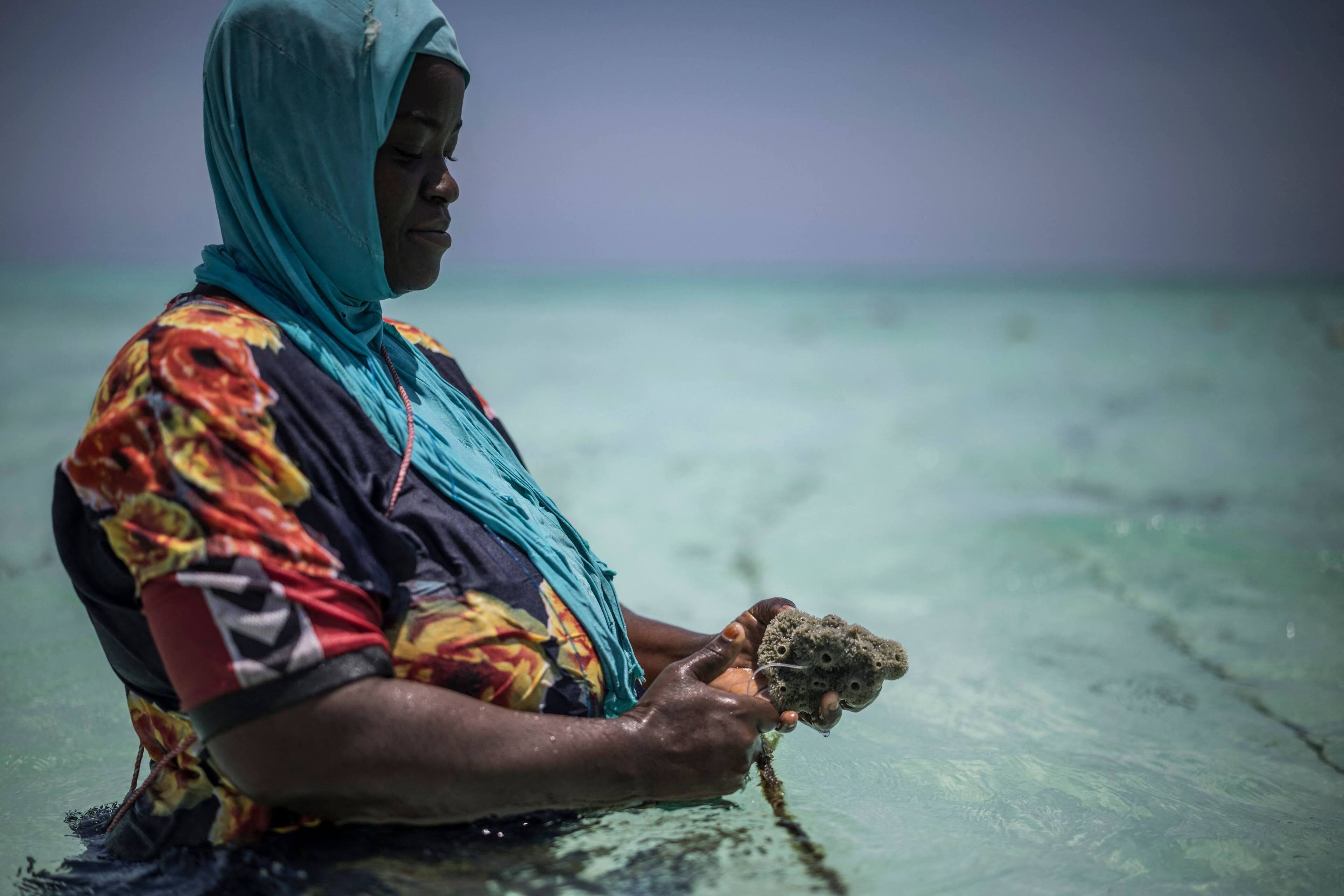
At about 10am every morning, women wade through Zanzibar’s shallow tides to tend their sponge farms. These farms have helped people survive after climate change destroyed their former work.
Why are people farming sponges?
Zanzibar is a group of islands off the coast of East Africa. Rising ocean temperatures, overfishing and pollution have ruined marine ecosystems around Zanzibar. This has affected a key source of income for locals in Jambiani village, who long depended on farming seaweed.
Ali Mahmudi is a project manager with a Swiss NGO called Marine Cultures. He said that hot temperatures killed seaweed, and many fishermen quit because there were not enough fish.
Now, Marine Cultures has set up a project that helps locals make money by growing sponges. This is because sponges tend to thrive in warmer waters.
They can be sold as an organic personal care product to exfoliate skin.
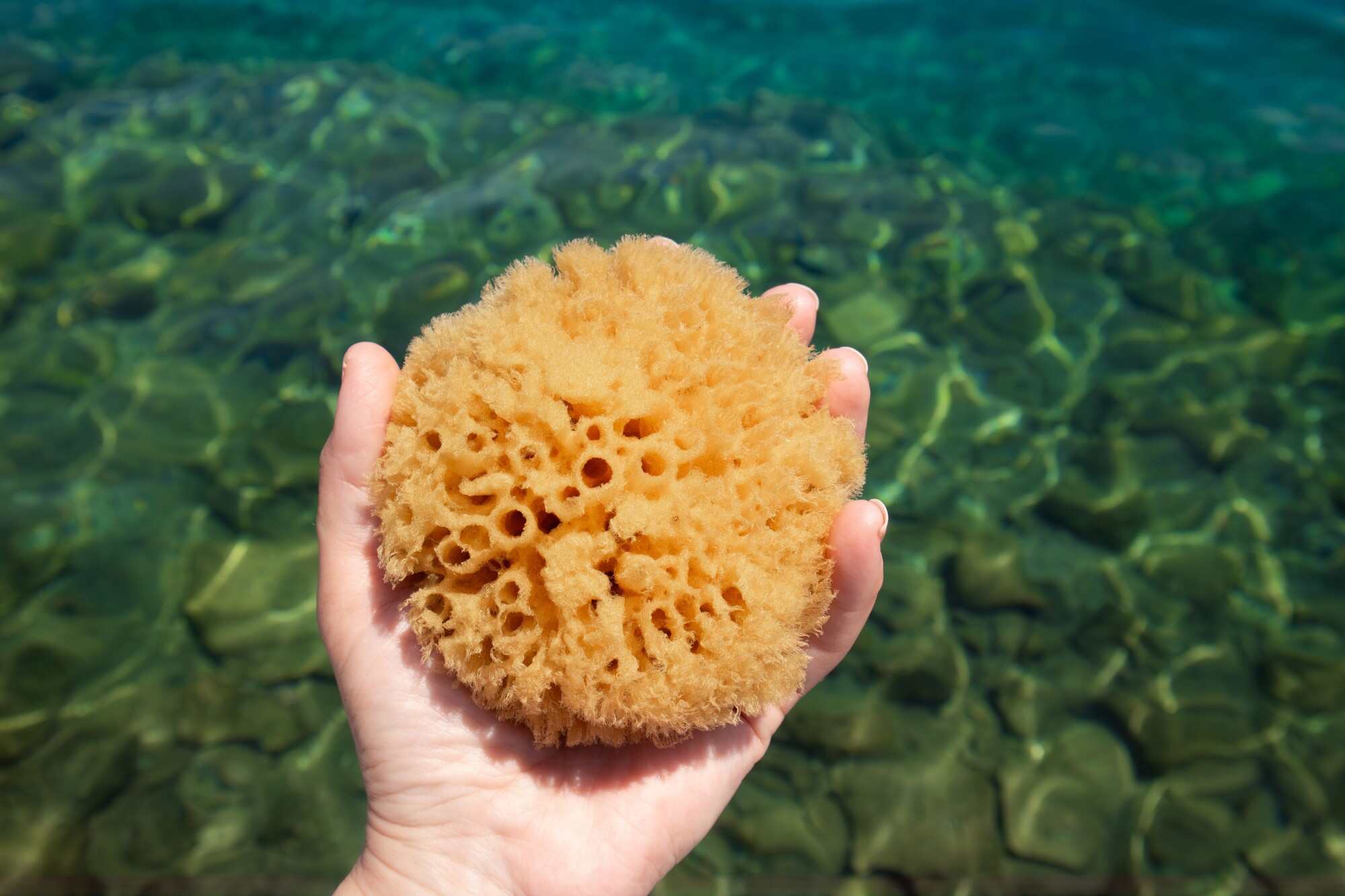
Depending on their size, the sponges can be sold for up to US$30 (HK$233) each. One farm can have as many as 1,500 sponges.
In 2009, Marine Cultures launched a pilot sponge farm with widowed women in Jambiani. In Zanzibar, more than a quarter of the 1.9 million people live below the poverty line.
The market for sponges has been growing because people around the world want to buy eco-friendly products. The US National Oceanic and Atmospheric Administration estimates the value of the natural sponge market to be US$20 million (HK$155.6 million) in 2020.
Many other women have now joined a cooperative to expand the sponge farming project.
Sponges benefit the ocean
Sponges are also helpful for the marine environment. Studies show that a sponge helps recycle carbon in coral reef ecosystems.
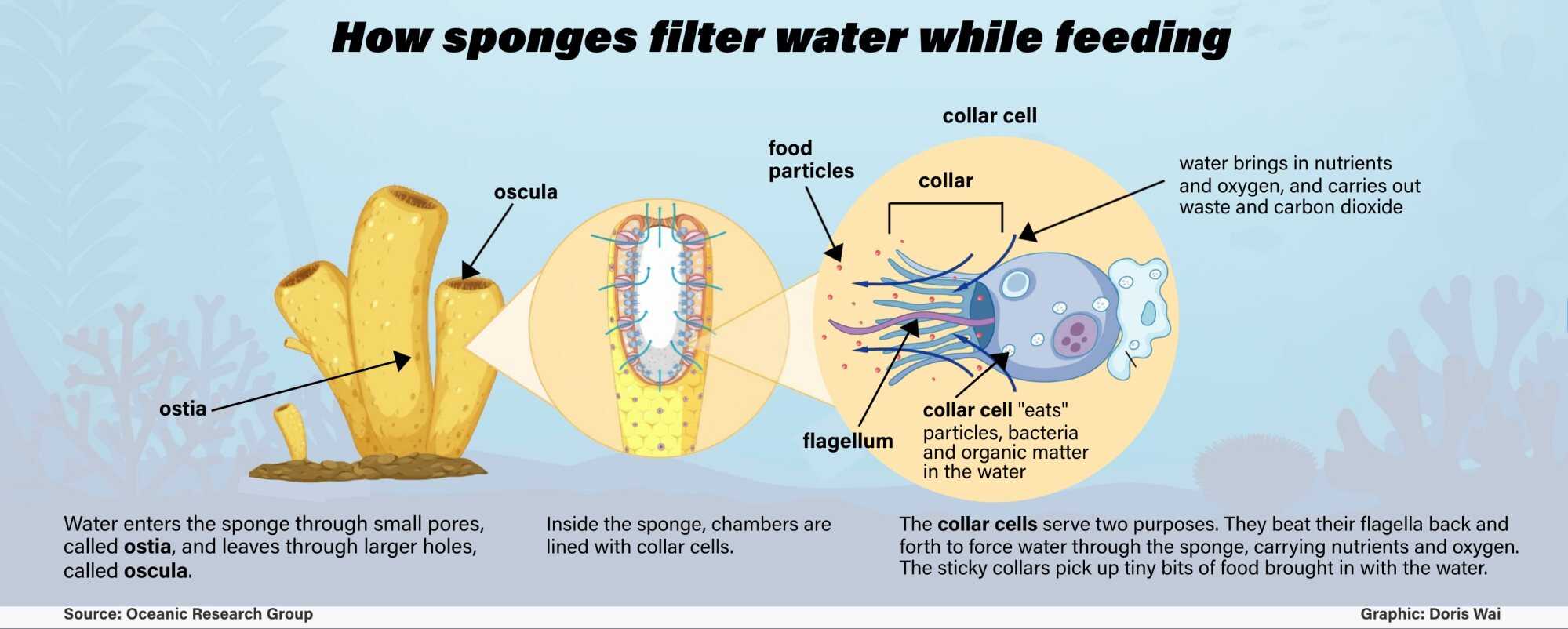
Sponges are also excellent filter feeders. They remove suspended particles, bacteria and organic matter from the water. This filtration reduces excess nutrients and contaminants to maintain water clarity and quality (see graphic).
Sponges are also known to help restore coral reefs. This is important because corals support 25 per cent of marine life, and they are currently under threat.
What is a sponge, and how is it different to a coral?
Sponges are simple aquatic animals. They have no real organs, and their bodies are made up of fibre-like protein, which is similar to a bath sponge.
Like corals, sponges live in the water and are invertebrates that cannot move.
But corals are complex animals with many cells and special body parts called tissues. Sponges are much simpler and do not have tissues or organs.
All corals must live in saltwater. While most sponges live in the ocean, they can also be found in fresh water such as rivers and lakes.