
Do you have something to say? Send us a letter using this form.
Lessons in cooperation
Jayden Poon, German Swiss International School

I never imagined I would be surrounded by students from more than 150 countries – but there I was on Yale’s historic campus for the Yale Young Global Scholars (YYGS) programme. Over the next two weeks, I learned a few crucial lessons.
First, the same issue can look completely different from another vantage point. In a seminar on the rise of far-right authoritarian governments,
I focused on the road to World War II and how propaganda shaped public opinion.
What I overlooked was the present-day threat posed by parties like Austria’s Freedom Party and Italy’s Brothers of Italy. As the Austrian and Italian students in the room pointed out, history doesn’t just rhyme; it can repeat. Their perspectives pushed me to trace parallels between European fascism in the 1930s and contemporary populism, deepening a field I had assumed I already understood.
I also learned that communication is a discipline, not a debate to be won. Too often, we bicker and shut down when we disagree. At YYGS, we were consistently exposed to perspectives that challenged our own. I learned that no viewpoint is inherently wrong and that there are many ways to see the same problem.
The Symposium, a crisis simulation where students represented different stakeholders and countries, brought this to life. Even after I was threatened with sanctions in character, our group produced two resolutions that offered conflicting yet equally logical responses to a simulated oil spill in the Arctic. It showed us the importance of working together to solve global problems and to develop solutions that take into account the position of all stakeholders.
Why should students in Hong Kong care about global perspectives? Because we learn by listening to others’ experiences.
For advocacy, especially, youth in Hong Kong must draw on global ideas to shape local solutions for housing, the climate crisis and food security, then adapt them to our city’s unique context.
YYGS showed me that when we bring global perspectives into the room and truly listen, we gain the empathy, evidence and confidence to turn ideas into action back home in Hong Kong.
Yale Young Global Scholars is an academic enrichment programme at Yale University that offers tracks in the social sciences, humanities and STEM. The programme unites 1,950 students from more than 150 countries and all 50 US States, and offers US$3 million in need-based financial aid per year to both international and domestic students.
Nostalgia and Hong Kong’s future
Stephanie Kwan Tsz-lui, Hong Kong International School
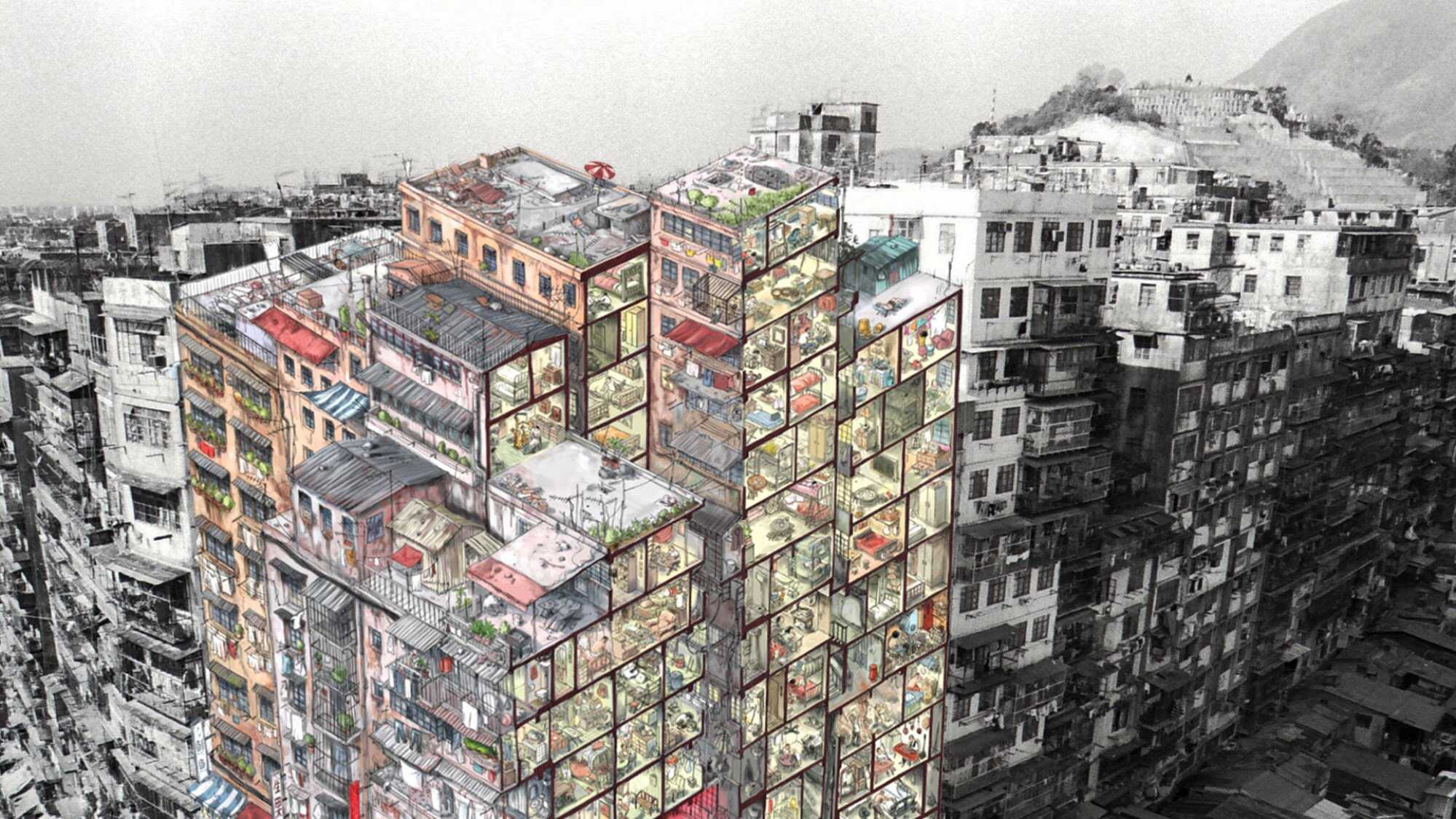
Hong Kong is experiencing a powerful wave of nostalgia. This is evident in the photography of fading neon signs, the renewed popularity of 80s music, the influx of media dedicated to the Kowloon Walled City and the emergence of new cafes inspired by the bing sut (冰室). We are collectively gravitating towards icons from Hong Kong’s past.
Is this a cultural trend, or a deeper, more distressing response to cultural erosion and a loss of community?
Swedish historian Johan Norberg, in his book False Nostalgia, asserts that amid uncertainty, nostalgia becomes an anchor.
When our sense of stability is lost, we think about the “good old days” because it provides continuity and unity.
The fascination with the Kowloon Walled City, in particular, stems from its portrayal as a tight-knit, self-sufficient and resilient community set within a cyberpunk fantasy world.
For instance, the film Twilight Warriors: Walled In powerfully illuminates the community spirit that thrived in what was once known as the “dirty old wart”.
The film captured the essence of the Walled City in the line: “It’s not because of the Walled City itself, but because of the people in it.” The film dominated the awards at the 43rd Hong Kong Film Festival and became the second Hong Kong film to ever surpass US$100 million in earnings.
Young Post’s interview with the film’s director Soi Cheang Pou-Soi revealed the secret behind its success: its ability to communicate nostalgia.
The essence of Kowloon Walled City resonated so well with its audience because it fulfilled our cravings for community and human spirit.
It may also signal a yearning for the revival of Hong Kong’s vibrant cultural identity – a desire for the city to return to a past better than the present.
However, nostalgia is a double-edged sword. Norberg cautioned that its selective nature tends to romanticise inequality and hardship.
In a 2024 SCMP interview titled “Remembering Hong Kong’s ‘City of Darkness’,” former resident Winston Chan recalled playing with kites on the rooftop. While Chan held positive memories, they coexisted with challenges.
He stated that had he stayed longer, “I may have either been sent to jail, killed in a fight, or overdosed on drugs.”
Nostalgia should not confine us to a faraway past, but instead strengthen our drive to build and thrive in the present.