Do you have something to say? Send us a letter using this form.
Look beyond a book’s cover
Portia Pang, South Island School

“Never judge a book by its cover.” Many people have heard of this famous saying, but physical appearance still influences how they treat and perceive others. These judgments affect not only social interactions and relationships but also professional opportunities.
In a 2006 study published in the journal Psychological Science, an experiment found that it only took a tenth of a second to form first impressions based solely on physical attributes – and longer exposures mainly boosted respondents’ confidence in their judgments.
A 2006 study published in the journal Psychological Science found that it took only a tenth of a second to form first impressions based solely on physical attributes – and that longer exposures mainly boosted respondents’ confidence in their judgments.
There are some people who might argue that personality and skills are what matter most. While that can be true, the harsh reality is that physical appearance still dictates how people perceive others, sometimes in unfair and unconscious ways.
Numerous social experiments have showcased this phenomenon, often called the “halo effect”. The halo effect describes when individuals deemed to be more attractive are often assumed to have more positive personality traits and thus receive friendlier treatment.
Because of this bias, people who are seen as being more attractive often receive more attention and greater opportunities before they have even said a word.
This term was first coined in a 1920 paper by psychologist Edward Thorndike, whose experiment found that military officers’ ratings of their subordinates’ physiques correlated with ratings of their intelligence and leadership.
When we judge people exclusively based on their looks, we ignore other attributes that they might have. This is especially relevant in today’s world, where social media influences how people see themselves and others. On these platforms, it is immensely difficult not to judge people based on their appearances, as that might be all we know about them from their accounts.
When social media users – and wider society – value certain looks over others, people who do not fit into these ideals can experience discrimination or exclusion. Especially in the vulnerable years when teenagers are still developing, being pushed to fit into unrealistic beauty standards complicates their path to finding themselves.
Finally, it is important to remember that different places have different beauty standards. For example, in many Western countries, tanned skin is desirable, and some people sit in the sun or use tanning beds to meet this standard.
However, East Asian countries usually prefer a paler complexion, and some people go so far as to bleach their skin to meet this standard. This example shows that what might be considered ugly in one place might be deemed attractive in another.
But if we all tried to look beyond appearances, what more could we discover?
Dangers of overtourism
Peter Chui Pui-ling, Maryknoll Fathers’ School

During the National Day “golden week” holiday, more than 1.4 million mainland Chinese visitors flocked to Hong Kong. Government officials had an optimistic outlook, claiming that an influx of tourists would boost the city’s economy.
As the Pearl of the Orient, Hong Kong blends stylish modernity with traditional culture and is known as a paradise for food and shopping. Many mainland Chinese visitors come to the city to experience things that are unavailable back home. Additionally, the city’s nuanced historical background as a British colony creates a unique environment for visitors to see.
From Sha Tau Kok to Tai O, Hong Kong has many cultural and natural highlights for tourists to explore.
Among these hotspots is Sharp Island, located off the coast of Sai Kung. This Unesco Global Geopark has also been given another name – Fairy Path, which refers to the thin trail of sand that connects the main island to a smaller islet. Known for its natural rock formations, Sharp Island has become a go-to attraction for tourists.
On the first day of the golden week holiday, Greenpeace Hong Kong reported that more than 4,600 people arrived on the island. During their visit to the Fairy Path, people were found trampling on the corals, removing marine life and cooking over open fires.
Tourists’ experiences on Sharp Island came at the expense of the ecosystem.
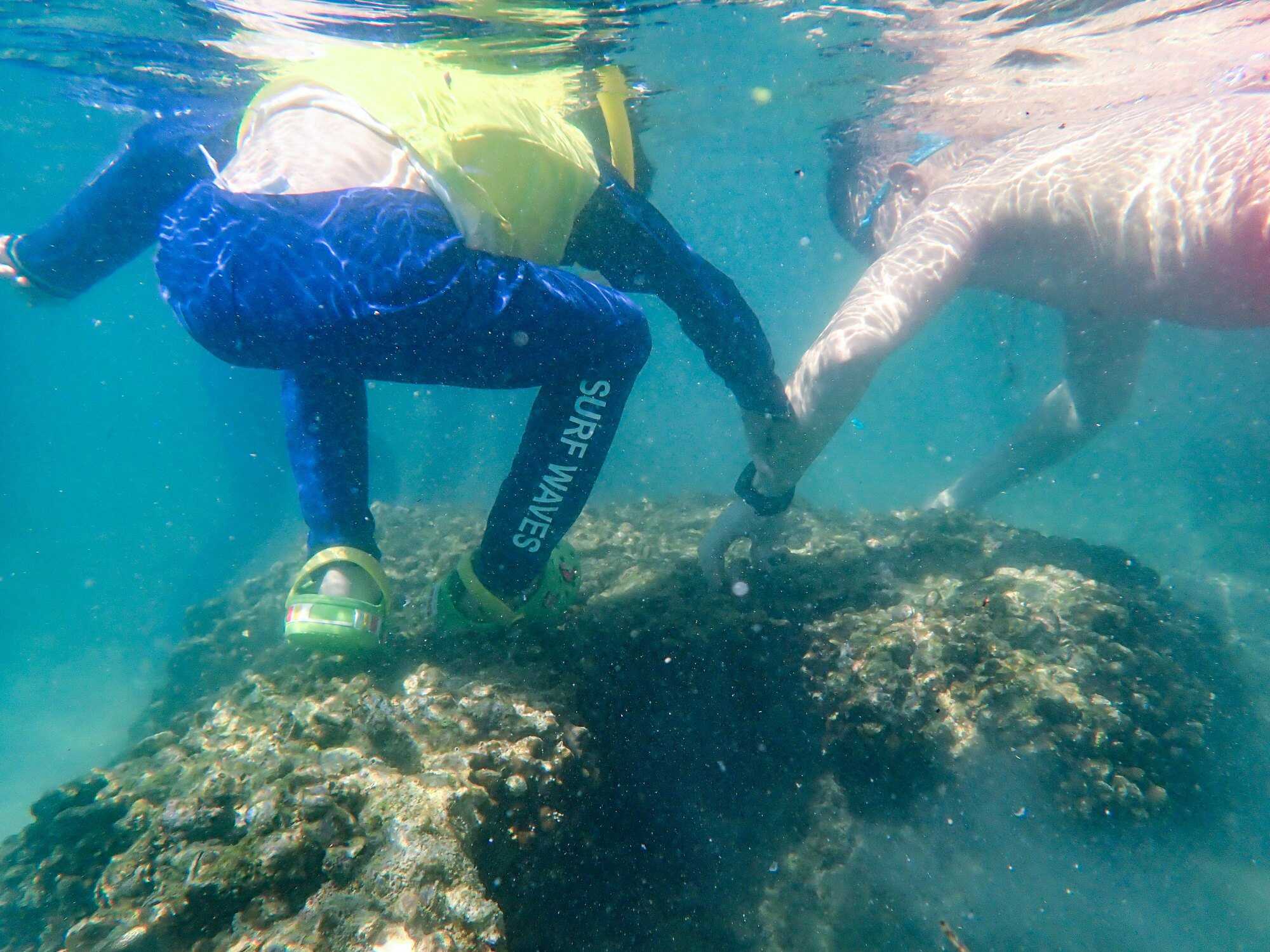
Large numbers of people snorkelled around the coral reefs and walked on them. Sadly, their actions contributed to the destruction of the city’s reefs, which are already suffering from warming waters that bleach the corals. Because of overtourism, local conservation efforts to protect the corals have been done in vain.
Different newspapers reported that the island was also covered in garbage.
Green groups expressed their disappointment over the degradation of wildlife, urging authorities to intervene and investigate the situation, as well as to tell visitors to take away their trash.
Hong Kong’s government has been actively promoting ecotourism, but the damage suffered by Sharp Island makes the outlook seem grim for other potential eco-spots.
Could this incident have been averted? Other ecotourism spots should not fall prey to this fate.
The government should conduct comprehensive reviews of the devastation endured by Sharp Island and make progress on its repair. Authorities must map out measures to preserve eco-spots by managing tourists. Visitors to Hong Kong’s natural areas should be educated about how to protect the ecosystems.