Deep Dive delves into hot issues in Hong Kong and mainland China. Our easy-to-read articles provide context to grasp what’s happening, while our questions help you craft informed responses. Check sample answers at the end of the page.
News: Overtourism in a Unesco-listed geopark
-
Greenpeace calls for ecological protection of Hong Kong’s outlying islands
-
More than 4,000 people landed on Sharp Island on National Day
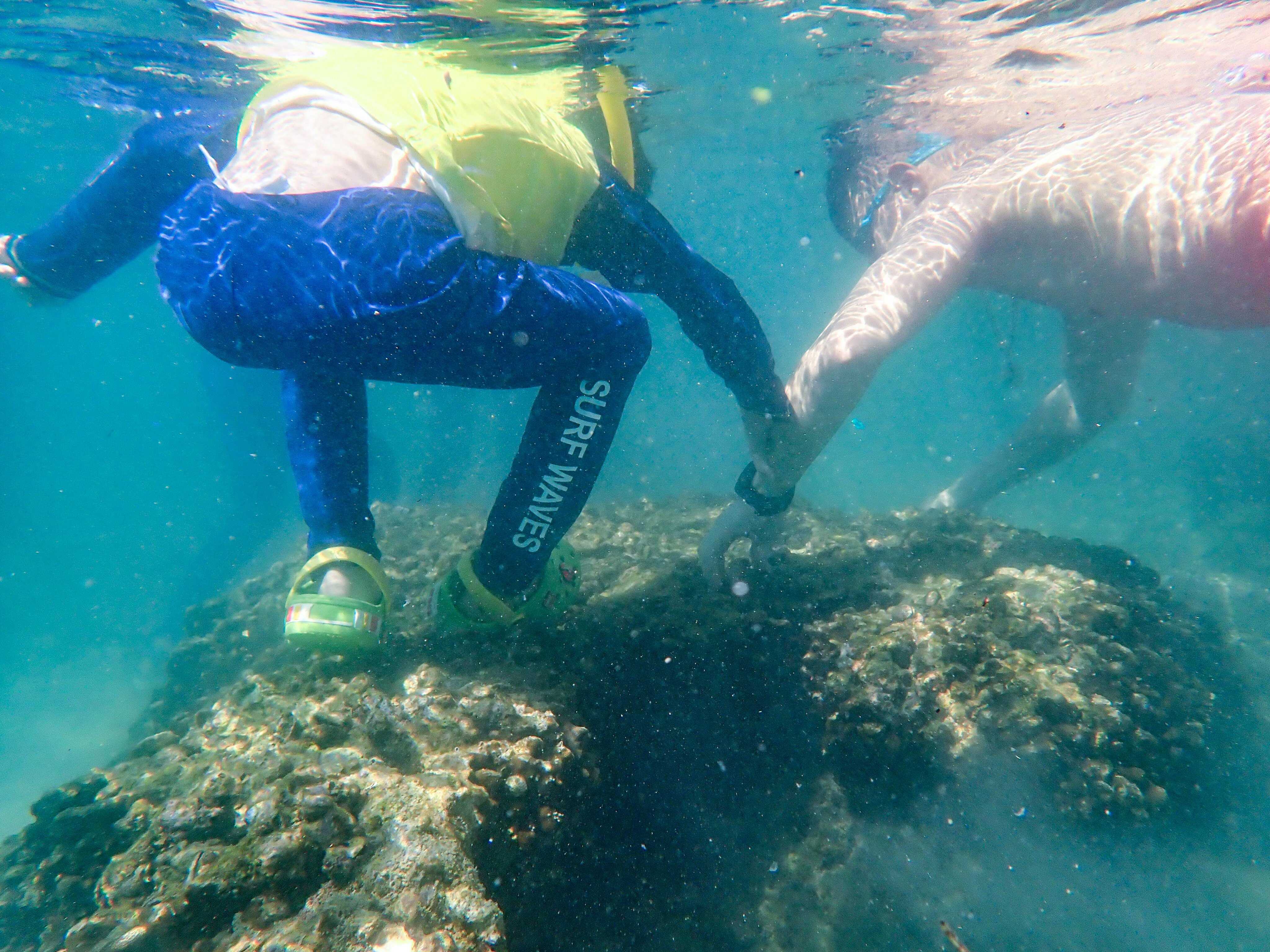
Some tourists trampled corals, cooked over open fires and dug up marine creatures in a Unesco-listed geopark in Hong Kong, violating park rules and posing an ecological threat.
A site inspection by Greenpeace found that 4,062 people landed on Sharp Island – also known as Kiu Tsui Chau – on October 1, the first day of the National Day “golden week” holiday. The site is a key location within the geopark.
Some coral reefs in the shallow beach area were found slightly damaged, according to an investigation by the Agriculture, Fisheries and Conservation Department (AFCD).
Greenpeace has called for the government to protect Hong Kong’s outlying islands.
The geopark became a tourist hotspot after it received hype on the popular Chinese social media platform RedNote, with many users sharing pictures and selfies of themselves visiting the island.
Sharp Island North is a critical coral distribution area in Hong Kong. A 2024 survey by the AFCD found that the area’s coral coverage rate was 71.3 per cent – the second-highest in the city.
The large sandy areas on the island are suitable for scuba diving and dive training, making it the most popular dive training hotspot in Hong Kong. However, the current unregulated recreational diving activities are affecting marine biodiversity.
“During our inspection, we found that some vessels were anchored in coral zones, seemingly ignoring the AFCD’s ‘No Anchoring’ signs there,” said Greenpeace campaigner Ha Shun-kuen.
“[Touching the coral] risks breaking or killing the coral, potentially exacerbating the coral bleaching issues recently observed in the area.”
Ha noted that the recovery of the corals could take years and urged the department to publish the survey on the reefs and the extent of the damage caused by people.
“We call on the Culture, Sports and Tourism Bureau and the Environment and Ecology Bureau to jointly review the incident, examine loopholes in existing legislation and formulate an ecotourism policy to prevent a repeat of history,” Ha said.
Officers from the marine conservation branch of the AFCD were seen distributing fliers to visitors and telling them not to damage corals or remove organisms from the area.
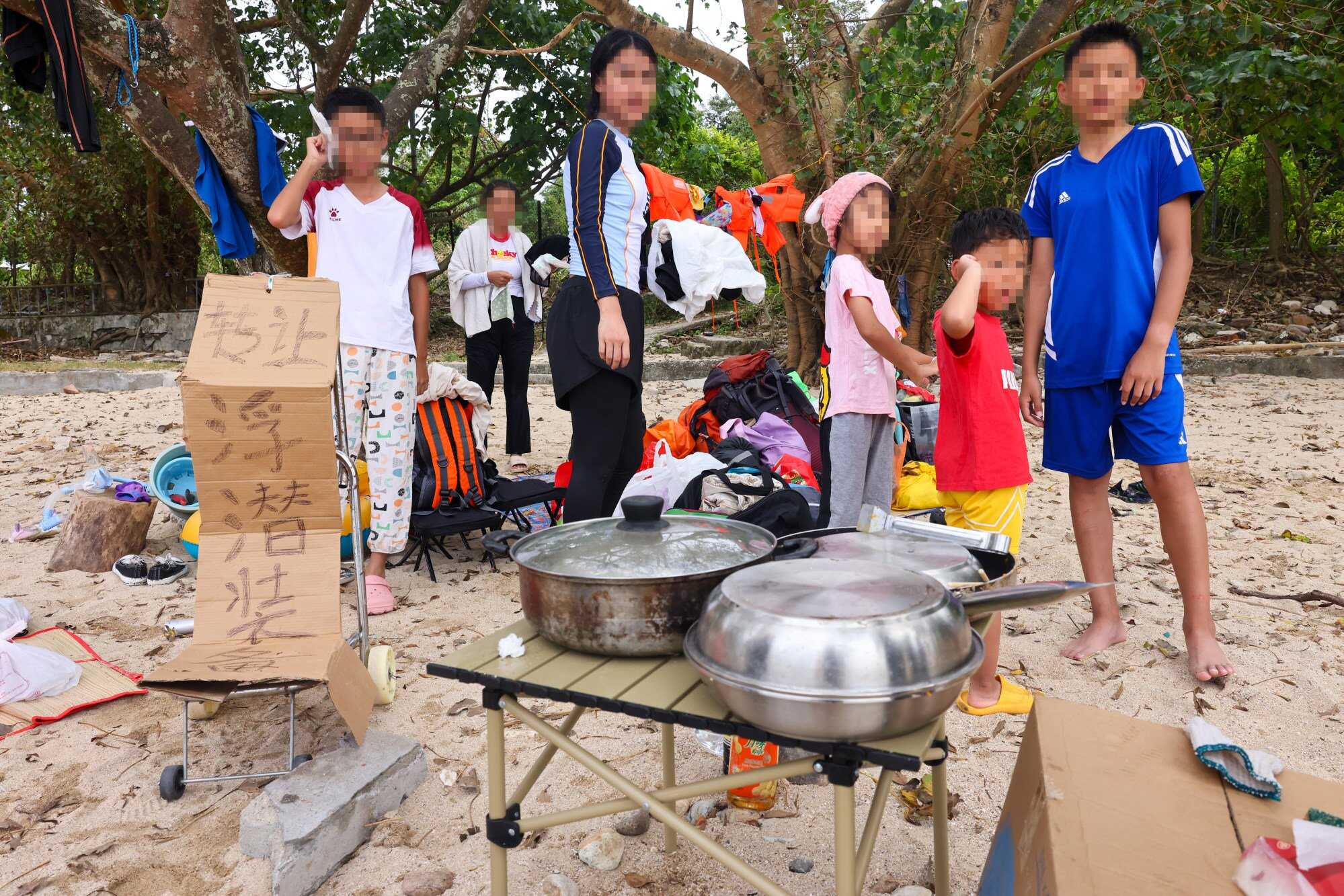
Ha added that observers also documented tourists digging up sea stars, sea urchins, sea cucumbers, conches and clams, as well as littering and illegally lighting fires for cooking.
According to the authority, it is an offence under the Forests and Countryside Ordinance to illegally light or use a fire in country parks and the open countryside.
Staff writers
Question prompts
1. Which of the following statements about Sharp Island are false?
(1) Sharp Island has rich biodiversity.
(2) Some tourists were camping and cooking on the beach.
(3) More than 4,602 tourists had landed on the protected site on National Day.
(4) Sharp Island is not part of the Hong Kong Unesco Global Geopark.
A. (1), (2) only
B. (2), (3) only
C. (3), (4) only
D. (1), (4) only
2. List TWO reasons why the geopark is a popular destination for tourists.
3. What is overtourism’s impact on Sharp Island? Explain using the glossary, news and your own knowledge.
Photo
Question prompts
1. What illegal activities did observers from Greenpeace document tourists engaging in at Sharp Island?
2. What should the government do to curb these illegal activities? Explain using the news, glossary and your own knowledge.
Sample answers
News:
-
C
-
The geopark received hype on the popular Chinese social media platform RedNote, with many users sharing pictures and selfies of themselves visiting the island. The large sandy areas on the island are suitable for diving training, making it the most popular dive training hotspot in Hong Kong.
-
The large influx of visitors during the golden week holiday and the hype generated by social media platforms like RedNote contribute to environmental problems in an area recognised for its high coral coverage, as Sharp Island North has the city’s second-highest coverage at 71.3 per cent. Visitors were seen littering, which creates plastic pollution, and illegally lighting fires for cooking, which could be dangerous. Vessels were found anchored in coral zones, causing damage to the corals and ignoring the “No Anchoring” signs.
Photo:
-
Greenpeace observers documented several rule-violating activities, including trampling corals, digging up marine creatures, littering, and illegally lighting fires for cooking. Some vessels were anchored in coral zones despite the signs that said “No Anchoring”.
-
The government should tighten its rules for boat operators and tourist groups. They could limit the number of people who can go to Sharp Island at one time and give licences to trained boat operators who will maintain the health of the coral reefs. (accept all reasonable answers)