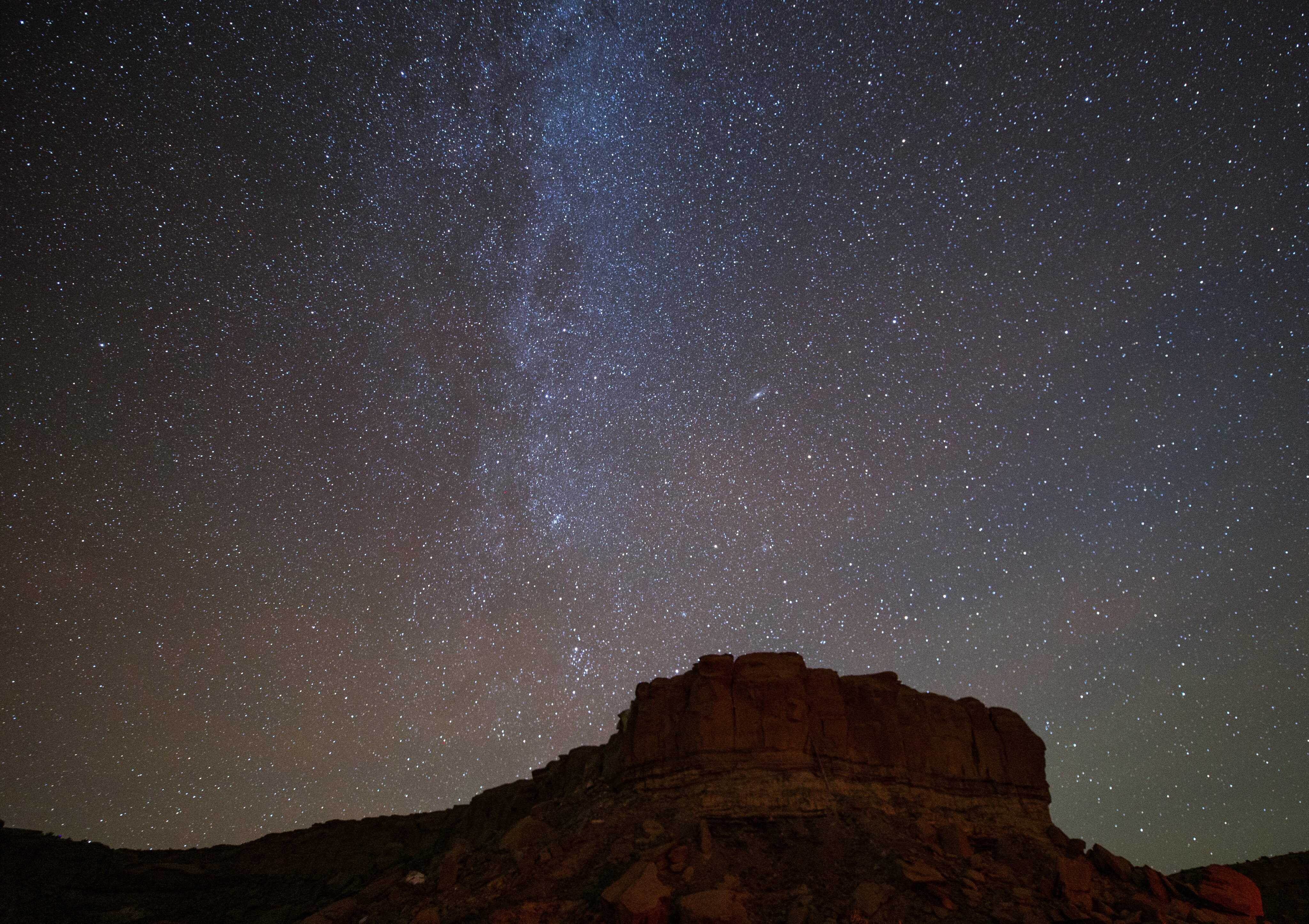
Have you ever looked at the stars and wondered why some look blurry? That is because Earth’s atmosphere bends and blocks some of the light from space.
To get a clearer view of the universe, scientists built space telescopes that orbit above our atmosphere. Two famous ones are the Hubble Space Telescope and the James Webb Space Telescope.
How Hubble helps us observe the universe
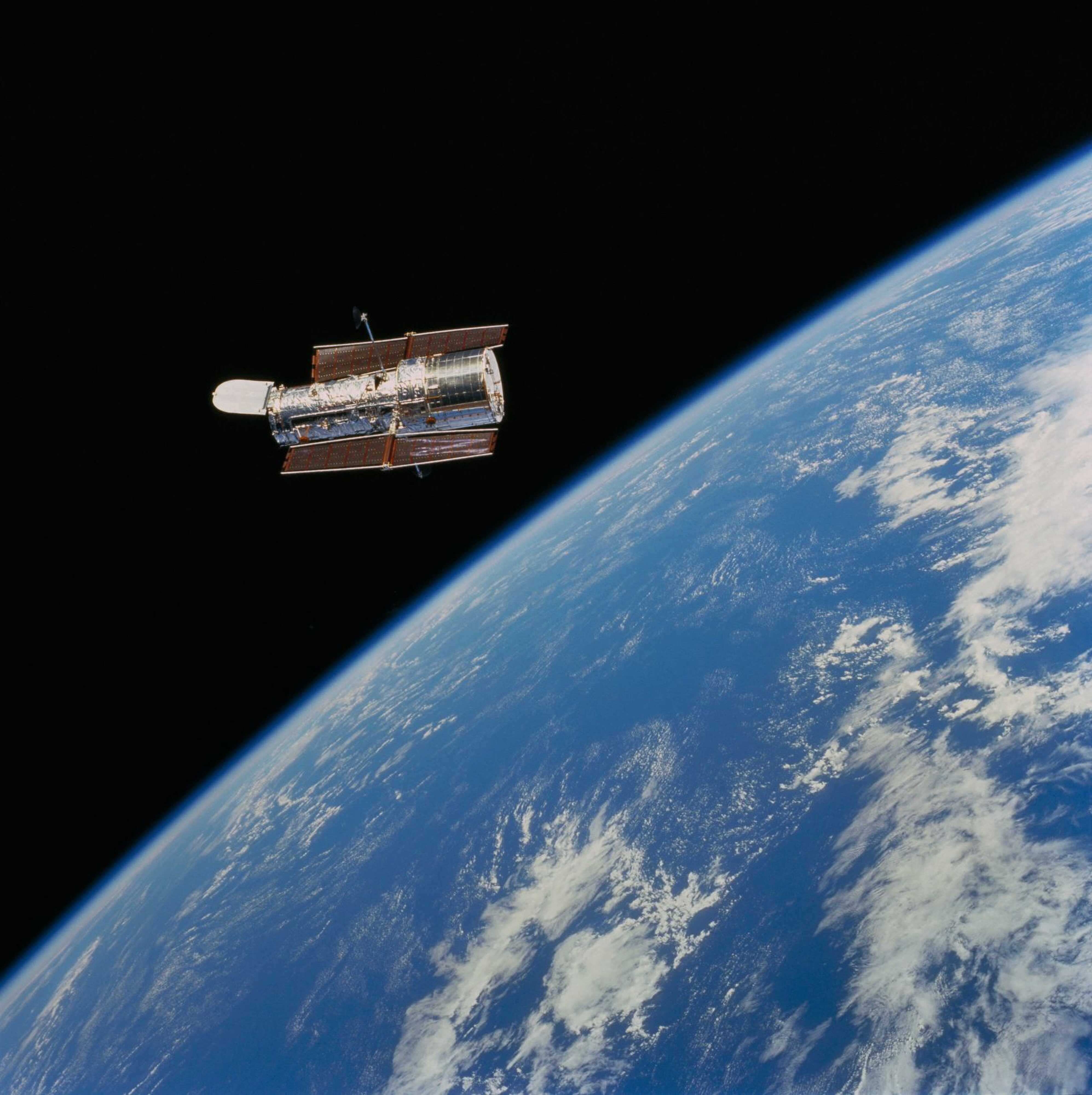
Launched in 1990, the Hubble Space Telescope orbits about 540km above Earth. It takes sharp pictures of stars, galaxies and colourful clouds of gas called nebulae.
Before Hubble, astronomers studied the universe using ground-based telescopes, long-exposure astrophotography and measurements of how celestial objects moved. But Earth’s atmosphere and urban light pollution often blurred the view and limited how clearly scientists could study the night sky.
Not only can Hubble see much farther than the human eye, but it can also detect invisible light such as ultraviolet and near-infrared wavelengths. This helps scientists learn how stars are born, how galaxies form and how the universe changes over time.
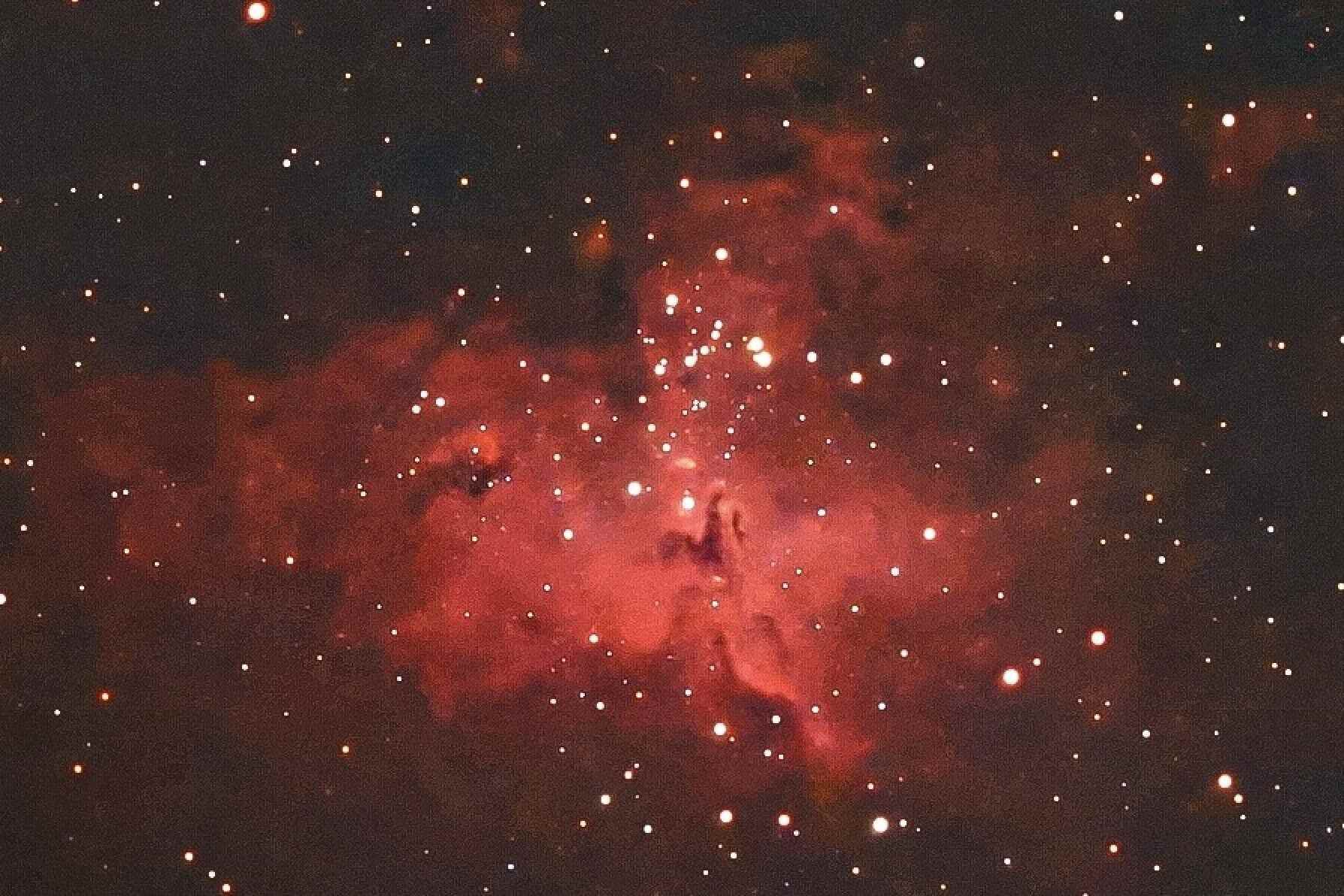
One example is the stunning photograph of the Pillars of Creation, taken by Hubble. The Pillars of Creation are where new stars are born. They are a small part of a space cloud called the Eagle Nebula.
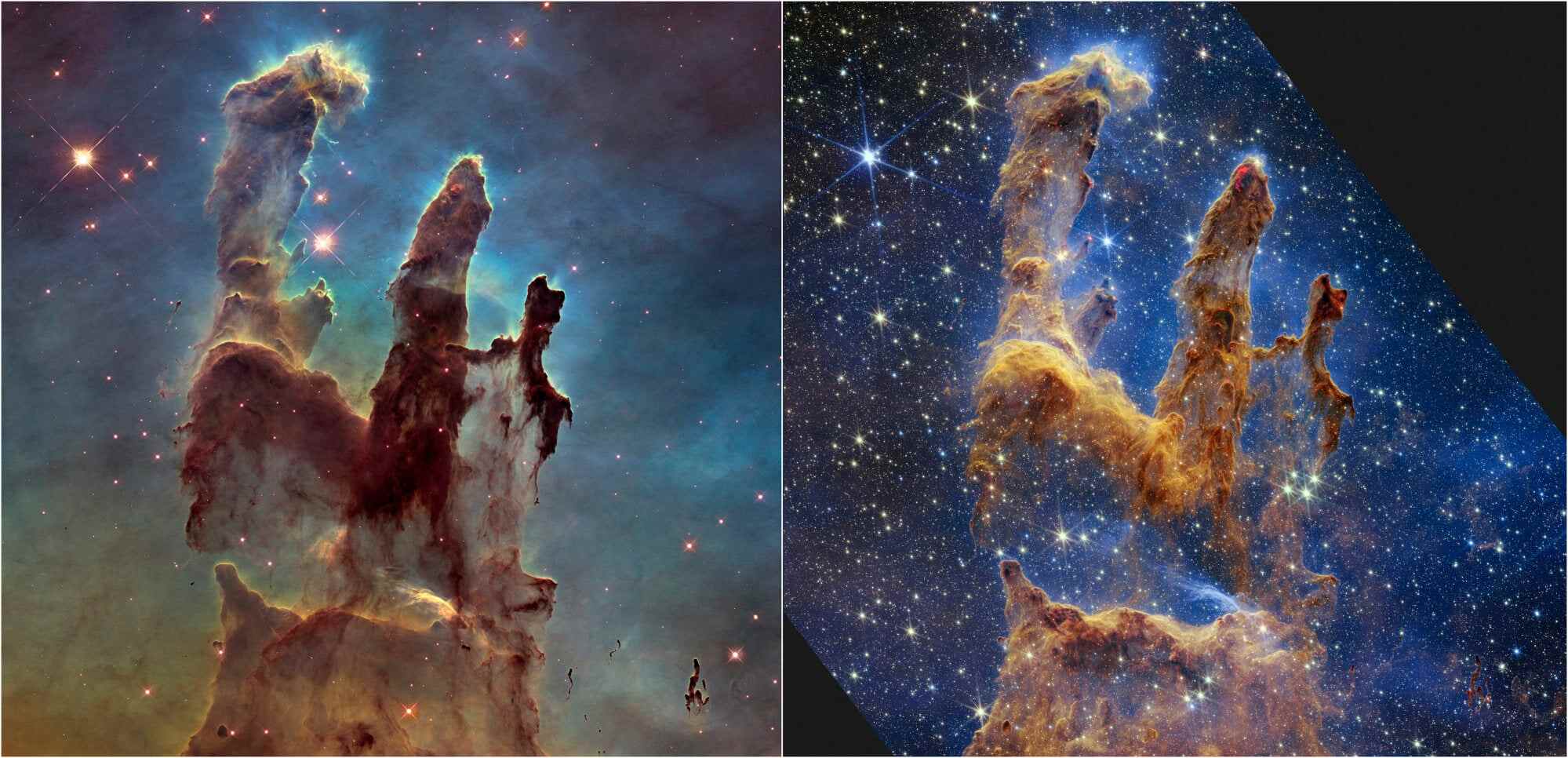
Discoveries from the James Webb Space Telescope
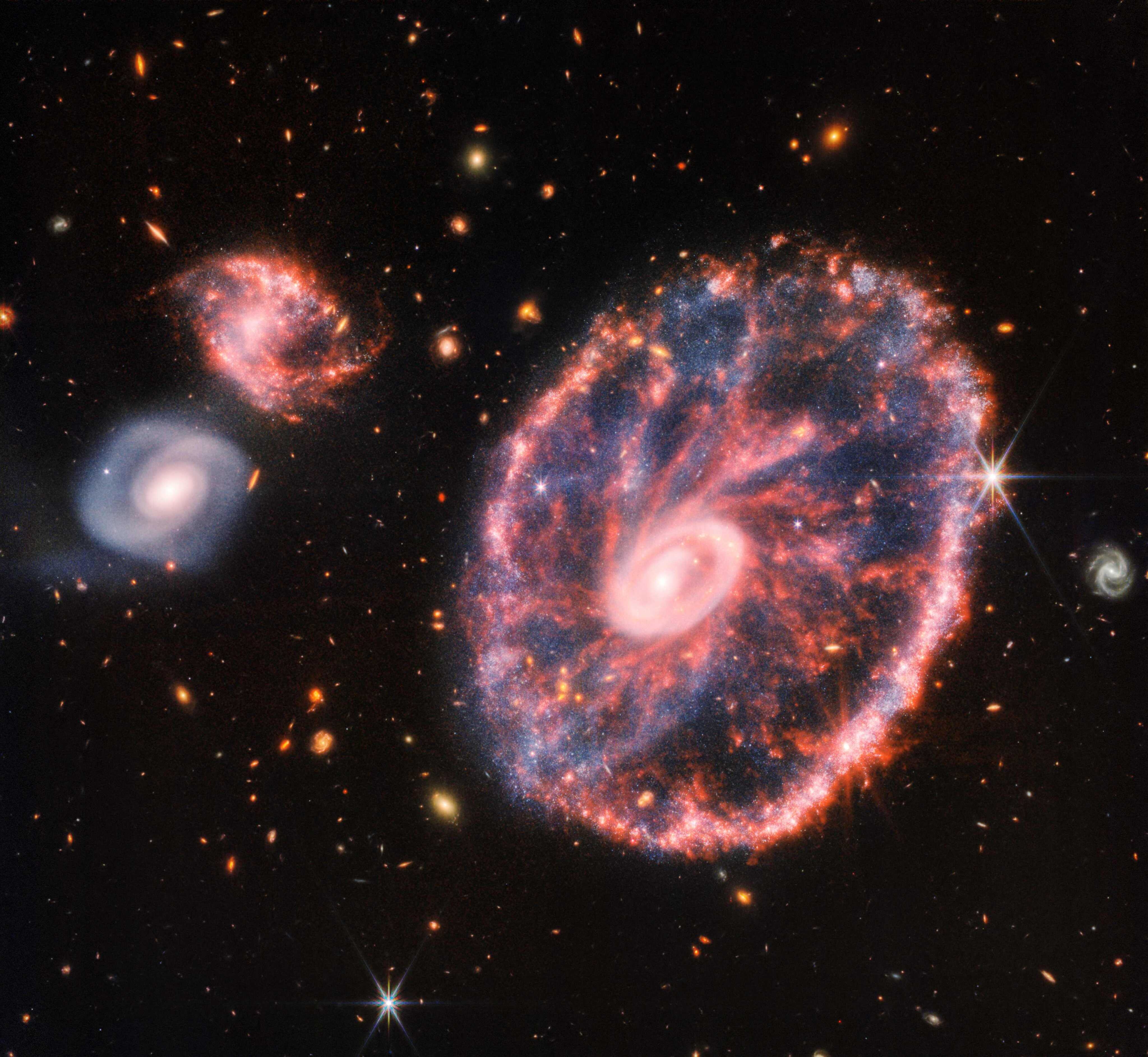
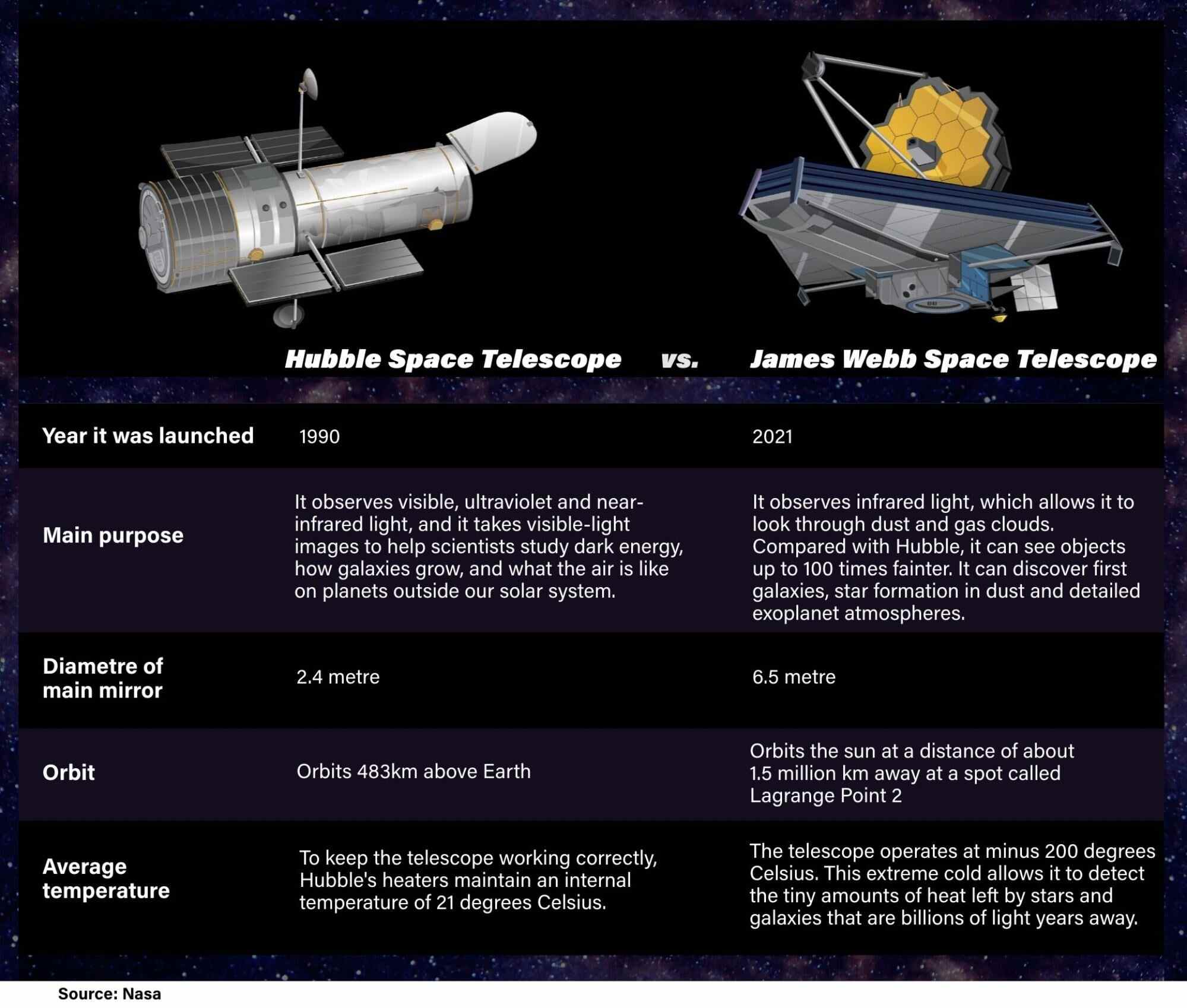
Along with Hubble, we now have the James Webb Space Telescope (see table), which has a larger mirror and can see infrared light. Because of this, it can look much deeper into space than Hubble could.
This leap in technology shows how upgrading tools allows scientists to see the world in a whole new way. How you look at a problem changes what you discover.
Make your own telescope
To understand the technology behind telescopes, you can build your own model.
All you need are two cardboard tubes, tape and two convex lenses. For the convex lenses, buy them online or ask your parents to help remove lenses from a pair of reading glasses.
-
Cut one tube the long way, and wrap it a bit more tightly so that it fits inside the other tube.
-
Pull the inner tube out slightly. Tape one lens to the end of the inside tube so that the curve faces inside.
-
Flip the tubes around, and tape the other lens to the outside tube so that the lens’ curve faces out.
-
Look through the inside tube’s lens, and try to look at things in the distance. Move the outside tube back and forth until you can see the image clearly.
The tube length matters because it helps set the distance between the two lenses. The longer you pull the outside tube forward, the longer the focal length is, which affects the magnification of the image.