China’s Tiangong space station orbits our planet. It is not only a home for astronauts, but it is also a place for science experiments in space.
For example, research in the life sciences helps us learn how living things survive in space. This knowledge can also help us better understand life on Earth. Let’s dive into some of these research projects on Tiangong.
Zebrafish: space swimmers
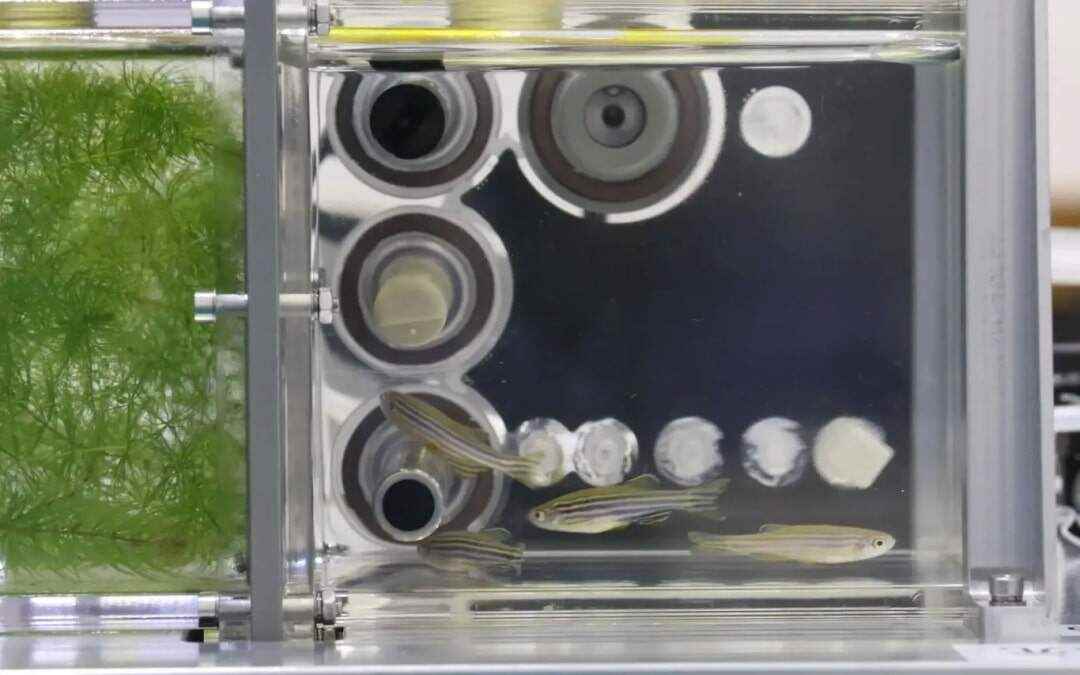
Zebrafish are tiny fish that grow and make babies quickly. Their small size makes them easy to bring on a spacecraft. Since their genes share a 70 per cent similarity with human genes, researchers often use zebrafish to study biological processes and diseases in space.
In April 2024, the astronauts of the Shenzhou-18 spacecraft took four adult zebrafish to Tiangong. This was China’s first aquatic ecological research project.
Like humans, the zebrafish could not understand which way was up or down when they were in space, where things float and appear to be weightless. The fish swam in strange ways, spinning around like silly dancers.
Still, the fish stayed healthy for 43 days. They became the longest surviving fish in space. They even laid eggs while they were on Tiangong.
The human astronauts sent the fish eggs and water samples back to Earth for further study.
This experiment could help scientists better understand how living in space could affect humans as well.
In April, the Shenzhou-20 crew brought more zebrafish to Tiangong to study how weightlessness affects their bones and muscles.
Planarians: regrowing in space
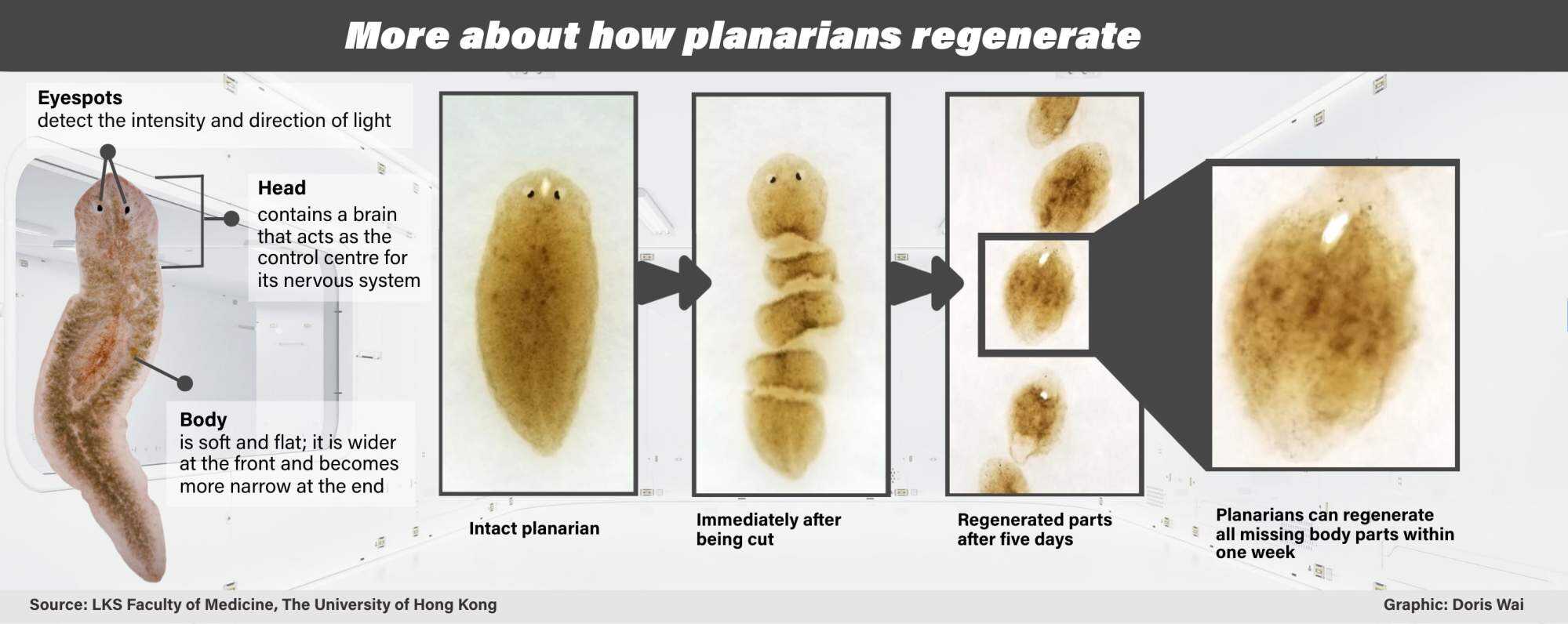
Planarians are flatworms that can regrow new body parts from cut sections (see graphic). The Shenzhou-20 crew also brought these special invertebrates to Tiangong.
Scientists cut the planarians into pieces before sending them to the space station for research. They wanted to understand how the planarians regrow new body parts in space compared to Earth.
This could help scientists learn how to heal humans on Earth and in space.
How students get involved
By joining competitions or programmes, students can propose ideas for real space missions.
For example, in 2016, the Shenzhou-11 spacecraft brought six silkworms to the Tiangong-2 space laboratory. This lab tested technology for Tiangong.
The idea to study silkworms in space came from four secondary school students in Hong Kong. The experiment investigated how they grew and spun cocoons in weightlessness.
In April, hundreds of primary and secondary school students in Hong Kong and Macau received seeds returned from Tiangong. They grew the plants and compared them to ordinary seeds to study their development.
To learn more about Tiangong, visit the Hong Kong Space Museum’s special exhibition “A Voyage to Space: China’s Manned Space Expedition”. You will see a model of the space station and learn about some experiments conducted on it. The exhibition runs until April 27, 2026, and is free for all.
Content provided by