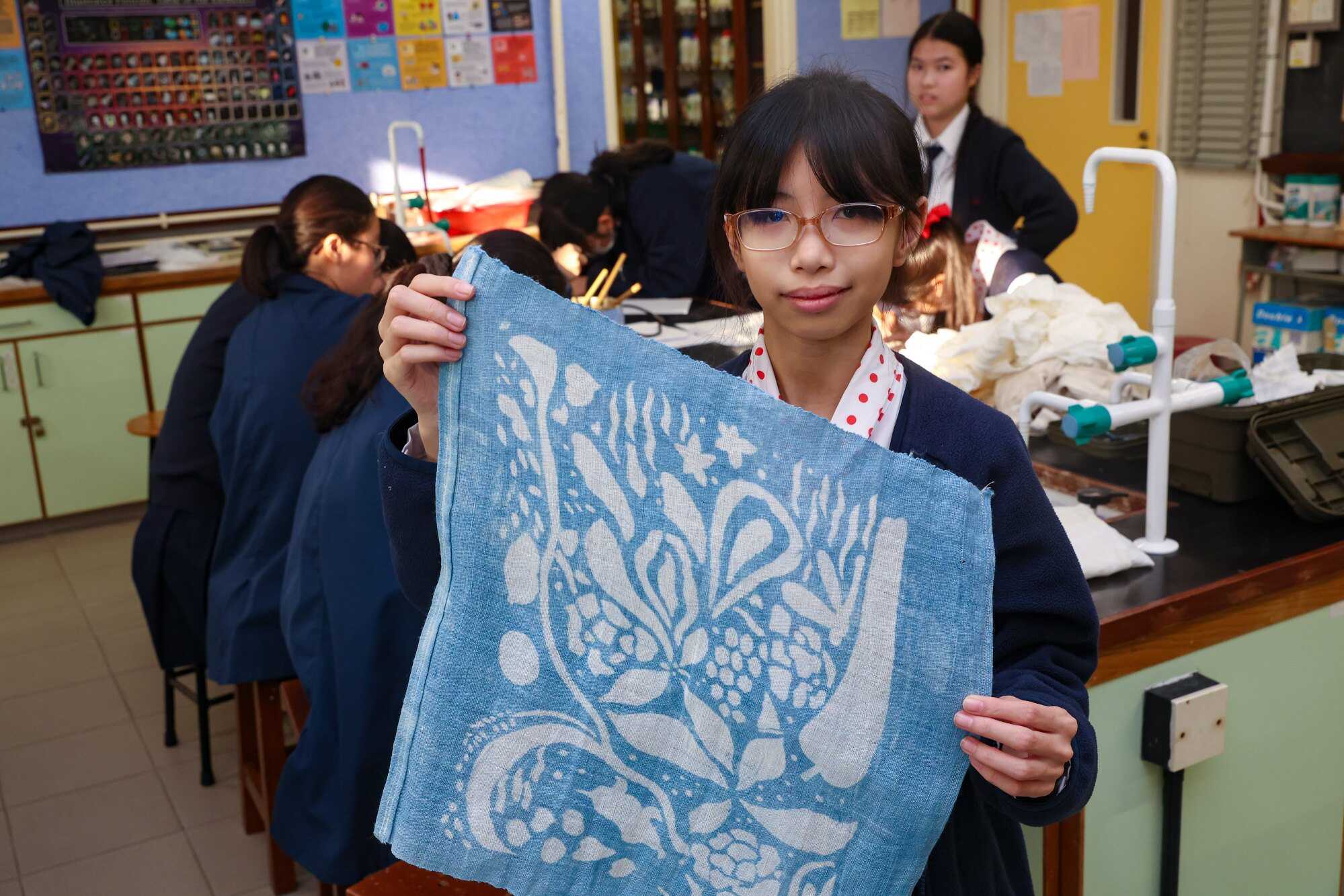
In a secondary school science class, Hong Kong students use beeswax to write Lunar New Year blessings on fabric. Then, they dip it in a pot of natural dye. They watch as the white fabric becomes blue.
The dye is made with Chinese indigo. This plant is native to Hong Kong. Centuries ago, indigo dyeing was a big part of Hakka village life.
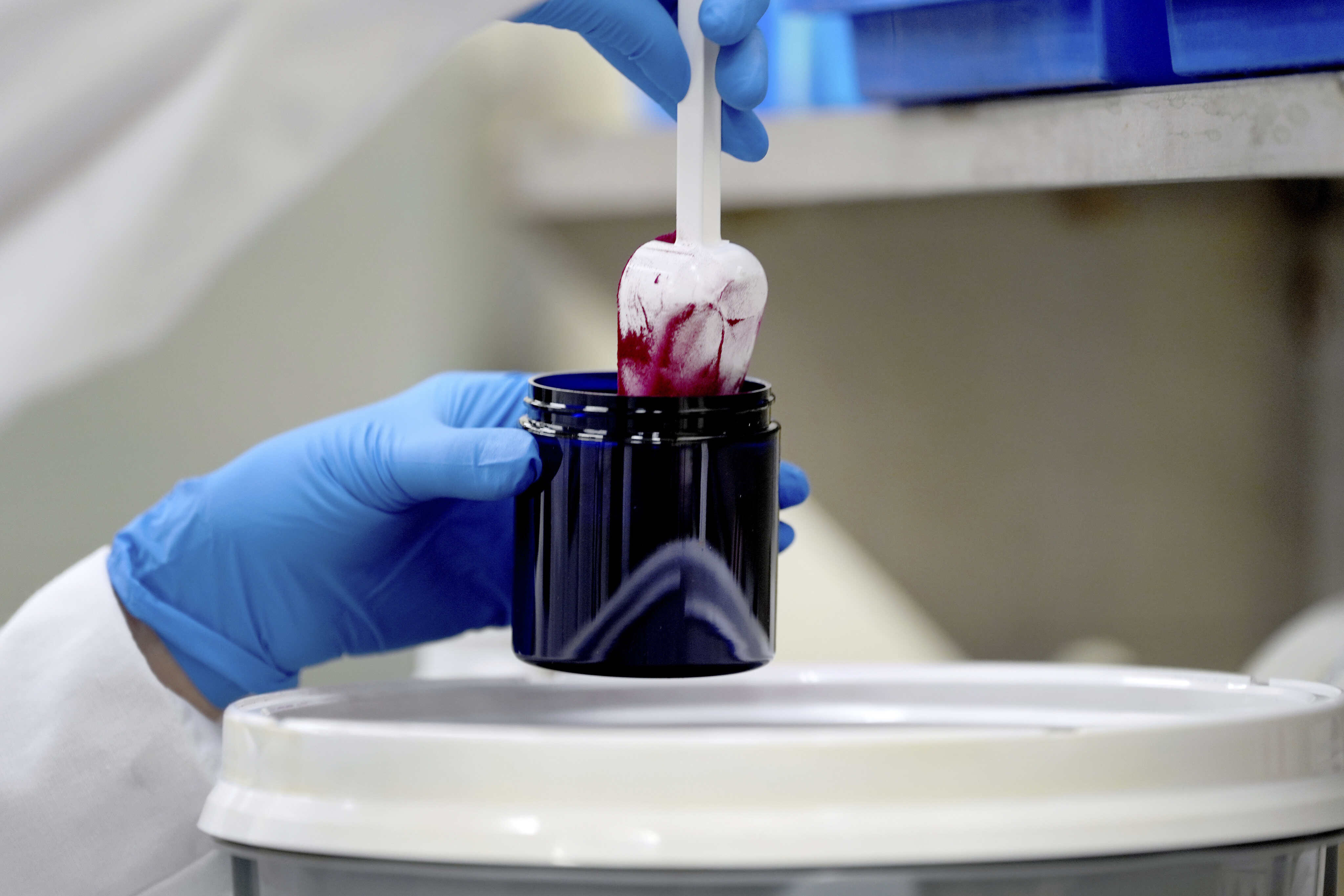
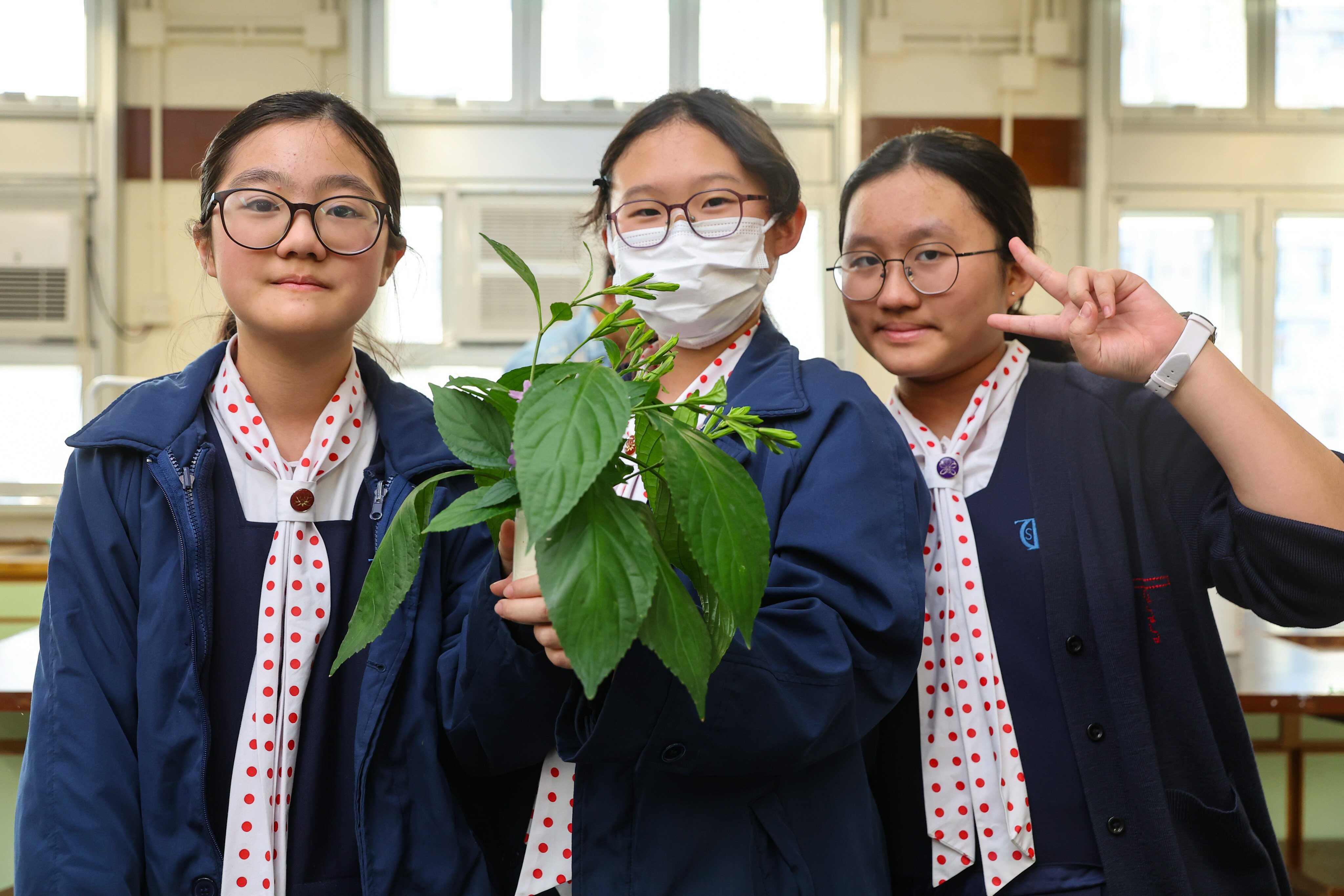
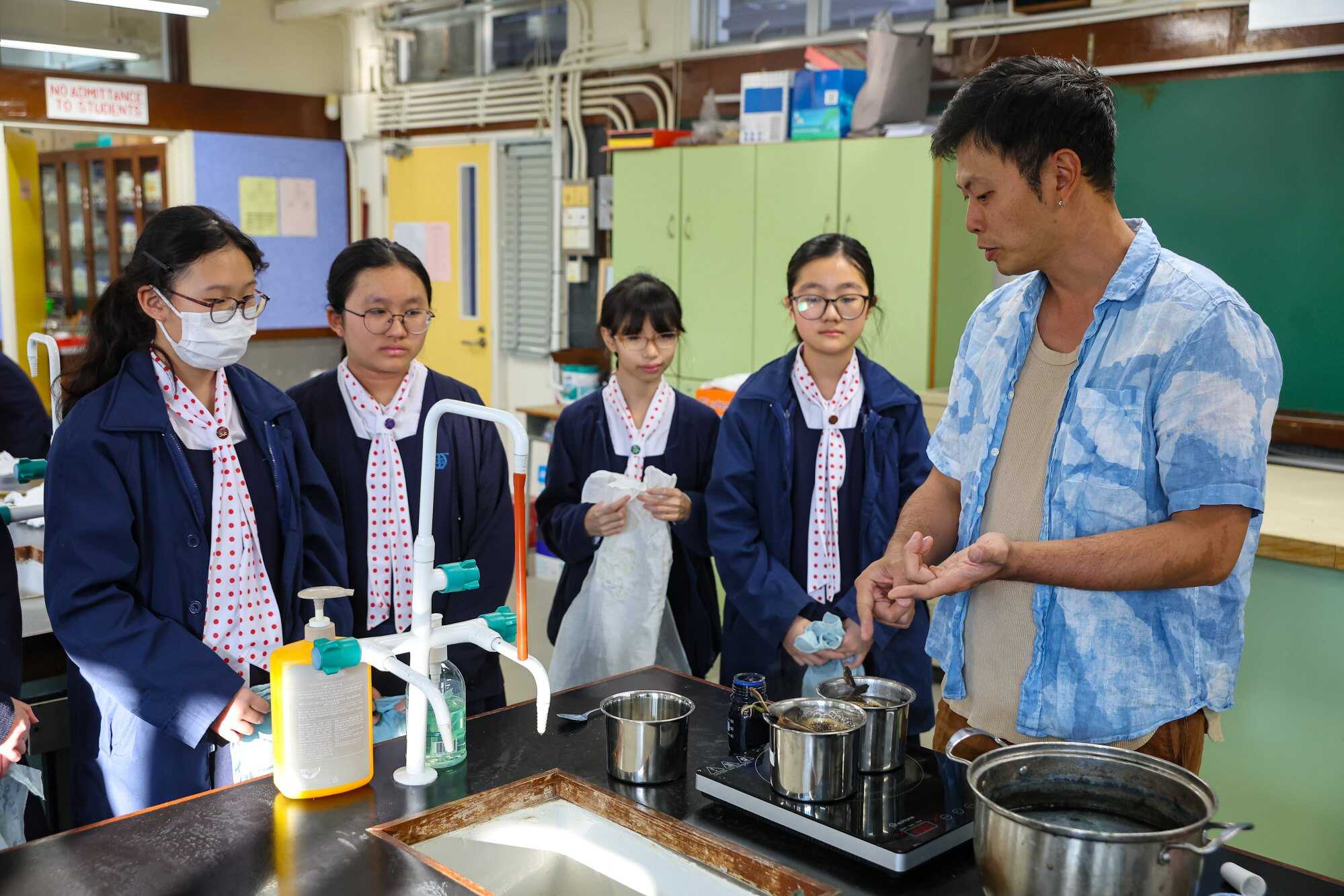
Last November, Tak Oi Secondary School pupils planted Chinese indigo on their campus. They later fermented the leaves to create a dye. This process turns indigo, water, shell ash and banana peels into a blue paste.
Kelly Yip Tsz-ching is a 15-year-old Form Three student. She said she enjoyed learning about natural dyes.
“Before joining this programme, I thought all dyeing processes use chemicals. I never thought we could use such simple ingredients to dye textiles,” she said.
“This is ancient wisdom passed down.”
The classroom experiment is part of an indigo dye programme. It was made by artist Benjamin Hao Lap-yan, three teachers, and Kadoorie Farm and Botanic Garden. It teaches students about the science, local heritage and sustainability of natural dyes.
In harmony with nature
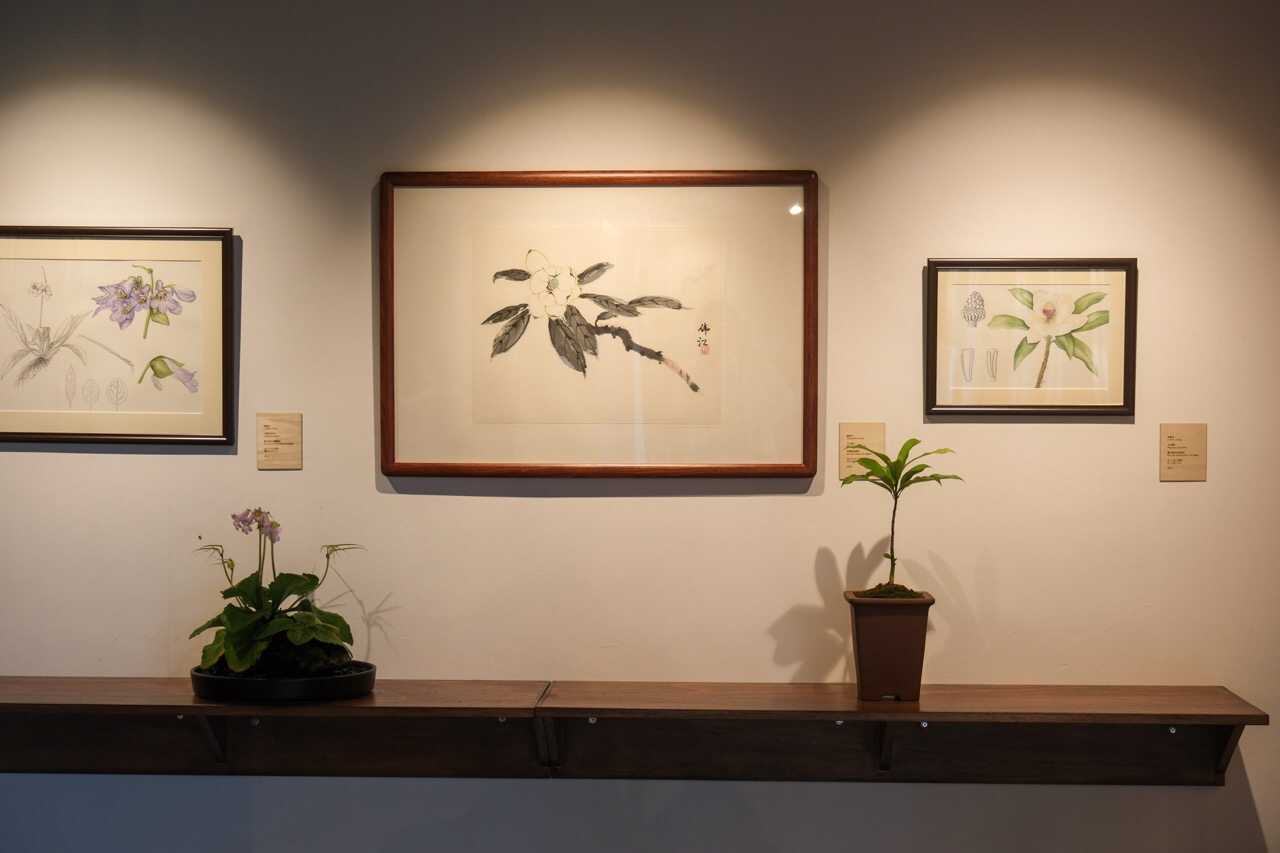
For four years, Hao has studied and made art about Chinese indigo.
Hao learned about indigo dyeing in a previous project. Then, he was curious about other native plants in Hong Kong. He also wanted to learn about the local history of natural dyeing. That is how he found that Chinese indigo and another plant called wild yam could colour fabric.
“In the past, people created things necessary for daily life in harmony with their environment, using what was naturally available,” Hao said.
He explained why natural dyes were more eco-friendly than the man-made dyes used in fast fashion.
“The whole production process avoids producing waste that contaminates the soil or water sources,” he said.
He said the leftover fermentation water and indigo leaves could go back into the ground to help new plants grow.
Hao is also passionate about indigo dyeing because it connects him with Hong Kong nature.
“Using local, natural materials is very important to me because every material carries a deep connection and meaning with the land,” he said.
Everything is connected
Delton Li Yiu-sing is a programme manager at Kadoorie Farm. Li hopes indigo dyeing can help students think about sustainability in new ways.
“It helps them see that in the past, people didn’t have chemical dyes or factory-style production,” he said.
“When we talk about sustainable development nowadays, it’s really about how we can ... discover alternative ways of doing things.”
The programme teaches students about this topic through art and science.
“On the one hand, this project has a very artistic and human-centred feel,” Li said.
“On the other hand, it also dives into the hard science ... [and] how reactions happen.”
Julian Yu Che-kwan is a teacher at Tak Oi Secondary School. He helped create the programme. He said studying Chinese indigo could show students how plants and animals rely on each other.
“This indigo plant is actually a host plant for butterflies ... All living beings are interconnected,” he said. “It leads [students] to think about what role humans play in the ecosystem: are we part of it, or are our actions damaging parts of it?”