Many know the Tyrannosaurus rex, the huge land predator. But it was not the only unfriendly “T. rex” alive in the dinosaur era. There was also a marine reptile called the Tylosaurus rex. Named this year, this T. rex of the sea rivalled its land counterpart in size and ferocity.
The Tyrannosaurus rex roamed the land that now forms parts of North America roughly 66 million years ago. The Tylosaurus rex (see graphic) prowled an inland sea that once split North America around 80 million years ago.
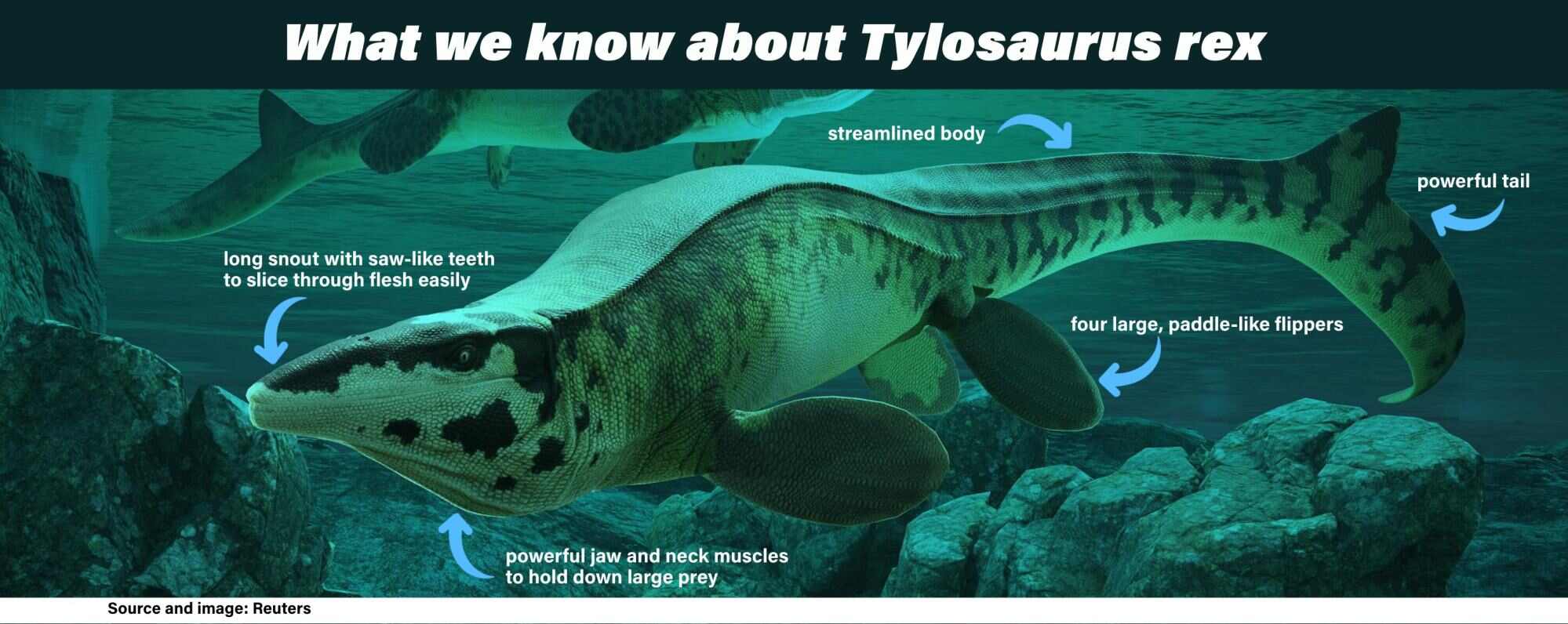
The genus Tylosaurus has been known since its fossils were formally discovered during the 19th century. A genus is a grouping of closely related species that share similar characteristics. For example, lions and tigers are from the same genus but are different species.
The largest Tyrannosaurus rex specimen is nicknamed Sue. It is about 12.3 to 12.8 metres and is held at the Field Museum of Natural History in the US city of Chicago.
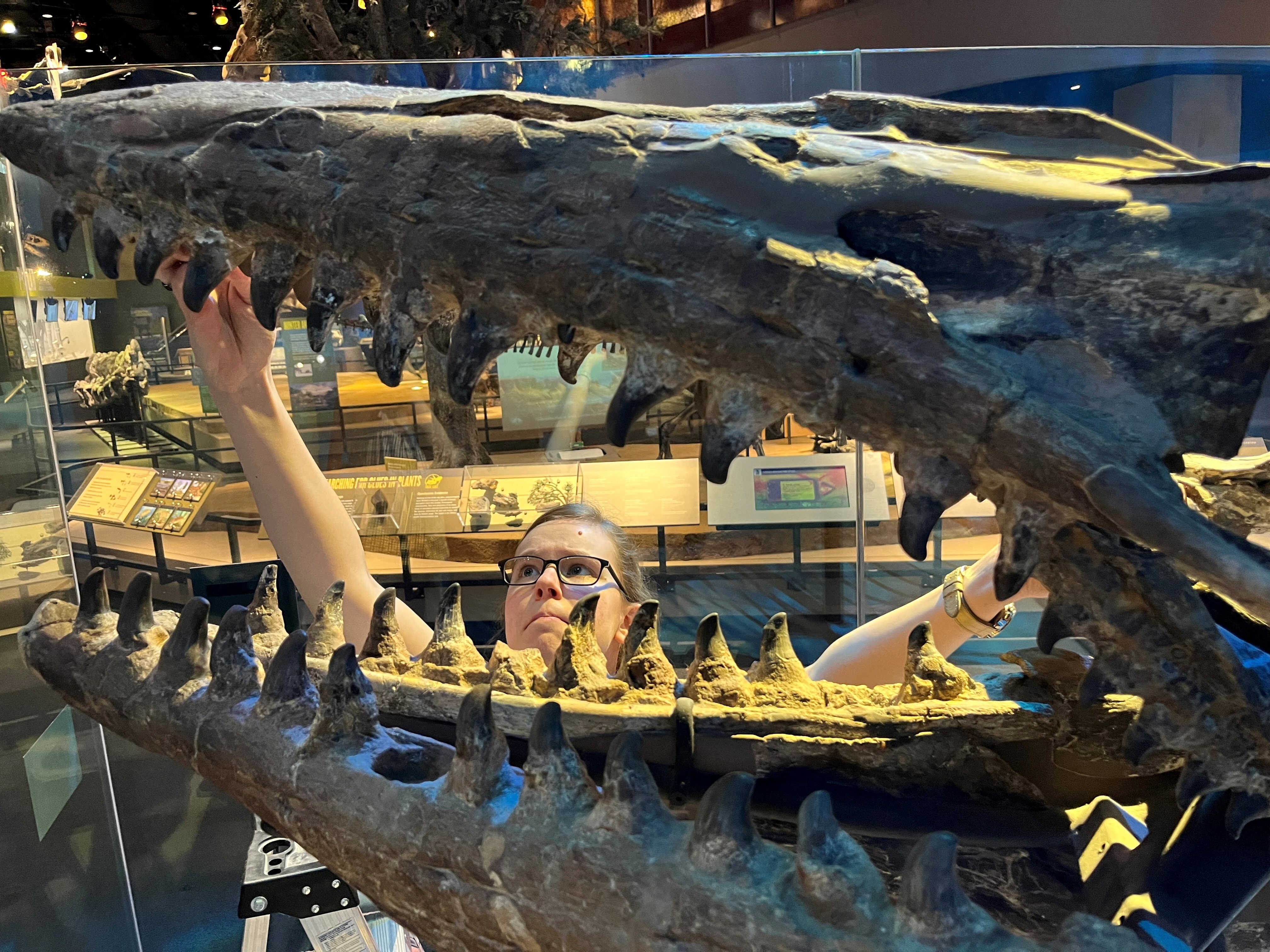
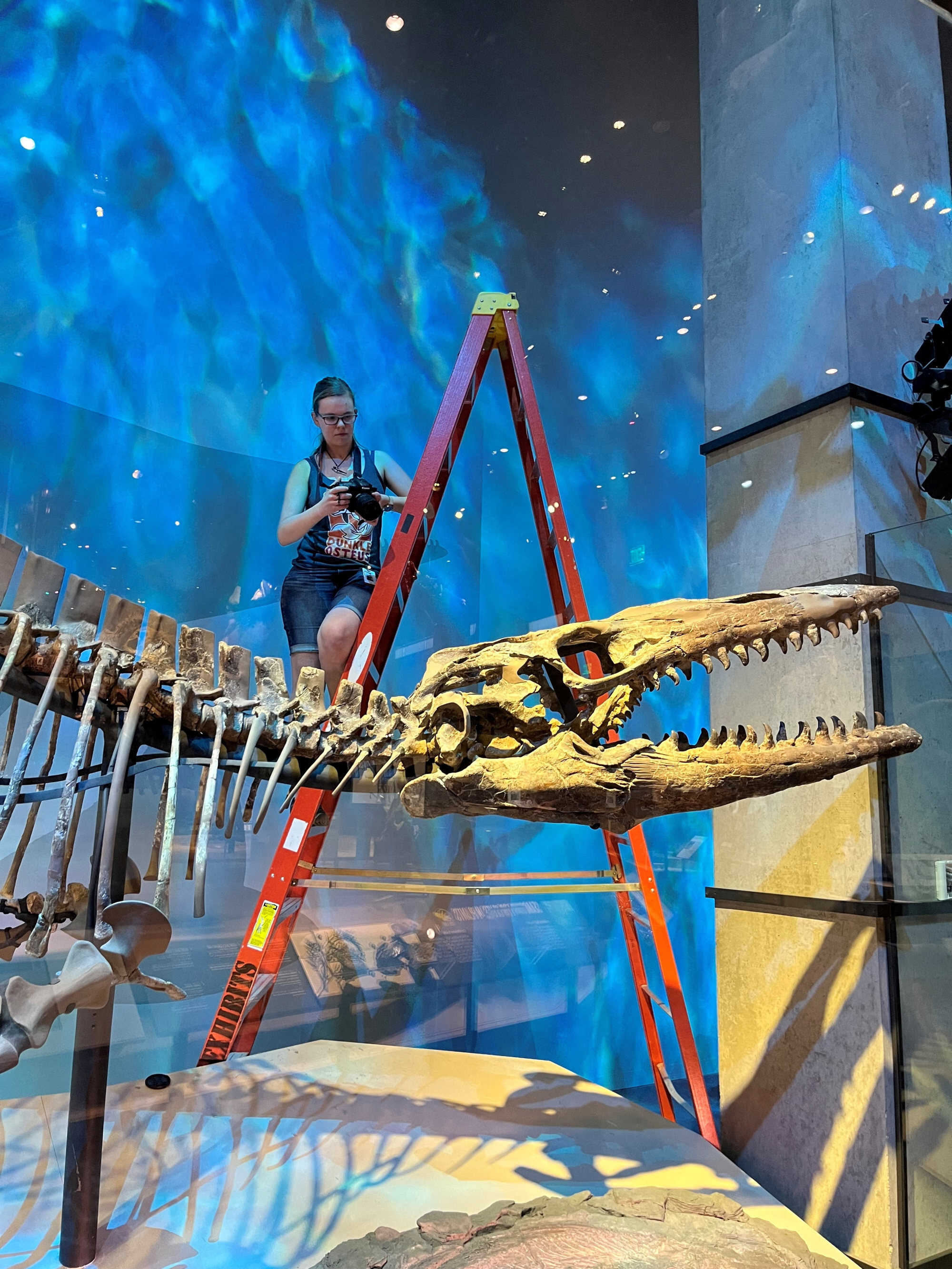
But the largest Tylosaurus rex specimen is even longer, at 13.2 metres. It’s nicknamed Bunker and lives at the University of Kansas Natural History Museum.
“The skull alone is as long as I am tall – 5-foot-7 inches [1.7 metres],” Amelia Zietlow said.
She is a palaeontologist from the History Museum at the Castle in the US state of Wisconsin. She is also the lead author of the study published in the Bulletin of the American Museum of Natural History.
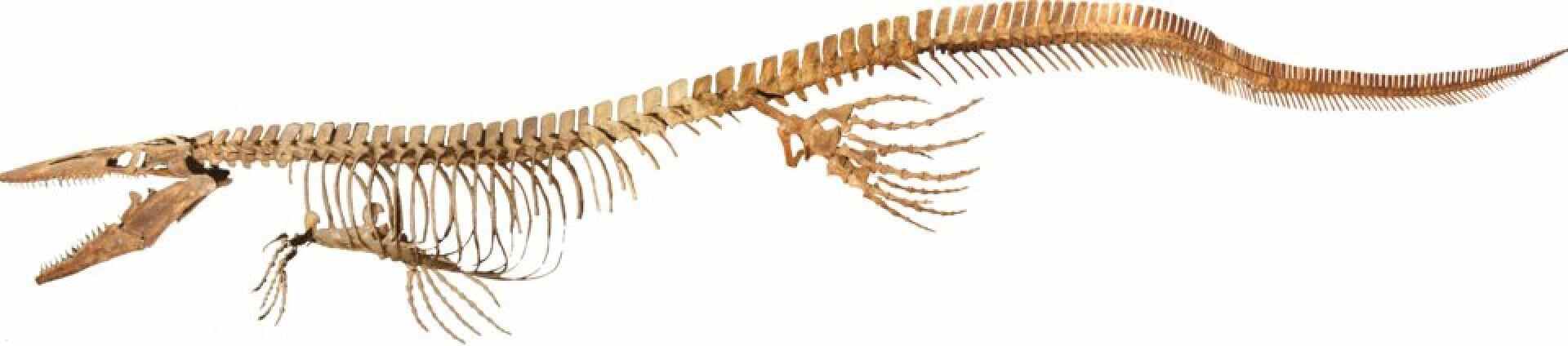
Tylosaurus is a member of a group of marine reptiles called mosasaurs. The group evolved from land-living lizards. They became apex marine predators during the final 30 million years of the age of dinosaurs.
Today’s monitor lizards are perhaps the Tylosaurus rex’s closest living relatives. The group includes the Komodo dragon, the largest living lizard.
Ron Tykoski is a co-author of the study. He is vice-president of science and a curator at the Perot Museum of Nature and Science in Dallas, Texas. Tykoski said the Tylosaurus rex would have been twice the length of today’s largest great white sharks.
Its holotype specimen – the fossil used to formally name a species – is at the Perot Museum in Dallas.
The new species name means “king of the Tylosaurs”. It was a nod to Tyrannosaurus rex. These two T. rexes did not live in the same era. But earlier giant dinosaurs lived at the same time as the giant mosasaur.
And as Tyrannosaurus rex could target the largest prey on land, Tylosaurus rex could do the same in the sea. It was among the largest of the mosasaurs.
What is a mosasaur?
Mosasaurs were large aquatic lizards. They lived in oceans during the late Cretaceous period, between 94 and 66 million years ago. They were excellent swimmers and fed on fish and ammonoids, molluscs that were abundant in the Cretaceous seas.
They competed with other marine reptiles for food. They died out during a mass extinction caused by a giant asteroid that struck Earth. The asteroid created the famous Chicxulub crater in present-day Mexico.